terça-feira, 25 de outubro de 2011

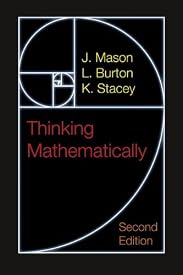
Thinking Mathematically


J. Mason, L. Burton, K. Stacey

Addison Wesley | 2.ª Edição | 265 páginas | PDF | 1,9 Mb


Thinking Mathematically is invaluable for anyone who wishes to promote mathematical thinking in others or for anyone who has always wondered what lies at the core of mathematics.

New in the Second Edition:
· The text has been updated with 77 fresh problems matched to curriculum topics together with links between those topics and the original problems.
· There is a new preface describing the origins and uses of the first edition
· New chapter correlates mathematical processes with the natural powers that every learner has already demonstrated in learning to speak.ng to speak.

The Elements of Creativity and Giftedness in Mathematics

Bharath Sriraman, Kyeong Hwa Lee

Sense Publishers | 2010 | 240 páginas | PDF | 9 MB


The Elements of Creativity and Giftedness in Mathematics edited by Bharath Sriraman and KyeongHwa Lee covers recent advances in mathematics education pertaining to the development of creativity and giftedness. The book is international in scope in the "sense" that it includes numerous studies on mathematical creativity and giftedness conducted in the U.S.A, China, Korea, Turkey, Israel, Sweden, and Norway in addition to cross-national perspectives from Canada and Russia. The topics include problem -posing, problem-solving and mathematical creativity; the development of mathematical creativity with students, pre and in-service teachers; cross-cultural views of creativity and giftedness; the unpacking of notions and labels such as high achieving, inclusion, and potential; as well as the theoretical state of the art on the constructs of mathematical creativity and giftedness. The book also includes some contributions from the first joint meeting of the American Mathematical Society and the Korean Mathematical Society in Seoul, 2009. Topics covered in the book are essential reading for graduate students and researchers interested in researching issues and topics within the domain of mathematical creativity and mathematical giftedness. It is also accessible to pre-service and practicing teachers interested in developing creativity in their classrooms, in addition to professional development specialists, mathematics educators, gifted educators, and psychologists.
Contents
AIMS AND SCOPE
1. WHAT ARE THE ELEMENTS OF GIFTEDNESS AND CREATIVITY IN MATHEMATICS?: An Overview of the KMS-AMS Symposium and the Book
INTRODUCTION
ACKNOWLEDGEMENT
2. AN EXPLORATORY STUDY OF RELATIONSHIPS BETWEEN STUDENTS’ CREATIVITY AND MATHEMATICAL PROBLEM-POSING ABILITIES: Comparing Chinese and U.S Students
INTRODUCTION
CONCEPTUAL FRAMEWORK
Guilford’s Structure of Intellect Model
Mathematical Problem-posing Framework
STUDY VARIABLES AND DEFINITION OF STUDY TERMS
Definition of Creativity
Definition of Mathematical Problem Posing
RESEARCH DESIGN
PARTICIPANTS
Participants from China
Participants from the United States
MEASURES AND INSTRUMENTATION
The Mathematics Content Test
The Torrance Tests of Creative Thinking
The Mathematical Problem-Posing Test
The Translation of the Tests from English to Chinese
DATA ANALYSIS
The Scoring of the Mathematics Content Test
The Scoring of the TTCT Tests
The Scoring of the Mathematical Problem-posing Test
RESULTS
Comparison of the Mathematics Content Test Scores
Comparison of TTCT Scores
Comparison of the Mathematical Problem-posing Test Scores
Correlations between TTCT and the Mathematical Problem-posing Test
DISCUSSION
LIMITATIONS OF THIS STUDY
The Participants
The Translation of the Instruments
The Time and Distance Restrictions
CONCLUSIONS AND IMPLICATIONS
REFERENCES
3. ARE MATHEMATICALLY TALENTED ELEMENTARY STUDENTS ALSO TALENTED IN STATISTICS?
INTRODUCTION
CONCEPTUAL ANALYSIS OF AVERAGE
METHOD
Participants
Tasks
Administration and Analysis
RESPONSES AND FINDINGS
Average as Being Representative
Mathematical Abstract Construction
Treatment of Variation
SUMMARY AND DISCUSSION
REFERENCES
4. DOES HIGH ACHIEVING IN MATHEMATICS = GIFTED AND/OR CREATIVE IN MATHEMATICS
INTRODUCTION
CREATIVITY AND MATHEMATICAL CREATIVITY
The Gestalt principle:
The Aesthetic principle:
The Scholarly principle:
The Free market principle:
The Uncertainty principle:
INTELLIGENCE AND MATHEMATICAL INTELLIGENCE
GIFTEDNESS AND MATHEMATICAL PRECOCIOUSNESS
Exceptional Abilities from a Young Age
Late Development of Mathematical Giftedness
Identifying Precociuosness
Programmes for the Highly Gifted Youth
SEVEN CASES OF VARIOUS LEVELS OF GIFTEDNESS AND ACHIEVEMENT
John, Gifted but not High Achieving in Mathematics
Lisa, High Achieving Merely through Hard Work
Steve, Late Discovery of Mathematical Precociousness
Annie, Initially a High Achiever by Strategic Social and Mathematical Behaviour
Chris, from Above Average to Low Achieving
Mary, High Achieving, Gifted and Creative
Nelly, Gifted but not Creative
DISCUSSION
The Labels High Achiever, Gifted and Creative in Mathematics
Social Impact and Changed Development
Assessment and School Practice
REFERENCES
5. DEVELOPING MATHEMATICAL POTENTIAL IN UNDERREPRESENTED POPULATIONS THROUGH PROBLEM SOLVING, MATHEMATICAL DISCOURSE AND ALGEBRA
INTRODUCTION
THEORETICAL FRAMEWORK
Participation Gap among Diverse Learners in Accessing Rigorous Mathematics
METHODOLOGY
Participants
Design Features of the Project
Focusing on the Core Traits of Mathematically Proficient Students
Procedures
RESULTS
Selecting Tasks and Sequences of Related Problems
Integrating Pedagogical Content Tools to Extend Students’ Reasoning
Orchestrating Classroom Discourse through Pedagogical Moves and Questioning
CONCLUSIONS
REFERENCES
6. ON TRACK TO GIFTED EDUCATION IN MATHEMATICS IN SWEDEN
INTRODUCTION
A HISTORICAL REVIEW – DEVELOPMENT OF THE SCHOOL SYSTEM AND THE CURRICULUM
NATIONAL POLICIES
ADVOCACY
GIFTED EDUCATION RESEARCH RELEVANT FOR MATHEMATICS EDUCATION
GIFTED EDUCATION IN THE SWEDISH TEACHER EDUCATION
IMPLEMENTATION OF GIFTED EDUCATION IN SCHOOLS
CHALLENGES FACING SWEDISH GIFTED EDUCATION IN MATHEMATICS
Legal Recognition of Gifted Students
Strengthening the Connection between Research and Implementation of Gifted Education
Identification of Gifted Students
Gifted Educa tion in the Swedish Teacher Education
Coordinating Measures for Gifted Students
Social Dimensions of Giftedness
CONCLUDING REMARK
REFERENCES
7. TEACHERS’ IMAGES OF GIFTED STUDENTS AND THE ROLES ASSIGNED TO THEM IN HETEROGENEOUS MATHEMATICS CLASSES
INTRODUCTION
THEORETICAL BACKGROUND
Mathematically able Students
Teachers of MAS
THE STUDY
Participating Teachers
Procedure
Data Analysis
FINDINGS
Teachers’ Images of Gifted Students
High abilities as a gift of god.
A gift is like a jug with a narrow opening.
A gifted student is a cyclamen with a lowered head.
Students’ Roles in the Classroom
MAS as a catalyst for class discussion.
MAS as a scaffold for class discussion.
MAS as a springboard for class discussion.
CONCLUDING REMARKS
NOTES
REFERENCES
8. MATHEMATICAL CREATIVITY AND MATHEMATICS EDUCATION: A Derivative of Existing Research
INTRODUCTION
IDENTIFICATION AND DEVELOPMENT OF MATHEMATICAL CREATIVITY
THE PROCESS OF CREATIVE MATHEMATICAL ACTIVITY
THE WALLAS MODEL OF PROBLEM SOLVING
MORE REMARKS ON INCUBATION
FALLIBILITY AND CRATIVE MATHEMATICAL ACTIVITY
THINKING AS MATHEMATICIANS
CONCLUSION
NOTES
REFERENCES
9. GIFTED EDUCATION IN RUSSIA AND THE UNITED STATES: Personal Notes
ABOUT MY EXPERIENCE
ON TECHNOLOGY IN MATHEMATICS GIFTED EDUCATION
ON THE PLACE OF TEACHING THE MATHEMATICALLY GIFTED IN THE EDUCATION SYSTEM
SOME PRACTICAL OBSERVATIONS
Public Opinion
Opportunities for Children
On Teachers
CONCLUSION: SO WHAT SHOULD WE DO?
REFERENCES
10. SEMIOTIC MICROWORLD FOR MATHEMATICAL VISUALIZATION
INTRODUCTION
MICROWORLD TOOLS FOR MATHEMATICAL VISUALIZATION
SEMIOTIC TOOLS FOR MATHEMATICAL VISUALIZATION
MATHEMATICAL VISUALIZATION WITH TURTLE BLOCKS
CLOSING REMARKS
REFERENCES
11. MATHEMATICALLY GIFTED STUDENTS IN INCLUSIVE SETTINGS: The Example of New Brunswick, Canada
INTRODUCTION: CONTEXT AND ISSUES
GIFTED EDUCATION IN CANADA: A BRIEF PORTRAYAL
NEW TRENDS IN MATHEMATICS EDUCATION: WHAT DOES IT BRING TO GIFTED STUDENTS?
INNOVATIVE PROJECTS AND NEW OPPORTUNITIES FOR GIFTED
EXAMPLES OF EXTRACURRICULAR INITIATIVES
CONCLUSIVE REMARKS ON UNSOLVED ISSUES
REFERENCES
12. PROSPECTIVE SECONDARY MATHEMATICS TEACHERS’ MATHEMATICAL CREATIVITY IN PROBLEM SOLVING: A Turkish Study
CONCEPTUAL FRAMEWORK
THE STUDY
THE PROBLEMS
DATA SOURCES
A SAMPLE PROBLEM AND SOLUTIONS
Problem
S9’s Solution for the Problem
S5’s Solution to the Problem
S4’s Solution for the Problem
Excerpt from S4’s Journal [solution has been translated/described above]
DATA ANALYSIS AND RESULTS
FINDINGS AND DISCUSSION
Logical Thinking
DISCUSSION
Difficulties
Creative Thinking Skills
Personal Choices
Logical and Intuitive Thinking
Other Affective Factors
Differences between Uses of Strategies
CONCLUSIONS
NOTES
REFERENCES
13. WHAT CHARACTERISES HIGH ACHIEVING STUDENTS’ MATHEMATICAL REASONING?
INTRODUCTION
Research Question
Literature Review
CONCEPTUAL FRAMEWORK
CREATIVE REASONING
IMITATIVE REASONING
Memorized Reasoning
Algorithmic Reasoning
METHODS
Procedures
Participants
Tasks
ANALYSIS
METHODOLOGICAL ISSUES
Validity
Reliability
RESULTS
Attacking the Problem
– Alf Description
Interpretation
– Anna Description
Interpretation
– Hege Description
Interpretation
The Prompt and Solution
– Alf Description
Interpretation
– Anna Description
Interpretation
– Hege Description
Interpretation
DISCUSSION
REFERENCES
14. FOSTERING CREATIVITY THROUGH GEOMETRICAL AND CULTURAL INQUIRY INTO ORNAMENTS
INTRODUCTION
CREATIVITY PATHWAYS
MATHEMATICS EDUCATION IN CULTURAL CONTEXT
EDUCATIONAL FRAMEWORK
EXAMPLES OF CREATIVE ACTIVITIES
Example 1
Example 2
Example 3
Experience of Learning Mathematics with Applications
Experience of Learning Geometry in Cultural Context
Experience of Connecting Geometry with Culture and Art
Geometrical View of Visual Patterns
Curiosity and Pride in Own Cultural Heritage
Interest, Motivation and Readiness to Teach Geometry in Cultural Context
Self-directed Inquiry
The Impact of the Technion Seminar
DISCUSSION AND CONCLUSION
ACKNOWLEDGEMENT
REFERENCES
Geometry as Objective Science in Elementary School Classrooms: Mathematics in the Flesh


Wolff-Michael Roth

Routledge International Studies in the Philosophy of Education

Routledge | 2011 | 312 páginas | PDF | 3,70 MB

This study examines the origins of geometry in and out of the intuitively given everyday lifeworlds of children in a second-grade mathematics class. These lifeworlds, though pre-geometric, are not without model objects that denote and come to anchor geometric idealities that they will understand at later points in their lives. Roth's analyses explain how geometry, an objective science, arises anew from the pre-scientific but nevertheless methodic actions of children in a structured world always already shot through with significations. He presents a way of understanding knowing and learning in mathematics that differs from other current approaches, using case studies to demonstrate contradictions and incongruences of other theories – Immanuel Kant, Jean Piaget, and more recent forms of (radical, social) constructivism, embodiment theories, and enactivism – and to show how material phenomenology fused with phenomenological sociology provides answers to the problems that these other paradigms do not answer.
Contents
List of Figures ix
Preface xiii
Introduction: Of Hands, Flesh, and Mind 1
PART A
Toward a Theory of Mathematics in the Flesh
Introduction to Part A 15
1 What Makes a Cube a Cube? A Phenomenological Overture 19
2 From Intellectualist Metaphysics to Embodiment Epistemologies 35
3 Material Life as the Organizing Principle of Knowing 60
PART B
Stories of Mathematics in the Flesh
Introduction to Part B 83
4 The Flesh, Distractions, and Mathematics 87
5 Coordinating Touch and Gaze: Re/Constructing a Mystery Object 111
6 Emergence of Measurement as the Realization of Geometry 138
7 Doing Time in Mathematical Praxis 157
PART C
Emergence of Geometry—An Objective Science
Introduction to Part C 197
8 Ethno-methods of Sorting Geometrically 201
9 Reproducing Geometry as Objective Science 231
10 Rethinking Mathematical Conceptions 243
Epilogue: From the Flesh to Society in the Mind 260
Appendix: Transcription Conventions 267
Notes 269
References 279
Index 287

Unexpected Links Between Egyptian and Babylonian Mathematics


Joran Friberg

World Scientific Publishing Company | 2005 | 307 páginas | PDF | 3 Mb

link
link1

Mesopotamian mathematics is known from a great number of cuneiform texts, most of them Old Babylonian, some Late Babylonian or pre-Old-Babylonian, and has been intensively studied during the last couple of decades. In contrast to this Egyptian mathematics is known from only a small number of papyrus texts, and the few books and papers that have been written about Egyptian mathematical papyri have mostly reiterated the same old presentations and interpretations of the texts. In this book, it is shown that the methods developed by the author for the close study of mathematical cuneiform texts can also be successfully applied to all kinds of Egyptian mathematical texts, hieratic, demotic, or Greek-Egyptian. At the same time, comparisons of a large number of individual Egyptian mathematical exercises with Babylonian parallels yield many new insights into the nature of Egyptian mathematics and show that Egyptian and Babylonian mathematics display greater similarities than expected.

Amazing Traces of a Babylonian Origin in Greek Mathematics


Joran Friberg

World Scientific Publishing Company 2007 | 498 páginas | PDF | 2 MB


A sequel to Unexpected Links Between Egyptian and Babylonian Mathematics (World Scientific, 2005), this book is based on the author s intensive and ground breaking studies of the long history of Mesopotamian mathematics, from the late 4th to the late 1st millennium BC. It is argued in the book that several of the most famous Greek mathematicians appear to have been familiar with various aspects of Babylonian metric algebra, a convenient name for an elaborate combination of geometry, metrology, and quadratic equations that is known from both Babylonian and pre-Babylonian mathematical clay tablets. The book s use of metric algebra diagrams in the Babylonian style, where the side lengths and areas of geometric figures are explicitly indicated, instead of wholly abstract lettered diagrams in the Greek style, is essential for an improved understanding of many interesting propositions and constructions in Greek mathematical works. The author s comparisons with Babylonian mathematics also lead to new answers to some important open questions in the history of Greek mathematics.

segunda-feira, 11 de abril de 2011

What Counts in Teaching Mathematics: Adding Value to Self and Content


Sandy Schuck, Peter Pereira

Springer | 2011 | 208 páginas | PDF | 1,5 Mb


In this book, internationally recognised scholars and practitioners synthesise current practice and research developments in the area of mathematics teacher education and mathematics education. The book "s two sections examine the role and significance of collaborations and critical friends in the self-study of mathematics teaching and teacher education; and the emerging conflicts, dilemmas and incongruities arising from the study of mathematics education practices. The book considers the insights gained from self-analysis regarding the practitioner themselves, as well as their pedagogical content, students and approaches. The contributions highlight the complexity, characteristics and features of mathematics education.The chapters reveal nuances in teaching and learning that are of particular relevance in mathematics education. In addition, the book contains ideas and suggestions on how to enhance the teaching of mathematical content to pre-service teachers. Accordingly, the book appeals to a wide audience of educators including education academics, teachers, student teachers and researchers. As teacher educators involved in mathematics education, reflection on practice and engagement in practitioner research is becoming increasingly important in our efforts to enhance our teaching. Teachers and student teachers also gain from the insights arising from such reflection. The knowledge and experience encapsulated in this book provides much for the mathematics education community to build on.

Table of Contents


  • Series Editor’s Foreword.- List of Contributors.- What counts in mathematics education? Sandy Schuck and Peter Pereira.- Part 1 Collaborations and Critical Friends.- 1. Tensions of Mentoring Mathematics Teachers: Translating Theory into Practice, Paul Betts.- 2. Team Teaching about Mathematics for All Collaborative Self-Study, Hafdís Guðjónsdóttir and Jónína Vala Kristinsdóttir.- 3. Growing Possibilities: Designing mathematical and pedagogical problems using variation, Cynthia Nicol.- 4. Resisting complacency: my teaching through an outsider’s eyes, Sandy Schuck.- Part 2 Examining our practice: Conflicts, dilemmas and incongruities.- 5. How students teach you to learn: Using Roundtable Reflective Inquiry to enhance a mathematics teacher educator’s teaching and learning, Robyn Brandenburg.- 6. Making sense of students’ fractional representations using critical incidents, Nell B.Cobb.- 7. Reforming Mathematics Teacher Education Through Self Study, Joanne E. Goodell.- 8. Opportunities for Learning: A Self-Study Of Teaching Statistics in a Mathematics Learning Centre, Sue Gordon.- 9. Reconstructing Teachers of Mathematics, Peter Pereira.- 10. Are we singing from the same songbook? Anne Prescott.- Adding value to self and content in mathematics education: Working in a third space, Peter Pereira and Sandy Schuck.
  • Early Algebraization: A Global Dialogue from Multiple Perspectives

    Jinfa Cai, Eric Knuth
    Springer | 2011 |647 páginas | PDF - 7,7 Mb


    In recent years there has been increased interest in the development of students’ algebraic thinking in the elementary and middle school grades. This important and timely new volume contains the most comprehensive collection of research focused on early algebraization. The volume’s authors—leading international mathematics education scholars—present perspectives on early algebraization that promote a global dialogue on the topic. Research is presented from many parts of the world, including Asia, Australasia, Western and Eastern Europe, and North America. The volume authors consider issues concerning early algebraization from three fundamental perspectives—curricular, cognitive, and instructional. The chapters in this volume not only represent the state of the art about research on early algebraization, but also provide suggestions for future research.
    “This volume on early algebraization reveals the rich diversity that characterizes the rapidly evolving field of early algebra .… this volume offers to researchers, teachers, curriculum developers, professional development educators, and policy makers alike some of the most recent thinking in the field.” (Carolyn Kieran)