terça-feira, 1 de novembro de 2011

Origami Design Secrets: Mathematical Methods for an Ancient Art

Robert J. Lang

AK Peters | 2003 | 594 páginas | djvu | 24 Mb

link

Link sobre o livro: web.mit.edu

Robert J. Lang, one of the world's foremost origami artists and scientists, presents the never-before-described mathematical and geometric principles that allow anyone to design original origami, something once restricted to an elite few. From the theoretical underpinnings to detailed step-by-step folding sequences, this book takes a modern look at the heart of the centuries-old art of origami.
Origami novices will appreciate the organization of the book, which begins with easy techniques and progresses to deep and powerful tools for design, all based on simple, intuitive concepts like grafting, circle packing, and assembly of tiles.
Both novices and aficionados will find detailed, step-by-step instructions for previously unpublished models, including the famous "Black Forest Cuckoo Clock."

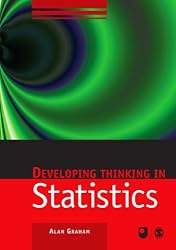
Developing Thinking in Statistics


Alan Graham

Paul Chapman Educational Publishing | 2006 | 288 páginas | PDF | 2,5 Mb

link
link1

This book should prove to be an important addition to the relatively few publications that exist on statistical thinking. It very nicely encourages the reader to take an active learning approach through simultaneously promoting pedagogy with knowledge and skills enhancement in statistics. Understanding what the subject is for and what it can do are crucial in statistical education - by getting the reader to think statistically Mr Graham has provided us with a very readable book that helps to dispel the poor reputation that statistics has acquired over many years' - Professor Neville Davies, Director, Royal Statistical Society Centre for Statistical Education, Nottingham Trent University