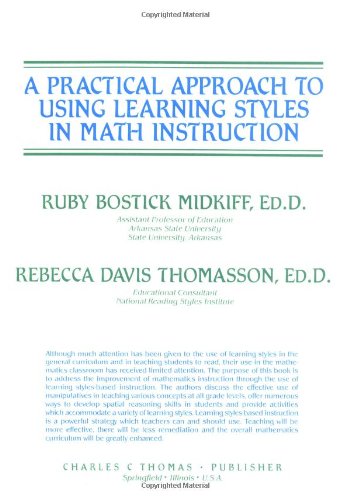
Ruby Bostick Midkiff e Rebecca Davis Thomasson
Charles C Thomas Pub Ltd | 1996 | 132 páginas | rar - pdf | 1,5 Mb
link (password: matav)
CONTENTS
Page
Chapter One INTRODUCTION ....... 3
Chapter Two IMPROVING MATHEMATICS INSTRUCTION ...... 5
Need for Improvement in Math Instruction ..... 5
Why Use Learning Styles? ......... 9
Conclusion ................. 11
Chapter Three LEARNING STYLES IN MATHEMATICS ........... 13
How Can I Implement Learning Styles? ........... 13
Learning Style Models ............ 14
Environmental Stimuli ............. 14
Emotional Stimuli ............ 17
Sociological Stimuli. . .. . . . .. 22
Physical Stimuli .............. 24
Psychological Stimuli. . . . . .. . . . 29
Underachieving Students and Learning Styles .......... 33
Conclusion ............ 34
Chapter Four USE OF MANIPULATIVES FOR INCREASED COMPREHENSION ...... 36
Need for Concrete Experiences. . . .. 36
Manipulatives and Uses ........ 40
Effective Use of Manipulatives ............. 41
Accommodating Learning Style Needs While Using Manipulatives ............ 52
Conclusion ............. 54
Chapter Five DIMINISHING GENDER DIFFERENCES IN MATHEMATICS ACHIEVEMENT .... 55
Physiological Differences. . . .. 56
Societal Expectations ..... 56
Effects of Toys and Games in Achievement of Mathematical Skills ......... 57
Spatial Perception Skills ...... 57
Curriculum and Spatial Reasoning. . ... 58
Spatial Reasoning Skills. . . . . . . 60
Accommodating Learning Style Needs While Using Spatial Reasoning Activities. . 73
Conclusion. . .... 74
Chapter Six MATCHING ACTIVITIES AND LEARNING STYLES ....... 75
Auditory, Small, or Large Group Activities ......... 75
Tactual, Visual, Individual, or Small Group Activities ............ 79
Tactual, Visual Activities. . . . . . . . . . .. 82
Kinesthetic, Visual, Mobility, Individual,
or Small Group Activities ...... 86
Small Group Activities ............... 87
Visual, Auditory, Mobility, Whole Group Activities ..... 90
Conclusion .......... 91
Chapter Seven PORTFOLIO ASSESSMENT IN MATHEMATICS..... 92
Need for Change in Assessment.......... 92
An Overview of Portfolio Assessment.. . . . . . . . . .. 93
Portfolio Contents ...... 96
Accommodating Learning Styles Through Portfolios ..... 104
Portfolio Organization ...... 105
Evaluation of Portfolios ..... 105
Parental Involvement. . . . . . . .. 107
Advantages of Portfolio Assessment ........... 107
Conclusion ....... 108
Chapter Eight CONCLUDING REMARKS ............ 110
References . ...... 113
Index . .. 119
sexta-feira, 4 de abril de 2014
Mathematical Byways in Ayling, Beeling, and Ceiling
Hugh ApSimon
Oxford University Press | 1991 | 11 páginas | pdf | 1,1 Mb
link
link1
Unique and highly original, Mathematical Byways is a work of recreational mathematics, a collection of ingenious problems, their even more ingenious solutions, and extensions of the problems--left unsolved here--to further stretch the mind of the reader. The problems are set within the framework of three villages--Ayling, Beeling, and Ceiling--their inhabitants, and the relationships (spacial and social) between them.The problems can be solved with little formal mathematical knowledge, although most require considerable thought and mental dexterity, and solutions are all clearly expounded in non-technical language. Stimulating and unusual, this book proves what Hugh ApSimon has known all along: mathematics can be fun!
Mathematics and Politics: Strategy, Voting, Power, and Proof
Alan D. Taylor e Allison M. Pacelli
Springer | 2010 -2ª edição | 382 páginas | pdf | 1,2 Mb
link
link1
As a text for an undergraduate mathematics course for nonmajors, Mathematics and Politics requires no prerequisites in either area while the underlying philosophy involves minimizing algebraic computations and focusing instead on some conceptual aspects of mathematics in the context of important real-world questions in political science.
Five major topics are covered including a model of escalation, game theoretic models of international conflict, yes-no voting systems, political power, and social choice. Each topic is discussed in an introductory chapter and revisited in more depth in a later chapter. This new edition has added co-author, Allison Pacelli, and two new chapters on "Fairness" and "More Fairness." The examples and the exercises have been updated and enhanced throughout.
Contents
Preface vii
......................................................................................
1 SOCIAL CHOICE
1.1. Introduction 1
1.2. May’s Theorem for Two Alternatives 4
1.3. Six Examples of Social Choice Procedures 5
1.4. Five Desirable Properties of Social Choice Procedures 10
1.5. Positive Results—Proofs 13
1.6. Negative Results—Proofs 20
1.7. A Glimpse of Impossibility 28
1.8. Approval Voting 31
1.9. Conclusions 34
Exercises 35
......................................................................................
2 YES–NO VOTING
2.1. Introduction 49
2.2. Four Examples of Yes–No Voting Systems 50
2.3. Weighted Voting and the U.N. Security Council 53
2.4. Swap Robustness and the Nonweightedness of the Federal System 56
2.5. Trade Robustness and the Nonweightedness of the Canadian System 59
2.6. Statement of the Characterization Theorem 62
2.7. Conclusion 63
Exercises 64
......................................................................................
3 POLITICAL POWER
3.1. Introduction 71
3.2. The Shapley-Shubik Index of Power 73
3.3. Calculations for the European Economic Community 78
3.4. The Banzhaf Index of Power 83
3.5. Two Methods of Computing Banzhaf Power 85
3.6. The Power of the President 90
3.7. The Chair’s Paradox 98
3.8. Conclusions 104
Exercises 105
......................................................................................
4 CONFLICT
4.1. Introduction 112
4.2. Two-By-Two Games 113
4.3. Dominant Strategies and Nash Equilibria 116
4.4. Prisoner’s Dilemma and the Arms Race 117
4.5. Chicken and the Cuban Missile Crisis 122
4.6. The Yom Kippur War 126
4.7. The Theory of Moves 128
4.8. Conclusions 137
Exercises 137
......................................................................................
5 FAIRNESS
5.1. Introduction 152
5.2. The Problem of Apportionment 153
5.3. Divisor Methods of Apportionment 155
5.4. A Glimpse of Impossibility 157
5.5. Dispute Resolution and Fair Division 159
5.6. An Alternative to Divide-and-Choose 163
5.7. Adjusted Winner 165
5.8. Adjusted Winner and the Middle East 171
5.9. Conclusions 173
Exercises 174
......................................................................................
6 ESCALATION
6.1. Introduction 179
6.2. The Dollar Auction 180
6.3. Game-Tree Analyses 181
6.4. Limitations and Back-of-the-Envelope Calculations 188
6.5. Statement of O’Neill’s Theorem 192
6.6. Vickrey Auctions 195
6.7. Conclusions 199
Exercises 200
......................................................................................
7 MORE SOCIAL CHOICE
7.1. Introduction 205
7.2. Social Welfare Functions 206
7.3. A Generalization of May’s Theorem 209
7.4. Arrow’s Impossibility Theorem 211
7.5. The Gibbard-Satterthwaite Theorem 222
7.6. Single Peakedness—Theorems of Black and Sen 231
7.7. Conclusions 240
Exercises 240
......................................................................................
8 MORE YES–NO VOTING
8.1. Introduction 247
8.2. A Magic Square Voting System 248
8.3. Dimension Theory and the U.S. Federal System 251
8.4. Vector-Weighted Voting Systems 255
8.5. Conclusions 260
Exercises 261
......................................................................................
9 MORE POLITICAL POWER
9.1. Introduction 264
9.2. The Johnston Index of Power 265
9.3. The Deegan–Packel Index of Power 271
9.4. Ordinal Power: Incomparability 275
9.5. Ordinal Power: Comparability 279
9.6. A Theorem On Voting Blocs 285
9.7. Conclusions 288
Exercises 289
......................................................................................
10 MORE CONFLICT
10.1. Introduction 293
10.2. Models of Deterrence 293
10.3. A Probabilistic Model of Deterrence 298
10.4. Two-Person Zero-Sum Games 303
10.5. Conclusions 309
Exercises 309
......................................................................................
11 MORE FAIRNESS
11.1. Introduction 314
11.2. Efficiency in Adjusted Winner 315
11.3. Adjusted Winner and Manipulability 319
11.4. Fair Division Procedures for Three or More Parties 322
11.5. Envy-Free Procedures 325
11.6. Envy-Free Procedures for Four or More Parties 328
11.7. Another Impossibility Result 330
11.8. Conclusions 331
Exercises 332
Contents xv
......................................................................................
12 MORE ESCALATION
12.1. Introduction 337
12.2. Statement of the Strong Version of O’Neill’s Theorem 337
12.3. Proof (By Mathematical Induction) of the Strong Version of O’Neill’s Theorem 344
12.4. Vickrey Auctions as a Generalized Prisoner’s Dilemma 346
12.5. Conclusions 348
Exercises 349
Attributions 350
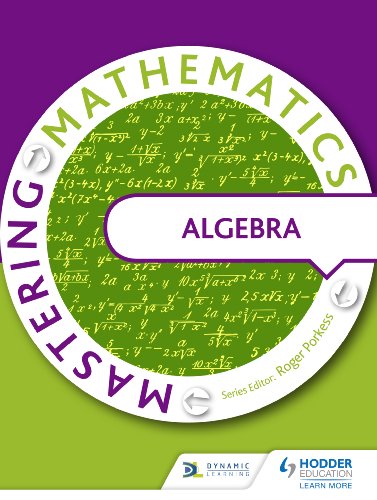
Mastering Mathematics - Algebra
Hodder Education | 2014 | 237 páginas | rar - pdf | 9,13 Mb
link (password: matav)
Contents
Strand 1 Starting algebra 01
Unit 1 Making and using word formulae 02
Unit 2 Using letters 10
Unit 3 Combining variables 19
Unit 4 Working with formulae 26
Unit 5 Setting up and solving simple equations 35
Unit 6 Using brackets 47
Unit 7 Working with more complex equations 56
Unit 8 Solving equations with brackets 64
Unit 9 Simplifying harder expressions 71
Unit 10 Using complex formulae 78
Strand 2 Sequences 89
Unit 1 What is a sequence? 90
Unit 2 Generating sequences 100
Unit 3 Linear sequences 106
Unit 4 Special sequences 118
Unit 5 Quadratic sequences 126
Strand 3 Functions and graphs 133
Unit 1 Real-life graphs 134
Unit 2 Plotting graphs of linear functions 154
Unit 3 The equation of a straight line 164
Unit 4 Plotting quadratic and cubic graphs 178
Strand 4 Algebraic methods 187
Unit 1 Trial and improvement 188
Unit 2 Linear inequalities 196
Unit 3 Solve pairs of equations by substitution 206
Unit 4 Solve simultaneous equations using elimination 212
Unit 5 Using graphs to solve simultaneous equations
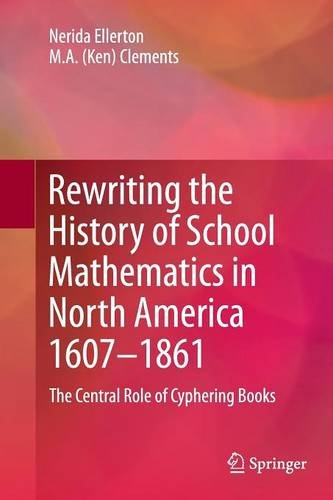
Rewriting the History of School Mathematics in North America 1607-1861: The Central Role of Cyphering Books
Nerida Ellerton e M.A. (Ken) Clements
Springer | 2012 | páginas | pdf | 5,5 Mb
link1
The focus of this book is the fundamental influence of the cyphering tradition on mathematics education in North American colleges, schools, and apprenticeship training classes between 1607 and 1861. It is the first book on the history of North American mathematics education to be written from that perspective. The principal data source is a set of 207 handwritten cyphering books that have never previously been subjected to careful historical analysis.
Contents
The Historical Challenge
Development of a Tradition
Translating the Cyphering-Book Tradition to North America
Formulating the Research Questions
The Principal Data Set
Ending a 600-Year Tradition: The Demise of the Cyphering.
Contents
The Historical Challenge
Development of a Tradition
Translating the Cyphering-Book Tradition to North America
Formulating the Research Questions
The Principal Data Set
Ending a 600-Year Tradition: The Demise of the Cyphering.
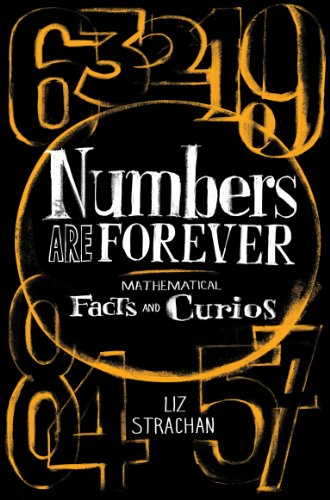
Numbers Are Forever
Liz Strachan
Constable | 2014 | 289 páginas | rar - epub | 873 kb
link (password: matav)
This book is only about numbers - that is, whole numbers and nothing but the whole numbers, which start from from 0, 1, 2, 3, 4... and go on forever. Here you can meet perfect numbers, happy numbers, lucky, untouchable, weird, narcissistic, evil and deficient numbers, not to mention nice Friedmans and multi-legged repunits, as well as primes and their cousins, the sexy primes. It is also full of fascinating facts and curios, prime number conjectures, the sieve of Eratosthenes, the Fibonacci series, and much more besides. This is an accessible, clearly explained approach which will appeal to recreational maths enthusiasts, puzzle solvers, and mathematicians of all ages.
Contents
Introduction;
The Very Beginning Starts with Zero;
Prime Numbers;
Goldbach's Conjecture;
1; 2;
The Binary System; Square Numbers;
Indices;
Standard Form;
A Twentieth-century Conjecture;
3;
Cubes and Cube Roots;
Mersenne Numbers;
Fermat's Last Theorem;
4; 5;
The Fibonacci Sequence;
6;
Perfect Numbers;
7;
Happy Numbers;
8; A
Review of Polygonal Numbers;
Factorial!;
∞;
9; 11; 12;
Abundant Numbers;
Deficient Numbers;
13;
16 and the Luhn Algorithm;
Leyland Numbers;
17; 19; 27; 28; 29;
30 and the Giuga Numbers;
31; 37; 41;
47, 497, 4997 et al.
The Magic 48^2
70 and Other Weird Numbers;
71; 74; 75; 81; 89; 97;
Reciprocals;
100;
101 and Its Other Palindromic Pals;
105; 109;
112 and the Rest of the Family;
118;
The 123 Curiosity;
127: De Polignac's Great Disappointment;
132; 136; 144;
Factorial Fun with 145;
153 and the Narcissistic Numbers;
The Friedman Numbers;
197; 199;
220 and Amicable Pairs; Pascal's Triangle;
232, 233 and 234;
2642 and Other Palindromic Squares;
365; 512;
561 and the Carmichael Numbers;
593;
642 and 643: The Amazing Difference between 2 Cubes;
648 and the Other Members of the Club;
666 703 and the Kaprekar Numbers 1000;
The Effect of Multiplying by 1001;
1033 and Other Constant Base Powers;
1089;
1138 Comes Full Circle After a 4th Power Journey;
1233 and Special Relationships;
1676;
Harshad Numbers;
Self Numbers;
Ramanujan and the Taxi Cab Number 1729;
Brocard's Problem;
Lucky Numbers;
1961;
The Untouchables;
2187 and Family Members;
2519; 2592;
The Amazing 2880;
3367;
435 and Münchhausen;
4884, Palindrome by Reversal;
4913;
5777 and 5993 (2 Flies in the Ointment);
9109;
12,496 and the Sociable Set;
19,937:
A Circular Prime;
27,594; 40,585;
Easy Adding;
142,857; 147,852 221,859510,510;
2,646,798; 87,539,318 --Another Taxi Cab Number;
Interesting 8-Digit Numbers;
123,456,789;
'Miracle' Numbers;
One Billion (1,000,000,000);
1,000,000,007;
Postscript;
Glossary
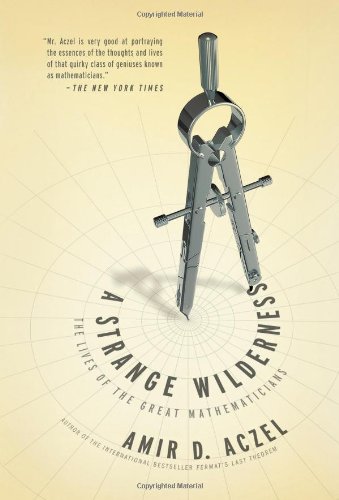
A Strange Wilderness: The Lives of the Great Mathematicians
Amir D. Aczel
Sterling | 2011 | 304 páginas | 304 páginas | rar - epub | 9,51 Mb
link (password: matav)
Contents
Hellenic foundations.
God is number ; Plato's Academy ; Alexandria
The East.
The House of Wisdom ; Medieval China
Renaissance mathematics.
Italian shenanigans ; Heresy
To calculus and beyond.
The gentleman soldier ; The greatest rivalry ; Geniuses of the Enlightenment
Upheaval in France.
Napoleon's mathematicians ; Duel at dawn
Toward a new mathematics.
Infinity and mental illness ; Unlikely heroes ; The strangest wilderness.
Sterling | 2011 | 304 páginas | 304 páginas | rar - epub | 9,51 Mb
link (password: matav)
“Mathematics is not a careful march down a well-cleared highway, but a journey into a strange wilderness, where the explorers often get lost.”-- Mathematics historian W. S. Anglin
From the internationally bestselling author of Fermat's Last Theorem comes a landmark publication on the eccentric lives of the foremost mathematicians in history..
From Archimedes' eureka moment to Alexander Grothendieck's seclusion in the Pyrenees, bestselling author Amir Aczel selects the most compelling stories in the history of mathematics, creating a colorful narrative that explores the quirky personalities behind some of the most groundbreaking, enduring theorems.
This is not your dry “college textbook” account of mathematical history; it bristles with tales of duels, battlefield heroism, flamboyant arrogance, pranks, secret societies, imprisonment, feuds, theft, and some very costly errors of judgment. (Clearly, genius doesn't guarantee street smarts.) Ultimately, readers will come away entertained, and with a newfound appreciation of the tenacity, complexity, eccentricity, and brilliance of the mathematical genius.
Contents
Hellenic foundations.
God is number ; Plato's Academy ; Alexandria
The East.
The House of Wisdom ; Medieval China
Renaissance mathematics.
Italian shenanigans ; Heresy
To calculus and beyond.
The gentleman soldier ; The greatest rivalry ; Geniuses of the Enlightenment
Upheaval in France.
Napoleon's mathematicians ; Duel at dawn
Toward a new mathematics.
Infinity and mental illness ; Unlikely heroes ; The strangest wilderness.
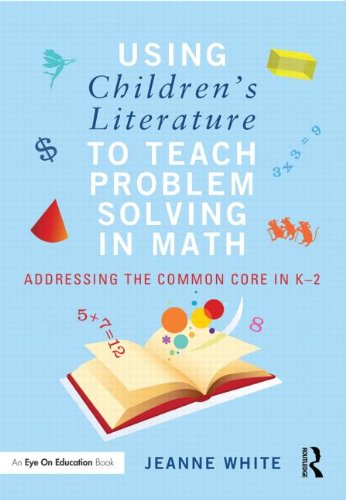
Using Children’s Literature to Teach Problem Solving in Math: Addressing the Common Core in K–2
Jeanne White
About the Author ix
Acknowledgments xi
Introduction: Using Children’s Literature to Teach
Problem Solving in Math 1
Types of Problem Solvers 2
Creating a Problem-Solving Community 3
1 Make Sense and Persevere 5
Early Problem Solvers 6
Seven Blind Mice—Decomposing Numbers 6
Developing Problem Solvers 10
MATH-Terpieces: The Art of Problem Solving—Using 2 and 3 Addends to Find a Sum 10
Advanced Problem Solvers 12
Splash!—Representing Addition and Subtraction Problems 12
2 Reason Abstractly 15
Early Problem Solvers 16
Ten Flashing Fireflies—Exploring the Commutative Property of Addition 16
Rooster’s Off to See the World—Exploring the Associative Property of Addition 17
Developing Problem Solvers 19
Each Orange Had 8 Slices—Demonstrating Fluency for Addition 19
Advanced Problem Solvers 21
How Many Mice?—Representing and Solving Problems With Addition and Subtraction 21
3 Construct Arguments 23
Early Problem Solvers 24
How Many Seeds in a Pumpkin?—Skip-Counting and Comparing Three-Digit Numbers 24
Developing Problem Solvers 27
Mall Mania—Adding Two-Digit Numbers Using Various Strategies 27
Advanced Problem Solvers 29
Spaghetti and Meatballs for All!—Creating Composite Shapes 29
4 Create a Model 33
Early Problem Solvers 33
The Doorbell Rang—Representing Addition in Various Ways 33
Developing Problem Solvers 38
Bigger, Better, Best!—Using Addition With Rectangular Arrays 38
Advanced Problem Solvers 42
Alexander, Who Used to be Rich Last Sunday—Solving Word Problems With Money 42
5 Use Mathematical Tools 47
Early Problem Solvers 48
Earth Day-Hooray!—Using Place Value to Add and Subtract 48
Developing Problem Solvers 52
Mummy Math—Recognizing Attributes of 3D Objects 52
Advanced Problem Solvers 54
Measuring Penny—Measuring in Standard and Nonstandard Units 54
6 Attend to Precision 59
Early Problem Solvers 59
If You Were a Quadrilateral—Identifying Quadrilaterals 59
Developing Problem Solvers 62
Lemonade for Sale—Representing and Interpreting Data 62
Advanced Problem Solvers 65
Measuring Penny—Relating Addition and Subtraction to Length 65
7 Look for Structure 69
Early Problem Solvers 69
The Button Box—Identifying Attributes for Sorting 69
Developing Problem Solvers 73
Patterns in Peru—Describing Relative Positions 73
Advanced Problem Solvers 76
The Greedy Triangle—Exploring Attributes of Shapes 76
8 Apply Repeated Reasoning 81
Early Problem Solvers 82
Bunches of Buttons: Counting by Tens—Counting to 100 by Tens 82
Developing Problem Solvers 85
How Big is a Foot?—Iterating Length Units 85
Advanced Problem Solvers 87
The King’s Commissioners—Representing Tens and Ones 87
Next Steps 91
Appendix: Common Addition and Subtraction Situations 93
References 95
Routledge | 2013 | 111 páginas | rar - pdf | 516 kb
link (password: matav)
Learn how to use children’s literature to engage students in mathematical problem solving. Teaching with children’s literature helps build a positive math environment, encourages students to think abstractly, shows students the real-world purposes of math, builds content-area literacy, and appeals to students with different learning styles and preferences. This practical book provides specific children’s book ideas and standards-based lessons that you can use to bring math alive in your own classroom.
Special Features:
- Step-by-step ideas for using children’s literature to teach lessons based on the Common Core Standards for Mathematical Content in kindergarten, first, and second grade
- Scripting, modeling, and discussion prompts for each lesson
- Information on alignment to the Standards for Mathematical Practice and how to put them into student-friendly language
- Reference to a wide variety of specific children’s literature that can provide a context for young children learning to engage in the standards
- Differentiated activities for students who are early, developing, and advanced problem solvers
About the Author ix
Acknowledgments xi
Introduction: Using Children’s Literature to Teach
Problem Solving in Math 1
Types of Problem Solvers 2
Creating a Problem-Solving Community 3
1 Make Sense and Persevere 5
Early Problem Solvers 6
Seven Blind Mice—Decomposing Numbers 6
Developing Problem Solvers 10
MATH-Terpieces: The Art of Problem Solving—Using 2 and 3 Addends to Find a Sum 10
Advanced Problem Solvers 12
Splash!—Representing Addition and Subtraction Problems 12
2 Reason Abstractly 15
Early Problem Solvers 16
Ten Flashing Fireflies—Exploring the Commutative Property of Addition 16
Rooster’s Off to See the World—Exploring the Associative Property of Addition 17
Developing Problem Solvers 19
Each Orange Had 8 Slices—Demonstrating Fluency for Addition 19
Advanced Problem Solvers 21
How Many Mice?—Representing and Solving Problems With Addition and Subtraction 21
3 Construct Arguments 23
Early Problem Solvers 24
How Many Seeds in a Pumpkin?—Skip-Counting and Comparing Three-Digit Numbers 24
Developing Problem Solvers 27
Mall Mania—Adding Two-Digit Numbers Using Various Strategies 27
Advanced Problem Solvers 29
Spaghetti and Meatballs for All!—Creating Composite Shapes 29
4 Create a Model 33
Early Problem Solvers 33
The Doorbell Rang—Representing Addition in Various Ways 33
Developing Problem Solvers 38
Bigger, Better, Best!—Using Addition With Rectangular Arrays 38
Advanced Problem Solvers 42
Alexander, Who Used to be Rich Last Sunday—Solving Word Problems With Money 42
5 Use Mathematical Tools 47
Early Problem Solvers 48
Earth Day-Hooray!—Using Place Value to Add and Subtract 48
Developing Problem Solvers 52
Mummy Math—Recognizing Attributes of 3D Objects 52
Advanced Problem Solvers 54
Measuring Penny—Measuring in Standard and Nonstandard Units 54
6 Attend to Precision 59
Early Problem Solvers 59
If You Were a Quadrilateral—Identifying Quadrilaterals 59
Developing Problem Solvers 62
Lemonade for Sale—Representing and Interpreting Data 62
Advanced Problem Solvers 65
Measuring Penny—Relating Addition and Subtraction to Length 65
7 Look for Structure 69
Early Problem Solvers 69
The Button Box—Identifying Attributes for Sorting 69
Developing Problem Solvers 73
Patterns in Peru—Describing Relative Positions 73
Advanced Problem Solvers 76
The Greedy Triangle—Exploring Attributes of Shapes 76
8 Apply Repeated Reasoning 81
Early Problem Solvers 82
Bunches of Buttons: Counting by Tens—Counting to 100 by Tens 82
Developing Problem Solvers 85
How Big is a Foot?—Iterating Length Units 85
Advanced Problem Solvers 87
The King’s Commissioners—Representing Tens and Ones 87
Next Steps 91
Appendix: Common Addition and Subtraction Situations 93
References 95
Elementary Statistics: Picturing the World
Ron Larson e Betsy Farber
Pearson | 2014 - 6ª edição |705 páginas | rar - pdf |12,4 Mb
link (password : matav)
5.ª edição - 2012
Statistics opens a window to the modern world, and this market-leading text makes it easy to understand! Larson and Farber’s Elementary Statistics: Picturing the World, Sixth Edition, provides stepped out instruction, real-life examples and exercises, and the use of technology to offer the most accessible approach. The authors carefully develop theory through strong pedagogy, and examples show how statistics is used to picture and describe the world. In keeping with the premise that students learn best by doing, it includes more than 210 examples and more than 2300 exercises, to make the concepts of statistics a part of students’ everyday lives.
Contents
PART ONE. DESCRIPTIVE STATISTICS
1. Introduction to Statistics
1.1. An Overview of Statistics
1.2. Data Classification
Case Study: Rating Television Shows in the
United States
1.3. Data Collection and Experimental Design
Activity: Random Numbers
Uses and Abuses
Chapter Summary
Review Exercises
Chapter Quiz
Chapter Test
Real Statistics-Real Decisions-Putting It All Together
History of Statistics-Timeline
Technology: Using Technology in Statistics
2. Descriptive Statistics
2.1. Frequency Distributions and Their Graphs
2.2. More Graphs and Displays
2.3. Measures of Central Tendency
Activity: Mean Versus Median
2.4. Measures of Variation
Activity: Standard Deviation
Case Study: Business Size
2.5. Measures of Position
Uses and Abuses
Chapter Summary
Review Exercises
Chapter Quiz
Chapter Test
Real Statistics-Real Decisions-Putting It All Together
Technology: Parking Tickets
Using Technology to Determine Descriptive
Statistics
Cumulative Review: Chapters 1 and 2
PART TWO. PROBABILITY & PROBABILITY DISTRIBUTIONS
3. Probability
3.1. Basic Concepts of Probability and Counting
Activity: Simulating the Stock Market
3.2. Conditional Probability and the Multiplication Rule
3.3. The Addition Rule
Activity: Simulating the Probability of Rolling a 3 or 4
Case Study: United States Congress
3.4. Additional Topics in Probability and Counting
Uses and Abuses
Chapter Summary
Review Exercises
Chapter Quiz
Chapter Test
Real Statistics-Real Decisions-Putting It All Together
Technology: Simulation: Composing Mozart
Variations with Dice
4. Discrete Probability Distributions
4.1. Probability Distributions
4.2. Binomial Distributions
Activity: Binomial Distribution
Case Study: Distribution of Number of Hits in
Baseball Games
4.3. More Discrete Probability Distributions
Uses and Abuses
Chapter Summary
Review Exercises
Chapter Quiz
Chapter Test
Real Statistics-Real Decisions-Putting It All Together
Technology: Simulation: Using Poisson
Distributions as Queuing Models
5. Normal Probability Distributions
5.1. Introduction to Normal Distributions and the Standard Normal Distribution
5.2. Normal Distributions: Finding Probabilities
5.3. Normal Distributions: Finding Values
Case Study: Birth Rates in America
5.4. Sampling Distributions and the Central Limit Theorem
Activity: Sampling Distributions
5.5. Normal Approximations to Binomial Distributions
Uses and Abuses
Chapter Summary
Review Exercises
Chapter Quiz
Chapter Test
Real Statistics-Real Decisions-Putting It All Together
Technology: Simulation: Age Distribution in the
United States
Cumulative Review: Chapters 3 to 5
PART THREE. STATISTICAL INFERENCE
6. Confidence Intervals
6.1. Confidence Intervals for the Mean (¡ Known)
6.2. Confidence Intervals for the Mean (¡ Unknown)
Activity: Confidence Intervals for a Mean
Case Study: Marathon Training
6.3. Confidence Intervals for Population Proportions
Activity: Confidence Intervals for a Proportion
6.4. Confidence Intervals for Variance and Standard Deviation
Uses and Abuses
Chapter Summary
Review Exercises
Chapter Quiz
Chapter Test
Real Statistics-Real Decisions-Putting It All Together
Technology: Simulation: Most Admired Polls
Using Technology to Construct Confidence
Intervals
7. Hypothesis Testing with One Sample
7.1. Introduction to Hypothesis Testing
7.2. Hypothesis Testing for the Mean (¡ Known)
7.3. Hypothesis Testing for the Mean (¡ Unknown)
Activity: Hypothesis Test for a Mean
Case Study: Human Body Temperature: What's
Normal?
7.4. Hypothesis Testing for Proportions
Activity: Hypothesis Test for a Proportion
7.5. Hypothesis Testing for Variance and Standard Deviation
A Summary of Hypothesis Testing
Uses and Abuses
Chapter Summary
Review Exercises
Chapter Quiz
Chapter Test
Real Statistics-Real Decisions-Putting It All Together
Technology: The Case of the Vanishing Women
Using Technology to Perform Hypothesis Tests
8. Hypothesis Testing with Two Samples
8.1. Testing the Difference Between Means (Independent Samples, ¡1 and ¡2 Known)
8.2. Testing the Difference Between Means (Independent Samples, ¡1 and ¡2 Unknown)
8.3. Testing the Difference Between Means (Dependent Samples)
8.4. Testing the Difference Between Proportions
A Summary of Hypothesis Testing
Uses and Abuses
Chapter Summary
Review Exercises
Chapter Quiz
Chapter Test
Real Statistics-Real Decisions-Putting It All Together
Technology: Tails over Heads
Using Technology to Perform Two-Sample
Hypothesis Tests
Cumulative Review: Chapters 6 to 8
PART FOUR. MORE STATISTICAL INFERENCE
9. Correlation and Regression
9.1 Correlation
Activity: Correlation by Eye
9.2. Linear Regression
Activity: Regression by Eye
Case Study: Correlation by Body Measurements
9.3. Measures of Regression and Prediction Intervals
9.4. Multiple Regression
A Summary of Hypothesis Testing
Uses and Abuses
Chapter Summary
Review Exercises
Chapter Quiz
Chapter Test
Real Statistics-Real Decisions-Putting It All Together
Technology: Nutrients in Breakfast Cereals
10. Chi-Square Tests and the F-Distribution
10.1. Goodness-of-Fit Test
10.2. Independence
Case Study: Food Safety Survey
10.3. Comparing Two Variances
10.4. Analysis of Variance
Uses and Abuses
Chapter Summary
Review Exercises
Chapter Quiz
Chapter Test
Real Statistics-Real Decisions-Putting It All Together
Technology: Teacher Salaries
Cumulative Review: Chapters 9 and 10
Subscrever:
Mensagens (Atom)