sábado, 22 de agosto de 2009

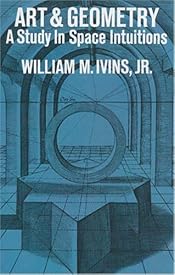
Art and Geometry: A Study in Space Intuitions


(Dover Books on Art History)

William M. Ivins

Dover Publications | 1964 | 123 páginas | PDF | 16 Mb

link

djvu | 1,96 Mb

link

Descrição:
A highly stimulating study of the sometimes startling interrelationships between art and mathematics as observed by the ancient Greeks, Renaissance theorists, artists such as Albrecht Dürer and many others throughout history.

The Nuts and Bolts of Proofs: An Introduction to Mathematical Proofs

Third Edition
Antonella Cupillari

Academic Press | 2005 | 192 páginas | pdf |

link direto
link
4shared.com


Descrição: The Nuts and Bolts of Proof instructs students on the basic logic of mathematical proofs, showing how and why proofs of mathematical statements work. It provides them with techniques they can use to gain an inside view of the subject, reach other results, remember results more easily, or rederive them if the results are forgotten.A flow chart graphically demonstrates the basic steps in the construction of any proof and numerous examples illustrate the method and detail necessary to prove various kinds of theorems.

* The "List of Symbols" has been extended.
* Set Theory section has been strengthened with more examples and exercises.
* Addition of "A Collection of Proofs"

How to Prove It: A Structured Approach


Daniel J. Velleman


Cambridge University Press | 2006 | 398 páginas | pdf | 23 Mb

link direto
lindholm.ca (link direto)
link

Conteúdos:

Introduction -- Sentential logic -- 1.1 Deductive reasoning and logical connectives -- 1.2 truth tables -- 1.3 variables and sets -- 1.4 operations on sets -- 1.5 The conditional and biconditional connectives -- Quantificational logic -- 2.1 Quantifiers -- 2.2 Equivalences involving quantifiers -- 2.3 More operations on sets -- Proofs -- 3.1 proof strategies -- 3.2 proofs involving negations and conditionals -- 3.3 Proofs involving quantifiers -- 3.4 Proofs involving conjunctions and biconditionals -- 3.5 Proofs involving disjunctions -- 3.6 Existence and uniqueness proofs -- 3.7 More examples of proofs -- Relations -- 4.1 Ordered pairs and cartesian products -- 4.2 Relations -- 4.3 More about relations -- 4.4 Ordering relations -- 4.5 Closures -- 4.6 Equivalence relations -- Functions -- 5.1 Functions -- 5.2 One-to-one and onto -- 5.3 Inverses of functions -- 5.4 Images and inverse images: a research project -- Mathematical induction -- 6.1 Proof by mathematical induction -- 6.2 More examples -- 6.3 Recursion -- 6.4 Strong induction -- 6.5 Closures again -- Infinite sets -- 7.1 Equinumerous sets -- 7.2 Countable and uncountable sets -- 7.3 The cantor--Schroder--Bernstein theorem -- Appendix 1: Solutions to selected exercises -- Appendix 2: Proof designer -- Suggestions for further reading -- Summary for proof techniques -- Index.

Introduction to Proofs in Mathematics

James Franklin, Albert Daoud

Prentice Hall | 1990 | 280 páginas | DjVu | 1,4 Mb

link
link1

online: maths.unsw (em capítulos)


How to Read and Do Proofs: An Introduction to Mathematical Thought Process


Daniel Solow

John Wiley& Sons | 1982 | 172 páginas | Djvu | 1,8 Mb

link
link1


Descrição: This straightforward guide describes the main methods used to prove mathematical theorems. Shows how and when to use each technique such as the contrapositive, induction and proof by contradiction. Each method is illustrated by step-by-step examples. The Second Edition features new chapters on nested quantifiers and proof by cases, and the number of exercises has been doubled with answers to odd-numbered exercises provided. This text will be useful as a supplement in mathematics and logic courses. Prerequisite is high-school algebra.

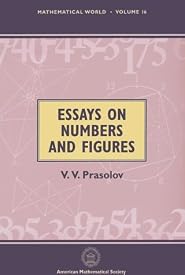
Essays on Numbers and Figures


(Mathematical World)
V. V. Prasolov

American Mathematical Society | 2000 | 75 páginas | Djvu | 554 kb

link
link1
link2

Descrição: This is the English translation of the book originally published in Russian. It contains 20 essays, each dealing with a separate mathematical topic. The topics range from brilliant mathematical statements with interesting proofs, to simple and effective methods of problem-solving, to interesting properties of polynomials, to exceptional points of the triangle. Many of the topics have a long and interesting history. The author has lectured on them to students worldwide. The essays are independent of one another for the most part, and each presents a vivid mathematical result that led to current research in number theory, geometry, polynomial algebra, or topology.

On The Study And Difficulties of Mathematics


Augustus De Morgan

on-line: archive.org (The Open Court Publishing Company, 1910)

Kessinger Publishing | 2004 | 300 páginas

Descrição: 1910. Augustus De Morgan was an important innovator in the field of logic. In addition, he made many contributions to the field of mathematics and the chronicling of the history of mathematics. He writes in the Preface that his object has been to notice particularly several points in the principles of algebra and geometry, which have not obtained their due importance in our elementary works on these sciences. Contents: On Arithmetical Notation; Elementary Rules of Arithmetic; Arithmetical Fractions; Decimal Fractions; Algebraical Notation and Principles; Elementary Rules of Algebra; Equations of the First Degree; On the Negative Sign, etc.; Equations of the Second Degree; On Roots in General, and Logarithms; On the Study of Algebra; On the Definitions of Geometry; On Geometrical Reasoning; On Axioms; On Proportion; and Application of Algebra to the Measurement of Lines, Angles, Proportion of Figures and Surfaces. See other titles by this author available from Kessinger Publishing.

Dictionary of Mathematics Terms

(Barron's Professional Guides)
Douglas Downing

Barron's Educational Series, Inc. | 2009 | 408 páginas | PDF

f3.tiera.ru (link direto)
sma1pekalongan.sch.id (link direto)
link

Descrição: This quick-reference dictionary for math students, teachers, engineers, and statisticians defines more than 700 terms related to algebra, geometry, analytic geometry, trigonometry, probability, statistics, logic, and calculus. It also lists and defines mathematical symbols, includes a brief table of integrals, and describes how to derive key theorems. Filled with illustrative diagrams and equations.

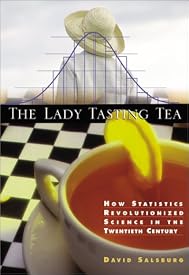
The Lady Tasting Tea: How Statistics Revolutionized Science in the Twentieth Century


David Salsburg

W. H. Freeman | 2001 | 352 páginas | djvu | 6 Mb

link
link1

PDF - 4,5 Mb
link
link1
4shared.com

Descrição: In the 1840s, astronomers used Newton’s mathematical laws to predict the existence of another planet. And Neptune was discovered--right where it was supposed to be. For the first time, the universe seemed to make sense. It ran like a clock and scientists understood the mechanics perfectly. But errors began to mount, and by the end of the nineteenth century the clockwork universe had broken down. Gradually, a new paradigm arose in its place—the statistical model of reality. In THE LADY TASTING TEA, David Salsburg tells the fascinating story of how statistics has revolutionized science in the twentieth century. Leading the reader through a maze of randomness and probability, the author clearly explains the nature of statistical models, where they came from, how they are applied to scientific problems, and whether they are true descriptions of reality. Salsburg also discusses the flaws inherent in a statistical model and the serious problems they’ve created for scientists as we enter the twenty-first century. Written for the layperson, THE LADY TASTING TEA contains no mathematical formulas. It does contain short, easily digestible chapters, each one built around one of the men or women who participated in the statistical revolution. While readers will not learn enough to engage in statistical analysis (that requires several years of graduate study) they will come away with some understanding of the basic philosophy behind the statistical view of science. And to start, we meet a lady tasting tea...At a summer tea party in Cambridge, England, a guest states that tea poured into milk tastes different from milk poured into tea. Her notion is shouted down by the scientific minds of the group. But one man, Ronald Fisher, proposes to scientifically test the hypothesis. There is no better person to conduct such an experiment, for Fisher is a pioneer in the field of statistics. The Lady Tasting Tea spotlights not only Fisher's theories but also the revolutionary ideas of dozens of men and women which affect our modern everyday lives. Writing with verve and wit, David Salsburg traces breakthroughs ranging from the rise and fall of Karl Pearson's theories to the methods of quality control that rebuilt postwar Japan's economy, including a pivotal early study on the capacity of a small beer cask at the Guinness brewing factory. Brimming with intriguing tidbits and colorful characters, The Lady Tasting Tea salutes the spirit of those who dared to look at the world in a new way.

The Statistical Pioneers


James W. Tankard

Schenkman Books Inc. | 1984 | 168 páginas | DjVu | 1,32 MB

link direto
link
link1

This book is intended to be a supplementary textbook in statistics classes presently being taught in many fields. Its purpose is to place the major ideas of statistics in their historical setting and tell the stories of the men who developed them.

Statistics is often taught with little reference to the men who developed the basic ideas of the field. Frequently the correlation coefficient is discussed without reference to Sir Francis Galton, the chi-square test without mention of Karl Pearson, the t-test without a discussion of William Sealy Gosset, and analysis of var- iance without consideration of Sir Ronald Fisher. Even statisticstextbooks typically neglect these thinkers who did so much to establish a discipline.

The Statistical Pioneers was written to show that the major ideas in statistics were developed by human beings, and to bring out their human qualities. The book should also serve the purpose of making the statistical tests themselves easier to understand by describing the practical problems they were invented to solve. Fi- nally, the book attempts to show something of the origin of statis- tical ideas by locating them in the social and cultural context from which they arose.