domingo, 30 de outubro de 2011

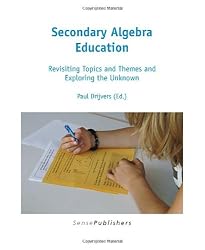
Secondary Algebra Education


Paul Drijvers

Sense Publishers | 2010| 234 páginas | pdf | 5,5 Mb

link


Página de Paul Drijvers: fi.uu.nl

Nowadays, algebra education is subject to worldwide scrutiny. Different opinions on its goals, approaches and achievements are at the heart of debates among teachers, educators, researchers and decision makers. What should the teaching of algebra in secondary school mathematics look like? Should it focus on procedural skills or on algebraic insight? Should it stress practice or integrate technology? Do we require formal proofs and notations, or do informal representations suffice? Is algebra in school an abstract subject, or does it take its relevance from application in (daily life) contexts? What should secondary school algebra education that prepares for higher education and professional practice in the twenty-first century look like?
This book addresses these questions, and aims to inform in-service and future teachers, mathematics educators and researchers on recent insights in the domain, and on specific topics and themes such as the historical development of algebra, the role of productive practice, and algebra in science and engineering in particular. The authors, all affiliated with the Freudenthal Institute for Science and Mathematics Education in the Netherlands, share a common philosophy, which acts as a – sometimes nearly invisible – backbone for the overall view on algebra education: the theory of realistic mathematics education. From this point of departure, different perspectives are chosen to describe the opportunities and pitfalls of today’s and tomorrow’s algebra education. Inspiring examples and reflections illustrate current practice and explore the unknown future of algebra education to appropriately meet students’ needs.

CONTENTS
Preface 3
1. Algebra education: Exploring topics and themes 5
Paul Drijvers, Aad Goddijn, Martin Kindt
2. Algebra from Ahmes to applet 27
Aad Goddijn
3. From arithmetic to algebra 69
Truus Dekker, Maarten Dolk
4. Patterns and formulas 89
Paul Drijvers, Truus Dekker, Monica Wijers
5. Restrictions in algebra 101
David Webb, Mieke Abels
6. Algebra in function 119
Michiel Doorman, Paul Drijvers
7. Principles of practice 137
Martin Kindt
8. Algebra and technology 179
Paul Drijvers, Peter Boon, Martin van Reeuwijk
9. Algebra in science and engineering 203
Henk van der Kooij, Aad Goddijn
Index 227

Pi: A Biography of the World's Most Mysterious Number

Alfred S. Posamentier, Ingmar Lehmann

Prometheus Books | 2004 | 324 páginas | Djvu | 3,4 Mb

link
link1
scribd.com

pdf - 6 Mb - link

PDF - 65 Mb
link1
rapidgator.net

Comentário em: MAA

In this delightful layperson's introduction to one of math's most interesting phenomena, Drs Posamentier and Lehmann review p's history from pre-biblical times to the 21st century, the many amusing and mind-boggling ways of estimating p over the centuries, quirky examples of obsessing about p (including an attempt to legislate its exact value), and useful applications of p in everyday life, including statistics.

sexta-feira, 28 de outubro de 2011

Reading, Writing, and Proving: A Closer Look at Mathematics


2nd Edition (Undergraduate Texts in Mathematics)
Ulrich Daepp, Pamela Gorkin
2.ª edição

Springer | 2011 | 391 páginas | pdf | 5 Mb

link direto
link

This book, which is based on Polya's method of problem solving, aids students in their transition from calculus (or precalculus) to higher-level mathematics. The book begins by providing a great deal of guidance on how to approach definitions, examples, and theorems in mathematics and ends with suggested projects for independent study. Students will follow Polya's four step approach: analyzing the problem, devising a plan to solve the problem, carrying out that plan, and then determining the implication of the result. In addition to the Polya approach to proofs, this book places special emphasis on reading proofs carefully and writing them well. The authors have included a wide variety of problems, examples, illustrations and exercises, some with hints and solutions, designed specifically to improve the student's ability to read and write proofs. Historical connections are made throughout the text, and students are encouraged to use the rather extensive bibliography to begin making connections of their own. While standard texts in this area prepare students for future courses in algebra, this book also includes chapters on sequences, convergence, and metric spaces for those wanting to bridge the gap between the standard course in calculus and one in analysis.

Contents
Chapter 1: The How, When, and Why of Mathematics
Solutions to Exercises
Spotlight: George Pólya
Chapter 2: Logically Speaking
Chapter 3: Introducing the Contrapositive and Converse
Chapter 4: Set Notation and Quantifiers
Chapter 5: Proof Techniques
Chapter 6: Sets
Spotlight: Paradoxes
Chapter 7: Operations on Sets
Chapter 8: More on Operations on Sets
Chapter 9: The Power Set and the Cartesian Product
Tips on Writing Mathematics
Chapter 10: Relations
Tips on Reading Mathematics
Chapter 11: Partitions
Tips on Putting It All Together
Chapter 12: Order in the Reals
Chapter 13: Consequences of the Completeness of R
Tips: You Solved It. Now What?
Chapter 14: Functions, Domain, and Range
Spotlight: The Definition of Function
Chapter 15: Functions, One-to-One, and Onto
Chapter 16: Inverses
Chapter 17: Images and Inverse Images
Spotlight: Minimum or Infimum?
Chapter 18: Mathematical Induction
Chapter 19: Sequences
Chapter 20: Convergence of Sequences of Real Numbers
Chapter 21: Equivalent Sets
Chapter 22: Finite Sets and an Infinite Set
Chapter 23:Countable and Uncountable Sets
Chapter 24: The Cantor–Schröder–Bernstein Theorem
Spotlight: The Continuum Hypothesis
Chapter 25:Metric Spaces
Chapter 26: Getting to Know Open and Closed Sets
Chapter 27: Modular Arithmetic
Chapter 28: Fermat’s Little Theorem
Spotlight: Public and Secret Research
Chapter 29: Projects
Tips on Talking about Mathematics
29.1 Picture Proofs
Guided Project
Open-Ended Project
Notes and Sources
29.2 The Best Number of All (and Some Other Pretty Good Ones)
29.3 Set Constructions
29.4 Rational and Irrational Numbers
29.5 Irrationality of e and p
29.6 A Complex Project
29.7 When Does f-1 = 1/f ?
29.8 Pascal’s Triangle
29.9 The Cantor Set
29.10 The Cauchy–Bunyakovsky–Schwarz Inequality
29.11 Algebraic Numbers
29.12 The Axiom of Choice
29.13 The RSA Code
Spotlight: Hilbert’s Seventh Problem
Appendix
Algebraic Properties of R
Order Properties of R
Axioms of Set Theory
Pólya’s List
References
Index

Matematica e cultura 2011


Michele Emmer

Springer | 2011 | 249 páginas | pdf | 10 Mb


Raccoglie gli articoli presentati al convegno di Matematica e cultura del marzo 2010.Picasso che dialoga con Luciano Emmer è l’immagine simbolo di Matematica e cultura 2011. Un omaggio al grande artista spagnolo e un ricordo del regista italiano che ha partecipato diverse volte agli incontri veneziani. E quelle immagini indimenticabili di Picasso a torso nudo che affresca una grande parete, e i suoi segni cancellati per un banale errore umano e rimasti solo sulla pellicola. Di arte, di arte contemporanea, di arte antica si parla. Di Venezia, di quel grande capolavoro che è la basilica di San Marco, e dei mosaici dimenticati del suo pavimento. Ne scrivono Ettore Vio che della basilica è il Proto, e Luigi Fregonese che ne ha portato a termine, con altri, il rilievo tridimensionale. Un lavoro di 20 anni! E di teatro, di matematica e cucina, non tralasciando le tante applicazioni della matematica. Con un occhio particolare alla letteratura di Neal Stephenson e al suono delle maree. Non potevano mancare le bolle di sapone e i fantastici progetti architettonici basati su lamine di sapone computerizzate di Tobias Walliser. Né manca la geometria delle gondole e i rapporti tra spazio matematico e teologia. Matematica, Venezia, cultura, un incontro che continua a stupire, anno dopo anno, rinnovandosi sempre. Pur restando in continuità con gli eventi passati.Matematica e cultura 2011. Un omaggio al grande artista spagnolo e un ricordo del regista italiano che ha partecipato diverse volte agli incontri veneziani. E quelle immagini indimenticabili di Picasso a torso nudo che affresca una grande parete, e i suoi segni cancellati per un banale errore umano e rimasti solo sulla pellicola. Di arte, di arte contemporanea, di arte antica si parla. Di Venezia, di quel grande capolavoro che è la basilica di San Marco, e dei mosaici dimenticati del suo pavimento. Ne scrivono Ettore Vio che della basilica è il Proto, e Luigi Fregonese che ne ha portato a termine, con altri, il rilievo tridimensionale. Un lavoro di 20 anni! E di teatro, di matematica e cucina, non tralasciando le tante applicazioni della matematica. Con un occhio particolare alla letteratura di Neal Stephenson e al suono delle maree. Non potevano mancare le bolle di sapone e i fantastici progetti architettonici basati su lamine di sapone computerizzate di Tobias Walliser. Né manca la geometria delle gondole e i rapporti tra spazio matematico e teologia. Matematica, Venezia, cultura, un incontro che continua a stupire, anno dopo anno, rinnovandosi sempre. Pur restando in continuità con gli eventi passati.
Indice
Parole dipinte. Omaggio a Luciano Emmer
La basilica di San Marco da cappella ducale a cattedrale della città: storia, procuratori, proti e restauri
Tutta la storia di Venezia è legata alla basilica
La presenza della signoria
Gli studi sull’acustica
Jacopo Sansovino
Le modifiche al presbiterio
I grandi lavori della piazza
La struttura e gli interventi
Il crollo di Venezia
L’Austria
Napoleone
L’epoca moderna
Le trasformazioni
Venezia all’Austria
Pietro Saccardo
I calchi a Parigi
Ferdinando Ongania
Saccardo proto
La caduta del campanile
Manfredo Manfredi
Luigi Marangoni
Le due guerre
La fabbriceria ritorna procuratoria
Il dopoguerra
L’alluvione del 1966
Gli studi e i restauri contemporanei
Bibliografia
Simmetria a San Marco
La basilica di San Marco
Bibliografia
Il pavimento tessulare di San Marco
La conoscenza del Bene Culturale e la sua documentazione
Metodi di rilievo
L’ortofoto digitale delle superfici complesse
La valorizzazione del pavimento tessulare attraverso la consultazione definitiva dell’ortofoto
Bibliografia
Gondole e traghetti
Traghetti e gondole da guadagno
I traghetti
La gondola
Bibliografia
Il design digitale nell’architettura – oltre la geometria classica
Idee matematiche come riferimento per progetti e design architettonici
Un hotel acquatico realizzato sulla base della superficie di Costa-Hoffman-Meeks
Bibliografia
Un piccolo libro sulle bolle di sapone
Un piccolo libro sulle bolle
Descrizione delle osservazioni fatte dai riferenti
Bibliografia
Quando il cielo ci cade sulla testa
Tolomeo
Kepler
Newton
Laplace
Le Verrier
Poincaré
Kolmogorov, Arnold, Moser e Nekhoroshev
Laskar
Bibliografia
Google, come cercare (e trovare) un ago in un pagliaio
Quando la matematica domina il mondo
Il web; cos’è e, soprattutto, quanto è grande?
La rivoluzione Google
Entra in gioco la matematica
Non solo ricerche
Non è tutto oro
Privacy
Censura
Diritto d’autore
Matematica e Cultura
Bibliografia
Ottimizzazione su reti
Introduzione
La teoria dei grafi
Il problema del percorso ottimo
Un problema ancora aperto
Bibliografia
Recenti sviluppi nella Teoria dei Giochi: l’ingegneria strategica
Introduzione
Ingegneria dei mercati
Ingegneria dei contratti
Ingegneria dei conflitti
Ingegneria delle istituzioni
Bibliografia
Affascinanti forme per oggetti topologici
Introduzione
Raggruppamenti di bolle e schiume
Eversioni di sfere con l’energia di Willmore
Nodi stretti
Visualizzare matematica e arte
Bibliografia
La matematica in cucina, un’introduzione allo spettacolo
La matematica in cucina
Da dove vengono gli oggetti matematici?
Ma che c’entra la cucina?
Bibliografia
Amleto e il teatro nell’era scientifica
Coincidenze e corrispondenze
Il teorema di Amleto
Bibliografia
La canzone delle maree
L’analisi armonica delle maree
Forme e formule
Matematica e architettura
Costruzione di nuovi strumenti
La formazione
Tante lingue in continua evoluzione
Rappresentazione implicita delle superfici
Rappresentazione parametrica delle superfici
La paura della matematica
Sintetizzatore di forme
SurfaceSynthetizer
Conclusioni
Bibliografia
Genesi. 1,1 2,4
L’origine dell’idea moderna dello spazio tra matematica, fisica e teologia
Bibliografia
Estratto da Anathem di Neal Stephenson
Dal Glossario di Anathem
Autori
Collana Matematica e cultura

Matematica e cultura 2010

Michele Emmer

Springer | 2010 | 323 páginas | pdf | 9 Mb

link
link1


Il colonnello Yorke (John Wayne) torna da una missione contro gli Apache (alla frontiera tra USA e Messico) e incontra il generale inviato a parlare con lui. "Mi dispiace Kirby, vostro figlio bocciato in matematica a West Point, lo hanno allontanato dall.Accademia Militare". Dialogo delle scene iniziali del film "Rio Grande" di John Ford, 1950. Morale: neppure nei territori di frontiera in lotta con gli Apache si possono trascurare gli studi di matematica! Di cinema, ma anche di letteratura, del grande amore di Stendhal per la matematica, si parla. E della geometria visionaria dei vestiti di Capucci, dei legami con l'arte contemporanea e i numeri. Con un omaggio a quella singolare figura di intellettuale che fu Pavel Florenskij, prete ortodosso, matematico, fondatore della scuola di Design di Mosca con Kandinsky. Riflessioni sul tema di matematica e religione, di cui molto si parla a sproposito. E poi di musica e di danza, delle dune del deserto e della ricostruzione virtuale degli affreschi del Mantegna distrutti durante la seconda guerra mondiale a Padova. Per finire con i grandi effetti speciale del cinema, da "King Kong" al "Signore degli anelli", fino al recentissimo "Avatar". Tanti temi, un grande legame culturale: la matematica. Perché della matematica non si può fare a meno!

Title Page
Copyright Page
Nel lontano West
Indice
Matematica e religione. Omaggio a Florenskij
Spazio iconico, geometria non e uclideae cultura nella visione del mondo di Pavel Florenskij
La geometria non euclidea in Russia: dalla scienza alla metafora
Lo spazio curvo delle icone
Conclusioni
Bibliografia
Pavel Florenskij,tra matematica e religione
L’interesse per la matematica
L’insegnamento ai Laboratori e le ricerche scientifiche sulla geometria e sulle teorie dello spazio
Florenskij tra matematica e religione nella Russia Sovietica [10]
Bibliografia
Curve di riempimento dello spazio nella new media art ispirata a Pavel Florenskij
Introduzione
L’interesse di Pavel Florenskij per le curve di riempimento dello spazio
La costruzione delle curve di riempimento dello spazio e la loro scoperta
Kazimir Malevich sulle forme spezzate
Italo Calvino e i meandri della narrazione
Opere più recenti
Conclusioni
Ringraziamenti
Bibliografia
Florenskij, l’infinito, la teologia
Bibliografia
Matematica e arte
Superfici di seta: la geometria negli abiti di Capucci
Dal Teorema Egregium al pallone da calcio
Curvature in alcuni abiti di Capucci
Le superfici algebriche
I fibrati
Le foliazioni
Conclusioni
Bibliografia
Pop Numbers
Nota
Bibliografia
Forme matematiche: dalla formula alla forma nello spazio La matematica nell’opera di Donald Judd e Ruth Vollmer
Introduzione – la matematica nel Circolo di New York
Specific Objects
Spherical Objects
La conquista dello spazio
Dalla formula alla forma I
Forme spaziali
Dalla formula alla forma II
Le forme dello spazio
Bibliografia
Matematica e immagini
Da King Kong a Ratatouille: nuove sfide matematiche per i personaggi digitali
Effetti speciali
Computer Graphics
Il Digital Character
Maturità
Le dimensioni contano
Interazione di luce e materia
Bibliografia
Filmografia*
_zur form Un progetto di Florian Grond, Thomas Kienzl e Gabriele Engelhardt
Cenni storici sui modelli matematici
L’origine delle forme scelte
Brevi cenni storici sulle dinamiche non lineari e sugli attrattori strani
Il ruolo della visualizzazione nella comunicazione dei risultati delle ricerche
Il progetto _zur form, forme, foto, installazione
Conclusioni
Ringraziamenti
Bibliografia
M.C. Escher e il piano iperbolico
Coxeter e Escher
Il piano iperbolico
In superficie
Cristalli iperbolici
Bibliografia*
Matematica e cinema: novità
Bibliografia
Matematica e applicazioni
Pile di sabbia e dune del deserto: materia granulare e matematica
La materia granulare: interesse e applicazioni
L’effetto “noci del Brasile”
La crescita di una pila di sabbia su di una tavola
I modelli matematici
La dinamica delle dune
Le dune “cantano”!
Conclusioni
Bibliografia
La matematica dentro l’immagine*
Introduzione
Ricomporre Mantegna
Immagini digitali e rotazioni
Complessità e tempo di calcolo
Una soluzione ingegnosa: le espansioni in armoniche circolari
Ricolorazione dell’immagine
Ringraziamenti
Bibliografia
La fisica degli stormi di storni in volo
L’analisi di un fenomeno biologico
Un sistema di ripresa metrico
Analisi statica del fenomeno biologico
Ricostruzione tridimensionale
Analisi statica
Ricostruzione tridimensionale delle singole traiettorie
Definizione di energia di una traiettoria
Analisi dinamica
Conclusioni
Bibliografia
Matematica e…
Prezzi nel caos
Adam Smith e la dottrina della mano invisibile
Un modello semplice: economia di scambio
Generalizzazioni
Conclusioni
Bibliografia
Matematica e sincerità
Paradossi e puzzle logici
Sincerità e interazioni economiche
La scoperta delle bugie
La prevenzione delle bugie
Postilla
Bibliografia
Matematica e letteratura
Percorsi
Bibliografia
Matematica: passione giovanile di Stendhal
Bibliografia
Conti e racconti: la scienza come laboratorio creativo
Bibliografia
Matematica e musica
Dianaballo1
Lirica Numerica
Dai numeri alle parole
Dai numeri alle note
La messa in scena
Il testo recitato
La scenografia
Bibliografia
Matematica e danza
Incontrare la scienza a passo di danza: flamenco
Conclusioni
Ringraziamenti
Bibliografia
Venezia
Le perle veneziane: un tesoro da scoprire
Le perle di Venezia
Le “margarite”, ossia le perle di canna di vetro
Le perle “a lume”
Bibliografia
Autori
Collana Matematica e cultura
Matematica e applicazioni

The Stanford Mathematics Problem Book


George Polya, Jeremy Kilpatrick

Dover | 2009 | 73 páginas | PDF | 2 Mb


djvu - 0,8 Mb
link
link1


This volume features a complete set of problems, hints, and solutions based on Stanford University's well-known competitive examination in mathematics. It offers stude

nts at both high school and college levels an excellent mathematics workbook. Filled with rigorous problems, it assists students in developing and cultivating their logic and probability skills.

A short account of the history of mathematics

W. W. Rouse Ball

The Macmillan Company | 1901

online: archive.org


This is the classic resource on the history of mathematics providing a deeper understanding of the subject and how it has impacted our culture, all in one essential volume. From the early Greek influences to the middle ages and the renaissance to the end of the 19th-century, trace the fascinating foundation of mathematics as it developed through the ages.


Geometry Revisited

H.S.M. Coxeter e S. L. Greitzer
The Mathematical Association of America |1967 | 207 páginas | DjVu | 1,5 M

link
link1
rapidshare.com

PDF - 6 Mb

scribd.com
analgeomatica (link direto)

Among the many beautiful and nontrivial theorems in geometry found in Geometry Revisited are the theorems of Ceva, Menelaus, Pappus, Desargues, Pascal, and Brianchon. A nice proof is given of Morley's remarkable theorem on angle trisectors. The transformational point of view is emphasized: reflections, rotations, translations, similarities, inversions, and affine and projective transformations. Many fascinating properties of circles, triangles, quadrilaterals, and conics are developed.

The Number Sense: How the Mind Creates Mathematics

Stanislas Dehaene

Oxford University Press, USA | 2011 | 339 páginas | PDF | 2,4 Mb


Our understanding of how the human brain performs mathematical calculations is far from complete, but in recent years there have been many exciting breakthroughs by scientists all over the world. Now, in The Number Sense, Stanislas Dehaene offers a fascinating look at this recent research, in an enlightening exploration of the mathematical mind. Dehaene begins with the eye-opening discovery that animals--including rats, pigeons, raccoons, and chimpanzees--can perform simple mathematical calculations, and that human infants also have a rudimentary number sense. Dehaene suggests that this rudimentary number sense is as basic to the way the brain understands the world as our perception of color or of objects in space, and, like these other abilities, our number sense is wired into the brain. These are but a few of the wealth of fascinating observations contained here. We also discover, for example, that because Chinese names for numbers are so short, Chinese people can remember up to nine or ten digits at a time--English-speaking people can only remember seven. The book also explores the unique abilities of idiot savants and mathematical geniuses, and we meet people whose minute brain lesions render their mathematical ability useless. This new and completely updated edition includes all of the most recent scientific data on how numbers are encoded by single neurons, and which brain areas activate when we perform calculations. Perhaps most important, The Number Sense reaches many provocative conclusions that will intrigue anyone interested in learning, mathematics, or the mind. "A delight." --Ian Stewart, New Scientist"Read The Number Sense for its rich insights into matters as varying as the cuneiform depiction of numbers, why Jean Piaget's theory of stages in infant learning is wrong, and to discover the brain regions involved in the number sense." --The New York Times Book Review"Dehaene weaves the latest technical research into a remarkably lucid and engrossing investigation. Even readers normally indifferent to mathematics will find themselves marveling at the wonder of minds making numbers." --Booklist

Contents
Preface to the Second Edition ix
Preface to the First Edition xiii
Introduction xvii
part one | our numerical heritage
1. Talented and Git ed Animals 3
2. Babies Who Count 30
3 . The Adult Number Line 53
part two | beyond approximation
4 . Th e Language of Numbers 79
5. Small Heads for Big Calculations 104
6. Geniuses and Prodigies 129
part three | of neurons and numbers
7. Losing Number Sense 161
8 . Th e Computing Brain 191
9. What is a Number? 214
part four | the contemporary science of number and brain
10. The Number Sense, Fit een Years Later 237
appendix A 279
appendix B 281
bibliography 283
index 3 0 7

quinta-feira, 27 de outubro de 2011

Mathematics for the Nonmathematician

Morris Kline

Courier Dover Publications | 1985 | 658 páginas | djvu | 11 Mb

link
link1
link2

epub - 11 Mb - link

PDF - 60 Mb - 4shared.com

Erudite and entertaining overview follows development of mathematics from ancient Greeks, through Middle Ages and Renaissance to the present. Chapters focus on logic and mathematics, the number, the fundamental concept, differential calculus, the theory of probability, and much more. Exercises and problems.

Practical, scientific, philosophical, and artistic problems have caused men to investigate mathematics. But there is one other motive which is as strong as any of these—the search for beauty. Mathematics is an art, and as such affords the pleasures which all the arts afford." In this erudite, entertaining college-level text, Morris Kline, Professor Emeritus of Mathematics at New York University, provides the liberal arts student with a detailed treatment of mathematics in a cultural and historical context. The book can also act as a self-study vehicle for advanced high school students and laymen.
Professor Kline begins with an overview, tracing the development of mathematics to the ancient Greeks, and following its evolution through the Middle Ages and the Renaissance to the present day. Subsequent chapters focus on specific subject areas, such as "Logic and Mathematics," "Number: The Fundamental Concept," "Parametric Equations and Curvilinear Motion," "The Differential Calculus," and "The Theory of Probability." Each of these sections offers a step-by-step explanation of concepts and then tests the student's understanding with exercises and problems. At the same time, these concepts are linked to pure and applied science, engineering, philosophy, the social sciences or even the arts.
In one section, Professor Kline discusses non-Euclidean geometry, ranking it with evolution as one of the "two concepts which have most profoundly revolutionized our intellectual development since the nineteenth century." His lucid treatment of this difficult subject starts in the 1800s with the pioneering work of Gauss, Lobachevsky, Bolyai and Riemann, and moves forward to the theory of relativity, explaining the mathematical, scientific and philosophical aspects of this pivotal breakthrough. Mathematics for the Nonmathematician exemplifies Morris Kline's rare ability to simplify complex subjects for the nonspecialist.

Mathematics and the Physical World

Morris Kline

Dover Publications | 1981 | 496 páginas | djvu | 3,6 Mb


Stimulating account of development of basic mathematics from arithmetic, algebra, geometry and trigonometry, to calculus, differential equations and non-Euclidean geometries. Also describes how math is used in optics, astronomy, motion under the law of gravitation, acoustics, electromagnetism, other phenomena.

Mathematics : A Cultural Approach

Morris Kline

Addison-Wesley | 1963 | 701 páginas

djvu - 14 Mb

link
link1
link2

PDF - 99 Mb
link
link1


CONTENTS
CHAPTER 1. WHY MATHEMATICS? 1
CHAPTER 2. THE COURSE OF MATHEMATICS: AN HISTORICAL ORIENTATION 11
2-1 Introduction 11
2-2 Mathematics in early civilizations 11
2-3 The classical Greek period 14
2-4 The Alexandrian Greek period 17
2-5 The Hindus and Arabs 18
2-6 Early and medieval Europe 19
2-7 The Renaissance 20
2-8 Developments from 1550 to 1800 21
2-9 Developments from 1800 to the present 24
2-10 The human aspect of mathematics 26
CHAPTER 3. THE WAYS OF MATHEMATICS 29
3-1 Introduction 29
3-2 The concepts of mathematics 29
3-3 Idealization 37
3-4 Methods of reasoning 38
3-5 Mathematical proof 41
3-6 Axioms and definitions 47
3-7 The creation of mathematics 48
3-8 Summary 52
CHAPTER 4. NUMBER: THE FUNDAMENTAL CONCEPT 54
4-1 Introduction 54
4-2 Whole numbers and fractions 54
4-3 Irrational numbers 59
4-4 Negative numbers 67
4-5 The axioms concerning numbers 69
4-6 Applications of the number system 72
CHAPTER 5. ALGEBRA, THE HIGHER ARITHMETIC 82
5-1 Introduction 82
5-2 The language of algebra 82
5-3 Algebraic transformations 85
5-4 Equations involving unknowns 88
CHAPTER 6. THE NATURE AND USES OF EUCLIDEAN GEOMETRY 103
6-1 The beginnings of geometry 103
6-2 The content of Euclidean geometry 105
6-3 Some mundane uses of Euclidean geometry 111
6-4 Euclidean geometry and the study of light 117
6-5 Conic sections 123
6-6 The conic sections and light 125
6-7 The cultural influence of Euclidean geometry 129
6-8 Euclidean geometry within the Greek cultural world 131
CHAPTER 7. CHARTING THE EARTH AND THE HEAVENS 136
7-1 The Alexandrian world 136
7-2 Basic concepts of trigonometry 141
7-3 Some mundane uses of trigonometric ratios 145
7-4 Charting the earth 148
7-5 Charting the heavens 154
7-6 Further progress in the study of light 158
CHAPTER 8. THE MATHEMATICAL ORDER OF NATURE 169
8-1 The Greek concept of nature 169
8-2 Pre-Greek and early Greek views of nature 169
8-3 The Pythagorean and Platonic views of nature 172
8-4 Greek astronomical theories 174
8-5 The evidence for the mathematical design of nature 177
8-6 The destruction of the Greek world 180
CHAPTER 9. THE AWAKENING OF EUROPE 183
9-1 The medieval civilization of Europe 183
9-2 Mathematics in the medieval period 186
9-3 First revival of the Greek works 189
9-4 Revolutionary influence in Europe 192
9-5 Intellectual revolt 195
9-6 New doctrines of the Renaissance 197
9-7 The religious motivation in the study of nature 200
CHAPTER 10. MATHEMATICS AND PAINTING IN THE RENAISSANCE 203
10-1 Introduction 203
10-2 Gropings toward a scientific system of perspective 203
10-3 Realism leads to mathematics 209
10-4 The basic idea of mathematical perspective 212
10-5 Some mathematical theorems on perspective drawing 215
10-6 Renaissance paintings employing mathematical perspective 221
10-7 Other values of mathematical perspective 229
CHAPTER 11. PROJECTIVE GEOMETRY 232
11-1 The problem suggested by projection and section 232
11-2 The work of Desargues 234
11-3 The work of Pascal 239
11-4 The principle of duality 242
11-5 The relationship between projective and Euclidean geometries 247
CHAPTER 12. THE REVOLUTION IN ASTRONOMY 250
12-1 Introduction 250
12-2 The work of Copernicus 250
12-3 The work of Kepler 253
12-4 The objections to a heliocentric theory 258
12-5 The arguments for the heliocentric theory 261
12-6 The scientific import of the heliocentric theory 264
12-7 The cultural influences of the heliocentric theory 265
CHAPTER 13. COORDINATE GEOMETRY 271
13-1 Descartes and Fermat 271
13-2 The need for new methods in geometry 274
13-3 The concepts of equation and curve 276
13-4 The parabola 284
13-5 Finding a curve from its equation 289
13-6 The ellipse 291
13-7 The equations of surfaces 293
13-8 Four-dimensional geometry 296
13-9 Summary 297
CHAPTER 14. THE MATHEMATIZATION OF SCIENCE 300
14-1 Mathematics and modern science 300
14-2 The growth of modern science 300
14-3 The search for scientific method 306
14-4 The scientific method of Galileo 308
CHAPTER 15. THE SIMPLEST FORMULAS IN ACTION 318
15-1 Introduction 318
15-2 Functions and formulas 318
15-3 The formulas describing the motion of dropped objects 321
15-4 The formulas describing the motion of objects thrown downward 327
15-5 Formulas for the motion of bodies projected upward 328
15-6 Mass and weight 331
15-7 Vertical motion in water 333
15-8 Motion along an inclined plane 335
15-9 Motion along planes with different slopes 341
15-10 Summary 344
CHAPTER 16. PARAMETRIC EQUATIONS AND CURVILINEAR MOTION 346
16-1 Introduction 346
16-2 The concept of parametric equations 347
16-3 The motion of a projectile dropped from an airplane 348
16-4 The motion of projectiles launched by cannons 352
16-5 The motion of projectiles fired at an arbitrary angle 357
16-6 Summary 363
CHAPTER 17. THE APPLICATION OF FORMULAS TO GRAVITATION 365
17-1 Introduction 365
17-2 The problem of relating earthly and heavenly motions 365
17-3 A sketch of Newton's life 367
17-4 The law of gravitation and the second law of motion 369
17-5 Further discussion of weight and mass 375
17-6 Some deductions from the law of gravitation 377
17-7 The rotation of the earth 383
17-8 Gravitation and the Keplerian laws 386
17-9 Implications of the theory of gravitation 390
CHAPTER 18. THE DIFFERENTIAL CALCULUS 396
18-1 Introduction 396
18-2 The problems leading to the calculus 396
18-3 The concept of instantaneous rate of change 398
18-4 The concept of instantaneous speed 400
18-5 The method of increments 402
18-6 The method of increments applied to general functions 405
18-7 The geometrical meaning of the derivative 410
18-8 The maximum and minimum values of functions 413
CHAPTER 19. THE INTEGRAL CALCULUS 417
19-1 Differential and integral calculus compared 417
19-2 Finding the formula from the given rate of change 417
19-3 Applications to problems of motion 418
19-4 Areas obtained by integration 422
19-5 The calculation of work 426
19-6 The calculation of escape velocity 429
19-7 The equation of the cable of a bridge 431
19-8 The concept of a differential equation 432
19-9 The integral as the limit of a sum 434
19-10 Some relevant history of the limit concept 439
CHAPTER 20. THE AGE OF REASON 443
20-1 Introduction 443
20-2 Materialism 444
20-3 Mechanism 446
20-4 Determinism 448
20-5 Theories of knowledge 449
20-6 Psychology 455
20-7 Biology 457
20-8 Respite 459
CHAPTER 21. RELIGION IN THE AGE OF REASON 461
21-1 Introduction 461
21-2 The grounds of the conflict 461
21-3 The beliefs of the creators of the Age of Reason 463
21-4 Rational movements in religion 466
21-5 The decline of superstition 471
21-6 The rise of toleration 472
21-7 The problem of ethics 474
CHAPTER 22. REASON IN LITERATURE AND AESTHETICS 479
22-1 Introduction 479
22-2 The language of reason 479
22-3 The reform of style and spirit 481
22-4 The age of prose 485
22-5 The content of the literature 486
22-6 Aesthetics 487
22-7 The revolt against reason 489
22-8 Retrospect 491
CHAPTER 23. TRIGONOMETRIC FUNCTIONS AND OSCILLATORY MOTION 493
23-1 Introduction 493
23-2 The motion of a bob on a spring 494
23-3 The sinusoidal functions 495
23-4 The mathematical analysis of the motion of the bob 503
23-5 Summary 509
CHAPTER 24. THE TRIGONOMETRIC ANALYSIS OF MUSICAL SOUNDS 510
24-1 Introduction 510
24-2 The nature of simple sounds 511
24-3 The method of addition of ordinates 516
24-4 The analysis of complex sounds 518
24-5 Subjective properties of musical sounds 522
24-6 Some practical applications of the mathematical analysis 524
24-7 Applications to physiology 525
24-8 Summary 527
CHAPTER 25. TRIGONOMETRIC FUNCTIONS AND ELECTROMAGNETISM 529
25-1 Introduction 529
25-2 Historical background 529
25-3 The generation of alternating current 531
25-4 Electromagnetic waves 538
25-5 Electromagnetic waves and light 544
25-6 The range of electromagnetic waves 546
25-7 Electromagnetic waves and the sense of sight 546
25-8 Electromagnetic theory and the physical world 548
CHAPTER 26. NON-EUCLIDEAN GEOMETRIES AND THEIR SIGNIFICANCE 553
26-1 Introduction 553
26-2 The historical background 553
26-3 The mathematical content of Gauss's non-Euclidean geometry 560
26-4 Riemann's non-Euclidean geometry 562
26-5 The applicability of non-Euclidean geometry 563
26-6 The applicability of non-Euclidean geometry under a new interpreta- tion of line 566
26-7 Non-Euclidean geometry and the nature of mathematics 572
26-8 The implications of non-Euclidean geometry for other branches of our culture 575
CHAPTER 27. ARITHMETICS AND THEIR ALGEBRAS 579
27-1 Introduction 579
27-2 The applicability of the real number system 579
27-3 Modular arithmetics and their algebras 582
27-4 The algebra of sets 587
27-5 Arithmetics and algebras as structures 592
27-6 Mathematics and models 593
CHAPTER 28. THE DEDUCTIVE APPROACH TO THE SOCIAL SCIENCES 595
28-1 Introduction 595
28-2 The rational reconstruction of political science 595
28-3 The philosophy of utilitarianism 599
28-4 The rational approach to economics 603
28-5 The reform of the philosophy of history 608
28-6 The accomplishment in the social sciences 610
CHAPTER 29. THE STATISTICAL APPROACH TO THE SOCIAL AND BIOLOGICAL SCIENCES 613
29-1 Introduction 613
29-2 A brief historical review 613
29-3 Averages 615
29-4 Dispersion 617
29-5 The graph and the normal curve 619
29-6 Fitting a formula to data 625
29-7 Correlation 630
29-8 Cautions concerning the uses of statistics 632
CHAPTER 30. THE THEORY OF PROBABILITY 636
30-1 Introduction 636
30-2 Probability for equally likely outcomes 637
30-3 Probability as relative frequency 642
30-4 Probability in continuous variation 643
30-5 Binomial distributions 646
30-6 The problems of sampling 651
30-7 Probability in the physical sciences 652
30-8 The statistical view of nature 653
CHAPTER 31. THE NATURE AND VALUES OF MATHEMATICS 660
31-1 Introduction 660
31-2 The structure of mathematics 660
31-3 The values of mathematics for the study of nature 666
31-4 The aesthetic and intellectual values 669
31-5 Mathematics and rationalism 673
31-6 The limitations of mathematics 674
TABLE OF TRIGONOMETRIC RATIOS 679
ANSWERS TO SELECTED EXERCISES 683
INDEX 691
Mathematics in Aristotle

Thomas Heath

Clarendon Press | 1949 | 303 páginas | djvu | 2,8 Mb

link
link1
link2

Mathematics in Aristotle is the result of work done during the last years of my husband's life, which he devoted to reading all that had been written on the subject and to making his own translations from the Greek.

His eagerness to return to this work too soon after a serious illness in 1939 was probably instrumental in hastening his end.

After his death in 1940 I found the manuscript (which I took to be unfinished) and consulted Sir David Ross as to the possibility of getting it completed. He most kindly read it through and, to my immense satisfaction, reported that the rough copy was, in fact, complete and advised that the fair copy, much of which was already done, should be finished in typescript.

This I undertook to do myself, and it proved not only a welcome distraction from the more disturbing elements of' total war', but, in addition, an unexpectedly enjoyable introduction to the fascinating world of Aristotle, which I had hitherto regarded as far above the head of one not a classical scholar. I had, however, not failed to remark the concomitance of Aristotelian learning with a love of music. During a short visit to Corpus Christi College during the presidency of Thomas Case, I had the unforgettable experience, having returned somewhat early from a Balliol Sunday concert, of discovering the President and my husband playing, by candle-light on the Broadwood grand piano, with unrestrained fortissimo, the four-hand arrangements of Haydn Symphonies. The conventional fiction obtained that my being a professional pianist precluded such indulgence within my hearing!

My very grateful thanks are due to Sir David Ross for his invaluable help and encouragement. For the reading of the proofs I am indebted to him and to Mr. Ivor Thomas, M.P., whose knowledge of Greek mathematics has been of the greatest assistance. Having no Greek myself, I have to thank Mr. Kerry Downes and Mr. P. R. W. Holmes for their assistance in transcribing the Greek quotations, and also my son Geoffrey T. Heath who, since his demobilization, has helped me in reading proofs and revising Greek quotations, mathematical figures, and formulae.

I regret the absence of a bibliography, as my husband left no note of authorities consulted, though some indications are given in footnotes as well as in the text.

The Copernicus of Antiquity - Aristarchus of Samos


Thomas L. Heath

online: archive.org


Apollonius of Perga Treatise on Conic Sections

Thomas L. Heath

Cambridge, University press | 1896

online: archive.org

This early work on conic sections is both expensive and hard to find in its first edition. It contains a comprehensive account of the mathematics of conics as expressed by Apollonius of Perga. This is a fascinating work and highly recommended for anyone interested in learning about mathematics and its history.

Índice
Introduction: pt. I. The earlier history of conic sections among the Greeks. 1. The discovery of conic sections; Menaechmus. 2. Aristaeus and Euclid. 3. Archimedes. pt. II. Introduction to the conics of Apollonius. 1. The author and his own account of the conics. 2. General characteristics. 3. The methods of Apollonius. 4. The construction of a conic by means of tangents. 5. The three-line and four-line locus. 6. The construction of a conic through five points.-Appendix: Notes on the terminology of Greek geometry.--The conics of Apollonius

The Works of Archimedes


Thomas L. Heath

PDF| 18,45 MB
on-line: archive.org


Diophantus of Alexandria: A Study in the History of Greek Algebra

Second Edition.
Thomas L. Heath
Cambridge, University Press | 1910| 387 páginas | PDF| 39,47 MB

online: archive.org


quarta-feira, 26 de outubro de 2011

More Mathematical Activities: A Resource Book for Teachers

Brian Bolt

Cambridge University Press | 1985 | 112 páginas | PDF | 3,18 Mb


This book follows the successful Mathematical Activities by the same author and has been written to provide teachers with further ideas to enrich their teaching of mathematics. It contains 127 investigations, puzzles, games and practical activities together with a commentary which provides solutions and additional ideas. These activities are suitable for use with children from age nine upwards to stimulate their interest and encourage mathematical thinking.

A Mathematical Jamboree

Brian Bolt

Cambridge University Press | 1995 | 112 páginas | PDF | 2,32 MB

A Mathematical Jamboree follows the very successful puzzle books by the same author. It contains 114 puzzles and activities to challenge people of all ages. There is a detailed commentary at the end of the book, giving solutions and explanations, together with the occasional follow-up problem


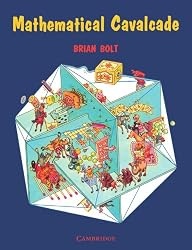
Mathematical Cavalcade

Brian Bolt

Cambridge University Press | 1992 |124 páginas | PDF | 2,6 MB

Mathematical Cavalcade follows the very successful Amazing Mathematical Amusement Arcade and The Mathematical Funfair by the same author. It contains a further 131 puzzles to challenge people of all ages. Hints and solutions are given in a commentary at the back of the book.

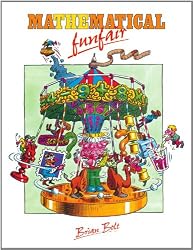
The Mathematical Funfair


Brian Bolt

Cambridge University Press | 1989 |128 páginas | PDF | 3 MB

link
link1

This book follows the successful Amazing Mathematical Amusement Arcade by the same author. It contains a further 128 puzzles and games designed to challenge people of all ages. The subjects range from matchsticks and coins to chocolate manufacture and expeditions across Dartmoor. The second part of the book contains a commentary giving hints and solutions.

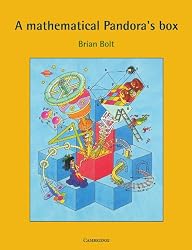
A Mathematical Pandora's Box


Brian Bolt

Cambridge University Press | 1993 | 126 páginas | PDF | 2,7 MB


A Mathematical Pandora's Box has been written in response to the success of Brian Bolt's earlier mathematical puzzle books. Through his own experience, the author has discovered a worldwide interest in these and similar puzzles. Not only do they stimulate creative thinking but they can also open up new areas of mathematics to the reader. This book contains 142 activities: in addition to puzzles, there are games, tricks, models and explanations of various phenomena. They range from number manipulation, through happy and amicable numbers, coin puzzles, picnicking bears and pentominoes, to building shapes with cubes. Some of the puzzles date from hundreds of years ago while many others are original, giving everyone something to think about. There is a detailed commentary at the end of the book, giving solutions and explanations, together with the occasional follow-up problem.