segunda-feira, 10 de setembro de 2012

Educational Studies in Mathematics - vol 18


Educational Studies in Mathematics
Springer Netherlands
1987

Volume 18, Number 1 / February 1987

RAR - PDF | 3,56 Mb

uploading.com (password : matav)
ESM-1987_02

Artigos:

Common logical errors in English and ChineseR. Zepp, J. Monin and C. L. Lei

Fonctions du code symbolique dans le discours mathématiqueFrançoise Boschet


The secondary school mathematics curriculum in ChinaF. K. S. Leung


A framework for assessing mathematical creativity in school childrenDerek W. Haylock


Ghosts of diophantusEon Harper


Private tutoring a hidden educational problemMansour G. A. Hussein


Book reviews* H. N. Jahnke -> George Adams -- Geometrische und Graphische Versuche oder Beschreibung der mathematischen Instrumente, deren man sich in der Geometrie, der Zivilund Militär-Vermessung, beim Nivellieren und in der Perspektive bedient (1985, ISBN: 3534093089)* Ole Skovsmose -> R. Fischer und G. Malle, unter Mitarbeit von H. Bürger -- Mensch und Mathematik (1985)


Announcements 


Volume 18, Number 2 / May 1987  

RAR - PDF | 4,1 Mb 

uploading.com (password : matav) 
ESM_1987_05

Artigos: 

An investigation of young children's academic arithmetic contextsPaul Cobb

Integrated column arithmetic according to progressive schematisationA. Treffers


Processus de preuve et situations de validationNicolas Balacheff


Using problem solving teaching styles to prepare candidates for the CXC basic proficiency examinationsIan Isaacs


A tale of 804.573 horses: Arithmetic teaching in Victoria 1860–1914Rachel Griffiths


Book reviews* Josette Adda -> Serge Lang -- Des jeunes et des maths. Un chercheur rencontre des collégiens (1986, ISBN: 2701104963)* Anna Sierpińska -> Dydaktyka Matematyki


Volume 18, Number 3 / August 1987   

RAR - PDF | 3,81 Mb  

uploading.com (password : matav) 
ESM_1987_08 

Artigos: 


Guest editorial
Josette Adda

Coming alive in school math and beyond
Hassler Whitney

Ability stereotyping in mathematics
Kenneth Ruthven

Teacher student interaction: A case study
Gilah C. Leder

The reality and potential of correcting pupils' work in mathematics
Stella Baruk

From failure to success: Changing the experience of adult learners of mathematics
Leone Burton

Roos and José, two children in a mixed ability group
Rijkje Dekker

A cautionary note
B. F. Sherman

Response to ‘a cautionary note’
Gilah C. Leder

Book reviews
* Lucia Grugnetti -> Rosie Walden and Valerie Walkerdine -- Girls and Mathematics (1985)
* Colette Laborde -> A. G. Howson and J. P. Kahane (eds.) -- The Influence of Computers and Informatics on Mathematics and Its Teaching (1986, ISBN: 0521324025, 0521311896)


Volume 18, Number 4 / November 1987   

RAR - PDF | 3,26 Mb  

uploading.com (password : matav)
ESM_1987_11 

Artigos: 


Learning to apply numbers to natureHelen Watson

Linking logo, levels and language in mathematicsA. T. Olson, T. E. Kieren e S. Ludwig


Humanities students and epistemological obstacles related to limitsAnna Sierpińska


Factors contributing to mathematical problem-solving performance: An exploratory studyNina Kay Buchanan


A calculator, a tape recorder, and thouDavid S. Fielker


Factors affecting girls' learning of mathematics in SudanA. B. Pollitt, J. W. Searl e A. S. El Sheikh


Videodisc technology and mathematics educationNeil Straker


Book review* Peter Damerow -> Schubring, Gert -- Die entstehung des mathematiklehrerberufs im 19. Jahrhundert. Studien u. Materialien zum prozeß d. Professionalisierung in preußen (1810–1870)


Announcement

quinta-feira, 6 de setembro de 2012

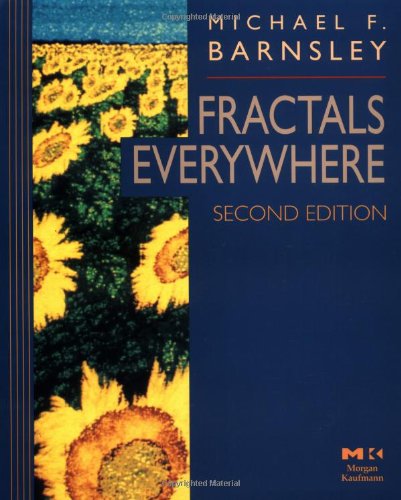
Fractals Everywhere

 2.ª edição

Michael F. Barnsley

Morgan Kaufmann Publishers | 2000 | 534 páginas |  PDF | 15,3 Mb

scribd.com
uploading.com
libgen.info

djvu - 6,2 Mb

link direto
libgen.info

This volume is the second edition of the highly successful Fractals Everywhere. The Focus of this text is how fractal geometry can be used to model real objects in the physical world.
This edition of Fractals Everywhere is the most up-to-date fractal textbook available today.
Fractals Everywhere may be supplemented by Michael F. Barnsley's Desktop Fractal Design System (version 2.0) with IBM for Macintosh software. The Desktop Fractal Design System 2.0 is a tool for designing Iterated Function Systems codes and fractal images, and makes an excellent supplement to a course on fractal geometry
* A new chapter on recurrent iterated function systems, including vector recurrent iterated function systems.* Problems and tools emphasizing fractal applciations.* An all-new answer key to problems in the text, with solutions and hints.

Great Book of Math Puzzles


Philip Heafford


Sterling Pub Co Inc  | 1993 | 96 Páginas |  PDF | 2,8 Mb

scribd.com
scribd.com
libgen.info

djvu

libgen.info

Entertaining book, not really the Great Book of Math as its title implies. You will find Over 200 mathematical teasers grouped in thirty separated parts, called "quizzes" in this book. All the solutions to the puzzles are provided at the end of the book. 
Here is am example of what you can find in this book (20-1): 
"A water lily doubles itself in size each day. From the time its first leaf appeared to the time when the surface of the pound was completely covered took forty days. How long did it take for the pond to be half covered? 
Difficulty level ranges from easy t medium. If you like more challenging pure mathematical teasers and puzzles, you may want to try "Challenging mathematical teasers" by J. A. H. Hunter.

El tio petros y la conjetura de Goldbach


Apóstolos Doxiadis

online: archive.org
librosmaravillosos.com

PDF

arundanet.com (link direto)

4shared.com
scribd.com
libgen.info


A través de su sobrino se cuenta la historia de Petros Papachristos, matemático griego que pasa su vida intentando demostrar la conjetura de Goldbach: "Todo nº  par mayor que dos puede escribirse como la suma de dos números primos". El tío Petros es considerado por sus hermanos la oveja negra de la familia pero en cambio ejerce una gran fascinación en su sobrino que también decide convertirse en matemático, algo que no le entusiasma a su tío por lo que intenta disuadirle.

Al contrario de lo que pueda parecer por el título para leer este libro no hace falta saber matemáticas. Es un libro que ya me leí en su día y que he vuelto a leerme ahora y me ha encantado. Encantado es poco, me ha entusiasmado. Lo he cogido con ganas y me lo he leído practicamente en dos días. Es un libro que nos introduce en el mundo de los grandes matemáticos, aquellos que con su mente previlegiada y la consagración de su vida a las matemáticas han conseguido  que se avance en muchos campos. Nos hace ver que esta disciplina es más que los números y los cálculos que nos enseñaban en el colegio. Y todo en forma de novela que te atrapa de principio a fin.

A lo mejor no estoy siendo del todo objetiva, después de todo yo  estudié Matemáticas en la Universidad, pero aun así creo que el libro se puede leer por cualquiera que no tenga ni la más mínima formación en ellas porque realmente es la historia de una vida y puede resultar interesante para ver esta disciplina, que tanto miedo da a todo el mundo, desde otro prisma.

Uncle Petros and Goldbach's Conjecture: A Novel of Mathematical Obsession


Apostolos Doxiadis

Bloomsbury USA | 2001 | 220 páginas | DJVU  | 2,81 Mb

uploading.com
libgen.info

In the tradition of Fermat's Last Theorem and Einstein's Dreams, a novel about mathematical obsession.Petros Papachristos devotes the early part of his life trying to prove one of the greatest mathematical challenges of all time: Goldbach's Conjecture, the deceptively simple claim that every even number greater than two is the sum of two primes. Against a tableau of famous historical figures-among them G.H. Hardy, the self-taught Indian genius Srinivasa Ramanujan, and a young Kurt Godel-Petros works furiously to prove the notoriously difficult conjecture. Decades later, his ambitious young nephew drives the defeated mathematician back into the hunt to prove Goldbach's Conjecture. . . but at the cost of the old man's sanity, and perhaps even his life.

Arithmetic and Ontology. A Non-Realist Philosophy of Arithmetic


Charles Sayward, Philip Hugley

Editions Rodopi | 2006 |  393 páginas | DJVU | 1,21 Mb

uploading.com
libgen.info

PDF

libgen.info

This volume documents a lively exchange between five philosophers of mathematics. It also introduces a new voice in one central debate in the philosophy of mathematics. Non-realism, i.e., the view supported by Hugly and Sayward in their monograph, is an original position distinct from the widely known realism and anti-realism. Non-realism is characterized by the rejection of a central assumption shared by many realists and anti-realists, i.e., the assumption that mathematical statements purport to refer to objects. The defense of their main argument for the thesis that arithmetic lacks ontology brings the authors to discuss also the controversial contrast between pure and empirical arithmetical discourse. Colin Cheyne, Sanford Shieh, and Jean Paul Van Bendegem, each coming from a different perspective, test the genuine originality of non-realism and raise objections to it. Novel interpretations of well-known arguments, e.g., the indispensability argument, and historical views, e.g. Frege, are interwoven with the development of the authors’ account. The discussion of the often neglected views of Wittgenstein and Prior provide an interesting and much needed contribution to the current debate in the philosophy of mathematics. Contents Acknowledgments Editor’s Introduction Philip HUGLY and Charles SAYWARD: Arithmetic and Ontology a Non-Realist Philosophy of Arithmetic Preface Analytical 

Table of Contents 
Chapter 1. Introduction Part One: Beginning with Frege 
Chapter 2. Notes to Grundlagen 
Chapter 3. Objectivism and Realism in Frege’s Philosophy of Arithmetic 
Part Two: Arithmetic and Non-Realism 
Chapter 4. The Peano Axioms 
Chapter 5. Existence, Number, and Realism 
Part Three: Necessity and Rules Chapter 6. Arithmetic and Necessity 
Chapter 7. Arithmetic and Rules 
Part Four: The Three Theses 
Chapter 8. Thesis One 
Chapter 9. Thesis Two 
Chapter 10. Thesis Three 
References 

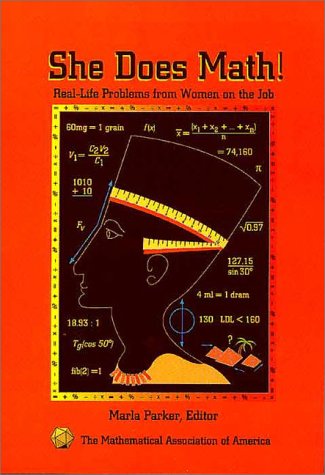
She Does Math!: Real-Life Problems from Women on the Job


(Classroom Resource Materials)


Marla Parker 

Mathematical Association of America | 1995 | 260 páginas | RAR - PDF | 1,19 Mb

uploading.com (password : matav)
20120906sdm


The range of applications is broad. The examples are easy to understand and are generally supported by interesting problems. The book is carefully edited and the graphic and text style are consistent from chapter to chapter—the hallmark of attention to detail in a book with numerous authors. — Mathematical Reviews
Finally—a practical, innovative, well-written book that will also inspire its readers. The wonder is...it is a mathematics text and a biography! The idea of women telling their own career stories, emphasizing the mathematics they use in their jobs is extremely creative. This book makes me wish that I could go through school all over again! — Anne Bryant, Executive Director, American Association of University Women

She Does Math! presents the career histories of 38 professional women and math problems written by them. Each history describes how much math the author took in high school and college; how she chose her field of study; and how she ended up in her current job. Each of the women present several problems typical of those she had to solve on the job using mathematics.
There are many good reasons to buy this book:

  • It contains real-life problems. Any student who asks the question,
    "Why do I have to learn algebra (or trigonometry or geometery)?"
    will find many answers in its pages. Students will welcome seeing
    solutions from real-world jobs where the math skills they are learning
    in class are actually used.
  • It provides strong female role models.
  • It supplies practical information about the job market. Students
    learn that they can only compete for these interesting, well-paying
    jobs by taking mathematics throughout theur high school and college
    years.
  • It demonstrates the surprising variety of fields in which mathematics
    is used.

Who should have this book? Your daughter or granddaughter, your sister, your former math teacher, your students — and young men, too. They want to know how the math they study is applied — and this book will show them.

Revisão : maa.org