terça-feira, 14 de agosto de 2012

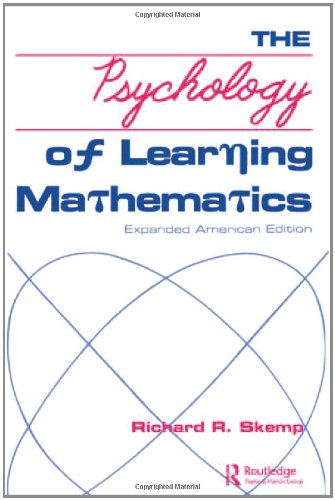
The Psychology of Learning Mathematics


Richard R. Skemp

Lawrence Erlbaum Associates | 1987 | 230 Páginas | PDF | 3,8 Mb


link
password : matav

This classic text presents problems of learning and teaching mathematics from both a psychological and mathematical perspective. The Psychology of Learning Mathematics, already translated into six languages (including Chinese and Japanese), has been revised for this American Edition to include the author's most recent findings on the formation of mathematical concepts, different kinds of imagery, interpersonal and emotional factors, and a new model of intelligence. The author contends that progress in the areas of learning and teaching mathematics can only be made when such factors as the abstract and hierarchical nature of mathematics, the relation to mathematical symbolism and the distinction between intelligent learning and rote memorization are taken into account and instituted in the classroom.


Contents
NOTES AND ACKNOWLEDGMENTS
1 INTRODUCTION AND OVERVIEW
We Still Have a Problem. 3
A Mental Journey Around the World, 5
Mathematics and Human Intelligence, 6
The School Situation, 7
Overview. 8
2 THE FORMATION OF MATHEMATICAL CONCEPTS
Abstracting and Classifying, 9
Naming, 12
The Communication of Concepts, 13
Concepts as a Cultural Heritage, 15
The Power of Conceptual Thinking, 17
The Learning of Mathematical Concepts. 18
Leeming and Teaching, 21
3 THE IDEA OF A SCHEMA
The Integrative Function of a Schema, 24
Understanding, 29
Implications for the Learning of Mathematics, 33
4 INTUITIVE AND REFLECTIVE INTELLIGENCE
5 SYMBOLS
Communication. 47
Recording Knowledge, 50
The Communication of New Concepts. 53
Making Multiple Classification Straightforward, 55
Explanations, 56
Making Possible Reflective Activity, 57
Helping to Show Structure, 58
Making Routine Manipulations Automatic, 61
Recovering Information and Understanding. 62
Creative Mental Activity, 64
6 DIFFERENT KINDS OF IMAGERY
Visual Symbols and Verbal Symbols, 66
The Two Systems in Conjunction, 76
The Two Systems Compared. 79
Hemispheric Specialization, 81
7 INTERPERSONAL AND EMOTIONAL FACTORS
What Criterion? 84
Rules Without Reasons, 86
Two Kinds of Authority, 87
Benefits of Discussion. 88
Anxiety and Higher Mental Activity, 91
Motivations for Learning, 95
8 A NEW MODEL OF INTELLIGENCE
Teachers and Learners. 101
Habit Learning and Intelligent Learning, 1 02
When Is a Stimulus Not a Stimulus? 103
Goal-Directed Action. 104
Survival, Adaptability, and Evolution, 104
Director Systems, 105
Goal-Directed Learning, 106
Goals of Intelligent Learning, 107
Schema Construction, 109
Uses of Our Schemas, 111
9 FROM THEORY INTO ACTION: KNOWLEDGE. PLANS. AND SKILLS
Knowledge, 115
Why Knowledge Must Be Conceptual, 116
PARTB
A Resonance Model. 118
Associative Links and Conceptual Links. 119
Other Names for Schemas. 121
Plans 125
Skills: Being Able, 126
10 TYPE 1 THEORIES AND TYPE 2 THEORIES: FROM BEHAVIORISM TO CONSTRUCTIVISM
Type 1 Theories and Type 2 Theories. 129
Theories and Methodologies. 130
Type 1 Methodologies and Type 2 Methodologies. 132
Methodologies in the Natural Sciences. 132
Methodologies Used in Mathematics Education Research, 133
Teaching Experiments. 138
11 MATHEMATICS AS AN ACTIVITY OF OUR INTELLIGENCE
Uses of Our Mathematical Schemas. 142
What Kind of Theory Is Mathematics? 149
12 RELATIONAL UNDERSTANDING AND INSTRUMENTAL UNDERSTANDING
Faux Amis. 152
Oevil's Advocate, 158
A Theoretical Formulation. 161
13 GOALS OF LEARNING AND QUALITIES OF UNDERSTANDING
A New Model of Intelligence, 164
How Many Kinds of Understanding Can We Usefully Distinguish? 165
Schemas and the Goals of Learning. 167
The Intuitive/Reflective Dimension, 172
14 COMMUNICATING MATHEMATICS: SURFACE STRUCTURES AND DEEP STRUCTURES 177
15 SYMBOLIC UNDERSTANDING
16 EMOTIONS AND SURVIVAL IN THE CLASSROOM
Do Emotions Have a Useful Function? 189
Mixed Emotions. 194
17 MANAGING THE RISKS IN LEARNING
Confidence and Frustration Tolerance. 200
Confidence and Understanding, 203
Peer-Group Interaction in Learning, 205
18 THE SILENT MUSIC OF MATHEMATICS
REFERENCES
AUTHOR INDEX
SUBJECT INDEX

Livro do mesmo autor, disponíveis no blog:


Mathematics in the Primary School (1989). Routledge 


Pre-Algebra Demystified


Allan Bluman 

McGraw-Hill Professional  | 2004 | 301 Páginas | PDF | 3,9 Mb


TAKE THE ANXIETY OUT OF PRE-ALGEBRA

In Pre-Algebra Demystified, experienced math instructor Allan Bluman provides an effective, anxiety-soothing, and totally painless way to master the math fundamentals so crucial to collegebut so difficult for the math-impaired and anxious.

With Pre-Algebra Demystified, you master the subject one simple step at a time -- at your own speed. This unique self-teaching guide offers problems at the end of each chapter, quizzes to pinpoint weaknesses, and a 100-question final exam to reinforce the entire book.
This is a fast and entertaining self-teaching course that's specially designed to reduce anxiety. Get ready to:
* Build a working knowledge of whole numbers, fractions, decimals, ratios, and percents
* Grasp word problems and underlying math concepts
* Learn basic equations and operations with integers
* Construct a solid foundation for algebra, geometry, statistics, and business math
* Prepare to take pre-college exams
Get over math anxiety using a special program included in the book
* Take a "final exam" and grade it yourself!
Pre-Algebra Demystified is your direct route to confidence with higher math! --This text refers to an out of print or unavailable edition of this title.

About the Author


Allan G. Bluman taught mathematics and statistics in high school, college, and graduate school for more than 35 years. He received his doctor’s degree from the University of Pittsburgh. Dr. Bluman has written several other mathematics books. He is the recipient of “An Apple for the Teacher Award” for bringing excellence to the learning environment and the “Most Successful Revision of a Textbook” award from McGraw-Hill.
.


CONTENTS
Preface ix
CHAPTER 1 Whole Numbers 1
CHAPTER 2 Integers 17
CHAPTER 3 Fractions: Part 1 38
CHAPTER 4 Fractions: Part 2 53
CHAPTER 5 Decimals 83
CHAPTER 6 Percent 105
CHAPTER 7 Expression and Equations 126
CHAPTER 8 Ratio and Proportion 153
CHAPTER 9 Informal Geometry 165
CHAPTER 10 Measurement 189
CHAPTER 11 Graphing 203
CHAPTER 12 Operations with Monomials and
Polynomials 233
Final Exam 251

Livros do mesmo autor, disponíveis no blog:


- Probability Demystified (2005)
- Math Word Problems Demystified (2004)

segunda-feira, 13 de agosto de 2012

Becoming a Primary Mathematics Specialist Teacher


Gina Donaldson, Jenny Field, Dave Harries, Clare Tope, Helen Taylor

Routledge | 2012 | 146 páginas | rar - PDF | 665 Mb

link  (password : matav)


What is the role of the mathematics specialist?
What is deep subject knowledge in mathematics?
What sort of pedagogical knowledge does a mathematics specialist need?
How can you best support your colleagues to improve mathematics teaching and learning?
Becoming a Primary Mathematics Specialist Teacher helps you explore the role of the specialist in promoting positive attitudes towards mathematics and developing the teaching and learning of mathematics in your primary school.
Illustrated throughout with classroom-based examples and referenced to relevant research, it is designed to support your development as a reflective practitioner who can confidently review and develop practice in your own classroom, as well as challenge and move the whole school forward through collaborative professional development. Essential topics explored include:
  • The nature of the role of the primary mathematics specialist
  • Understanding how attitudes to mathematics evolve, and why it is crucial to challenge and change negativity
  • What we mean by deep subject knowledge in primary mathematics
  • Pedagogical knowledge of how mathematics is taught and learned
  • The skills of coaching and mentoring to support teachers and teaching assistants
  • Unpicking the principles of progression for high quality teaching in all years groups
  • The key features of deep subject knowledge and pedagogy in three areas of the curriculum: multiplication, time and data handling.
Becoming a Primary Mathematics Specialist Teacher is an essential source of guidance and ideas for all primary school teachers aiming to achieve Mathematics Specialist status or already taking this role, those studying primary mathematics as a specialism and at masters level, and for all primary mathematics co-ordinators.
CONTENTS
List of figures and tables vi
Introduction 1
1 The role of the primary mathematics specialist teacher 3
2 Attitudes to mathematics 19
3 Deep subject knowledge 35
4 Pedagogical knowledge 47
5 Leading professional learning in mathematics in your school; mentoring and coaching 62
6 Championing the teaching and learning of multiplication 78
7 Championing the teaching and learning of time 97
8 Championing the teaching and learning of data handling 109
Conclusion 127
Bibliography 135
Index 141


The Beauty of Everyday Mathematics


Norbert Herrmann

Springer | 2011 | 151 páginas | PDF | 1,8 Mb


  • Complicated mathematics presented in a generally understandable way
  • Examples from everyday life are mathematized
  • Many examples presented with a good sense of humor
  • Small riddles and conjuring tricks garantee an entertaining read

Imagine that you’ve finally found a parking space after a long and harrowing search, but are now encountering some difficulty in trying to enter this space. Wouldn’t it be great if you knew a formula that allowed you to enter the space without difficulty? Are you annoyed because your soda can doesn’t remain upright during a picnic? Would you like to know why a mirror swaps right and left, but not top and bottom? Are you looking for a mathematical speech to toast your mother-in-law’s 85th birthday? Or do you want to give your heart away mathematically? Dr. Norbert Herrmann provides amusing and entertaining solutions to these and many other problems that we encounter in everyday situations. “A book for teachers, students of mathematics, and anybody who likes unusual and amusing calculations.

Contents
1 The Soda Can Problem . . . . . . . . . . . . . . . . . . . . . . . . . . . . . . 1
1.1 Introduction . . . . . . . . . . . . . . . . . . . . . . . . . . . . . . . . . . . . . 1
1.2 The Problem . . . . . . . . . . . . . . . . . . . . . . . . . . . . . . . . . . . . 1
1.3 Determining the Center of Gravity . . . . . . . . . . . . . . . . . . 2
1.4 The Lowest Position of the Center of Gravity . . . . . . . . . 5
1.5 Drinking in Two Mouthfuls . . . . . . . . . . . . . . . . . . . . . . . . 9
1.6 Center of Gravity of an Ordinary Can . . . . . . . . . . . . . . . 11
1.7 Final Remarks . . . . . . . . . . . . . . . . . . . . . . . . . . . . . . . . . . . 12
2 The Mirror Problem . . . . . . . . . . . . . . . . . . . . . . . . . . . . . . . . 13
2.1 Introduction . . . . . . . . . . . . . . . . . . . . . . . . . . . . . . . . . . . . . 13
2.2 The Mirror Problem for Individuals . . . . . . . . . . . . . . . . . 13
2.3 The Mirror Problem for Groups . . . . . . . . . . . . . . . . . . . . 15
2.4 The Problem . . . . . . . . . . . . . . . . . . . . . . . . . . . . . . . . . . . . 17
2.5 The Mirror Problem Expressed Mathematically . . . . . . . 17
2.6 Results of Analysis of the Mirror Problem . . . . . . . . . . . 20
3 The Leg Problem . . . . . . . . . . . . . . . . . . . . . . . . . . . . . . . . . . . 23
3.1 Introduction . . . . . . . . . . . . . . . . . . . . . . . . . . . . . . . . . . . . . 23
3.2 The Problem . . . . . . . . . . . . . . . . . . . . . . . . . . . . . . . . . . . . 23
3.3 The Physical Model . . . . . . . . . . . . . . . . . . . . . . . . . . . . . . 24
3.4 Analytical Solution . . . . . . . . . . . . . . . . . . . . . . . . . . . . . . 25
3.5 Graphical Solution . . . . . . . . . . . . . . . . . . . . . . . . . . . . . . . 26
3.6 Application and Comments . . . . . . . . . . . . . . . . . . . . . . . . 29
3.7 A Mnemonic Device for p . . . . . . . . . . . . . . . . . . . . . . . . 29
3.8 Comments on the Number p . . . . . . . . . . . . . . . . . . . . . . . 30
4 The Sketch Problem . . . . . . . . . . . . . . . . . . . . . . . . . . . . . . . . . 33
4.1 Introduction . . . . . . . . . . . . . . . . . . . . . . . . . . . . . . . . . . . . . 33
4.2 The Problem . . . . . . . . . . . . . . . . . . . . . . . . . . . . . . . . . . . . 34
4.3 The “Proof” . . . . . . . . . . . . . . . . . . . . . . . . . . . . . . . . . . . . . 34
4.4 The First Clue . . . . . . . . . . . . . . . . . . . . . . . . . . . . . . . . . . . 36
4.5 The Complete Truth . . . . . . . . . . . . . . . . . . . . . . . . . . . . . . 38
4.6 The Moral . . . . . . . . . . . . . . . . . . . . . . . . . . . . . . . . . . . . . . 39
5 The Parallel Parking Problem . . . . . . . . . . . . . . . . . . . . . . . . 41
5.1 Introduction. . . . . . . . . . . . . . . . . . . . . . . . . . . . . . . . . . . . . 41
5.2 The Problem . . . . . . . . . . . . . . . . . . . . . . . . . . . . . . . . . . . . 42
5.3 Rebecca Hoyle’s Formula . . . . . . . . . . . . . . . . . . . . . . . . . 43
5.4 Criticizing Hoyle’s Formula . . . . . . . . . . . . . . . . . . . . . . . 44
5.5 The Turning Circle . . . . . . . . . . . . . . . . . . . . . . . . . . . . . . . 45
5.6 The Center of the Turning Circle . . . . . . . . . . . . . . . . . . . 47
5.7 The Smallest Possible Circle . . . . . . . . . . . . . . . . . . . . . . . 48
5.8 The Effective Radius . . . . . . . . . . . . . . . . . . . . . . . . . . . . . 49
5.9 Our Model Car . . . . . . . . . . . . . . . . . . . . . . . . . . . . . . . . . . 50
5.10 New Formulas for Parallel Parking. . . . . . . . . . . . . . . . . 51
5.11 The Formula for a 45 degree Maneuver . . . . . . . . . . . . . 53
5.12 The Optimal Formulas . . . . . . . . . . . . . . . . . . . . . . . . . . . 54
5.13 Conclusions . . . . . . . . . . . . . . . . . . . . . . . . . . . . . . . . . . . . 55
5.14 Values for a Few Cars . . . . . . . . . . . . . . . . . . . . . . . . . . . 56
5.15 A Little Mental Exercise . . . . . . . . . . . . . . . . . . . . . . . . . 58
6 The Parking Garage Problem . . . . . . . . . . . . . . . . . . . . . . . . 59
6.1 Introduction . . . . . . . . . . . . . . . . . . . . . . . . . . . . . . . . . . . . . 59
6.2 The Problem . . . . . . . . . . . . . . . . . . . . . . . . . . . . . . . . . . . . 59
6.3 Forward Parking . . . . . . . . . . . . . . . . . . . . . . . . . . . . . . . . . 60
6.4 Backward Parking . . . . . . . . . . . . . . . . . . . . . . . . . . . . . . . 62
7 The 85th Birthday Problem . . . . . . . . . . . . . . . . . . . . . . . . . . 67
7.1 Dear Mother-in-Law . . . . . . . . . . . . . . . . . . . . . . . . . . . . . 67
7.2 What Do Mathematicians Do? . . . . . . . . . . . . . . . . . . . . . 68
7.3 The Numbers of Your Life . . . . . . . . . . . . . . . . . . . . . . . . 69
7.4 The Number Zero . . . . . . . . . . . . . . . . . . . . . . . . . . . . . . . . 70
7.5 The Number 85 . . . . . . . . . . . . . . . . . . . . . . . . . . . . . . . . . . 74
7.6 85 Is Everywhere . . . . . . . . . . . . . . . . . . . . . . . . . . . . . . . . 77
7.7 State Capital Problem . . . . . . . . . . . . . . . . . . . . . . . . . . . . 79
8 The Slippery-Ice or Bread-Slicing Problem . . . . . . . . . . . . 81
8.1 Introduction . . . . . . . . . . . . . . . . . . . . . . . . . . . . . . . . . . . . . 81
8.2 The Problem . . . . . . . . . . . . . . . . . . . . . . . . . . . . . . . . . . . . 81
8.3 Physical Background . . . . . . . . . . . . . . . . . . . . . . . . . . . . . 82
8.4 The Mathematical Model . . . . . . . . . . . . . . . . . . . . . . . . . 83
8.5 The Solution . . . . . . . . . . . . . . . . . . . . . . . . . . . . . . . . . . . . 85
8.6 The Result . . . . . . . . . . . . . . . . . . . . . . . . . . . . . . . . . . . . . . 89
8.7 Interpretation of the Result . . . . . . . . . . . . . . . . . . . . . . . . 90
8.8 Some Further Remarks . . . . . . . . . . . . . . . . . . . . . . . . . . . 90
8.9 A Little Brain Teaser . . . . . . . . . . . . . . . . . . . . . . . . . . . . . 92
9 The Snail–Racehorse Problem . . . . . . . . . . . . . . . . . . . . . . . . 93
9.1 Introduction . . . . . . . . . . . . . . . . . . . . . . . . . . . . . . . . . . . . . 93
9.2 The Problem . . . . . . . . . . . . . . . . . . . . . . . . . . . . . . . . . . . . 93
9.3 Mathematical Formulation . . . . . . . . . . . . . . . . . . . . . . . . 94
9.4 Solution of the Differential Equation . . . . . . . . . . . . . . . . 96
9.5 Calculating the Time of Meeting . . . . . . . . . . . . . . . . . . . 96
9.6 Evaluating the Example . . . . . . . . . . . . . . . . . . . . . . . . . . . 97
9.7 Solution of State Capital Problem . . . . . . . . . . . . . . . . . . 98
10 The Discus Thrower Problem . . . . . . . . . . . . . . . . . . . . . . . . 99
10.1 Introduction. . . . . . . . . . . . . . . . . . . . . . . . . . . . . . . . . . . . 99
10.2 The Problem . . . . . . . . . . . . . . . . . . . . . . . . . . . . . . . . . . . 100
10.3 The “Loss” Formula . . . . . . . . . . . . . . . . . . . . . . . . . . . . . 100
10.4 Application . . . . . . . . . . . . . . . . . . . . . . . . . . . . . . . . . . . . 103
11 The Beer Coaster Problem . . . . . . . . . . . . . . . . . . . . . . . . . . . 107
11.1 Introduction. . . . . . . . . . . . . . . . . . . . . . . . . . . . . . . . . . . . 107
11.2 The Problem . . . . . . . . . . . . . . . . . . . . . . . . . . . . . . . . . . . 107
11.3 Physical Background . . . . . . . . . . . . . . . . . . . . . . . . . . . . 108
11.4 Mathematical Description . . . . . . . . . . . . . . . . . . . . . . . . 108
11.5 The Solution . . . . . . . . . . . . . . . . . . . . . . . . . . . . . . . . . . . 110
11.6 Application to the Beer Coaster Problem . . . . . . . . . . . 115
11.7 Concluding Remarks . . . . . . . . . . . . . . . . . . . . . . . . . . . . 118
12 The Toasting Problem . . . . . . . . . . . . . . . . . . . . . . . . . . . . . . . 119
12.1 Introduction. . . . . . . . . . . . . . . . . . . . . . . . . . . . . . . . . . . . 119
12.2 The Problem . . . . . . . . . . . . . . . . . . . . . . . . . . . . . . . . . . . 120
12.3 Mathematical Induction . . . . . . . . . . . . . . . . . . . . . . . . . . 123
12.4 Application . . . . . . . . . . . . . . . . . . . . . . . . . . . . . . . . . . . . 126
12.5 Related Problems . . . . . . . . . . . . . . . . . . . . . . . . . . . . . . . 127
13 The Heart Problem . . . . . . . . . . . . . . . . . . . . . . . . . . . . . . . . . 129
13.1 Introduction. . . . . . . . . . . . . . . . . . . . . . . . . . . . . . . . . . . . 129
13.2 The Problem . . . . . . . . . . . . . . . . . . . . . . . . . . . . . . . . . . . 129
13.3 First Solution . . . . . . . . . . . . . . . . . . . . . . . . . . . . . . . . . . 129
13.4 Additional Solutions . . . . . . . . . . . . . . . . . . . . . . . . . . . . 132
References . . . . . . . . . . . . . . . . . . . . . . . . . . . . . . . . . . . . . . . . . . . . . 135
Index . . . . . . . . . . . . . . . . . . . . . . . . . . . . . . . . . . . . . . . . . . . . . . . . . 137

Revisão: mathdl.maa.org

Math is Fun


Joseph Degrazia

Emerson Books | 1976 | 158 páginas | PDF | 6 Mb

depositfiles.com

djvu - 1,3 Mb
link
link1

This book is the result of twenty years of puzzle collecting. For these many years I have endeavored to gather everything belonging to the realm of mathematical entertainment from all available sources. As an editor of newspaper columns on scientific entertainment, I found my readers keenly interested in this kind of pastime, and these readers proved to be among my best sources for all sorts of problems, both elementary and intricate.


Outro livro do mesmo autor, disponível no blog:


- Math tricks, brain twisters, and puzzles (1981). Bell Pub. Co

An Introduction to the Philosophy of Mathematics


Cambridge Introductions to Philosophy


Mark Colyvan

Cambridge University Press | 2012 | 200 páginas | PDF | 800 kb

link
link1
scribd.com

This introduction to the philosophy of mathematics focuses on contemporary debates in an important and central area of philosophy. The reader is taken on a fascinating and entertaining journey through some intriguing mathematical and philosophical territory, including such topics as the realism/anti-realism debate in mathematics, mathematical explanation, the limits of mathematics, the significance of mathematical notation, inconsistent mathematics and the applications of mathematics. Each chapter has a number of discussion questions and recommended further reading from both the contemporary literature and older sources. Very little mathematical background is assumed and all of the mathematics encountered is clearly introduced and explained using a wide variety of examples. The book is suitable for an undergraduate course in philosophy of mathematics and, more widely, for anyone interested in philosophy and mathematics.


Contents
Acknowledgments page viii
1 Mathematics and its philosophy 1
1.1 Skipping through the big isms 2
1.2 Charting a course to contemporary topics 8
1.3 Planning for the trip 15
2 The limits of mathematics 21
2.1 The Löwenheim–Skolem Theorem 22
2.2 Gödel’s Incompleteness Theorems 27
2.3 Independent questions 30
3 Plato’s heaven 36
3.1 A menagerie of realisms 36
3.2 Indispensability arguments 41
3.3 Objections 46
4 Fiction, metaphor, and partial truths 55
4.1 Fictionalism 55
4.2 An easier route to nominalism? 62
4.3 Mathematics as metaphor 68
5 Mathematical explanation 75
5.1 Theories of explanation 76
5.2 Intra-mathematical explanation 77
5.3 Extra-mathematical explanation 90
6 The applicability of mathematics 98
6.1 The unreasonable effectiveness of mathematics 98
6.2 Towards a philosophy of applied mathematics 104
6.3 What’s maths got to do with it? 109
7 Who’s afraid of inconsistent mathematics? 118
7.1 Introducing inconsistency 118
7.2 Paraconsistent logic 123
7.3 Applying inconsistent mathematics 127
8 A rose by any other name 132
8.1 More than the language of science 133
8.2 Shakespeare’s mistake 140
8.3 Mathematical definitions 145
9 Epilogue: desert island theorems 151
9.1 Philosophers’ favourites 151
9.1.1 Tarski–Banach Theorem (1924) 152
9.1.2 Löwenheim–Skolem Theorem (1922) 152
9.1.3 Gödel’s Incompleteness Theorems (1931) 152
9.1.4 Cantor’s Theorem (1891) 153
9.1.5 Independence of continuum hypothesis (1963) 153
9.1.6 Four-Colour Theorem (1976) 153
9.1.7 Fermat’s Last Theorem (1995) 153
9.1.8 Bayes’s Theorem (1763) 155
9.1.9 Irrationality of √2 (c. 500 BCE) 156
9.1.10 Infinitude of the primes (c. 300 BCE) 157
9.2 The under-appreciated classics 157
9.2.1 Borsuk–Ulam Theorem (1933) 157
9.2.2 Riemann Rearrangement Theorem (1854) 158
9.2.3 Gauss’s Theorema Egregium (1828) 159
9.2.4 Residue Theorem (1831) 160
9.2.5 Poincaré conjecture (2002) 161
9.2.6 Prime Number Theorem (1849) 162
9.2.7 The Fundamental Theorems of Calculus (c. 1675) 163
9.2.8 Lindemann’s Theorem (1882) 164
9.2.9 Fundamental Theorem of Algebra (1816) 164
9.2.10 Fundamental Theorem of Arithmetic (c. 300 BCE) 165
9.3 Some famous open problems 167
9.3.1 Riemann hypothesis 167
9.3.2 The twin prime conjecture 167
9.3.3 Goldbach’s conjecture 168
9.3.4 Infinitude of the Mersenne primes 168
9.3.5 Is there an odd perfect number? 168
9.4 Some interesting numbers 169
Bibliography 173
Index 184

Outro livro do mesmo autor, disponível no blog:


- Colyvan, M. (2001). The Indispensability of Mathematics . Oxford University Press, New York.

domingo, 12 de agosto de 2012

The History of Mathematical Proof in Ancient Traditions


Karine Chemla, Centre National de la Recherche Scientifique (CNRS)

Cambridge University Press | 2012 | 614 páginas | PDF | 7,52 Mb

link
uploading.com (password : matav)

'This radical, profoundly scholarly book explores the purposes and nature of proof in a range of historical settings. It overturns the view that the first mathematical proofs were in Greek geometry and rested on the logical insights of Aristotle by showing how much of that view is an artefact of 19th-century historical scholarship. It documents the existence of proofs in ancient mathematical writings about numbers, and shows that practitioners of mathematics in Mesopotamian, Chinese and Indian cultures knew how to prove the correctness of algorithms, which are much more prominent outside the limited range of surviving classical Greek texts that historians have taken as the paradigm of ancient mathematics. It opens the way to providing the first comprehensive, textually based history of proof.' Jeremy Gray, Open University


Table of Contents

Prologue: historiography and history of mathematical proof: a research program Karine Chemla
Part I. Views on the Historiography of Mathematical Proof: 1. The Euclidean ideal of proof in The Elements and philological uncertainties of Heiberg's edition of the text Bernard Vitrac
2. Diagrams and arguments in ancient Greek mathematics: lessons drawn from comparisons of the manuscript diagrams with those in modern critical editions Ken Saito and Nathan Sidoli
3. The texture of Archimedes' arguments: through Heiberg's veil Reviel Netz
4. John Philoponus and the conformity of mathematical proofs to Aristotelian demonstrations Orna Harari
5. Contextualising Playfair and Colebrooke on proof and demonstration in the Indian mathematical tradition (1780–1820) Dhruv Raina
6. Overlooking mathematical justifications in the Sanskrit tradition: the nuanced case of G. F. Thibaut Agathe Keller
7. The logical Greek versus the imaginative Oriental: on the historiography of 'non-Western' mathematics during the period 1820–1920 François Charette
Part II. History of Mathematical Proof in Ancient Traditions: The Other Evidence: 8. The pluralism of Greek 'mathematics' Geoffrey Lloyd
9. Generalizing about polygonal numbers in ancient Greek mathematics Ian Mueller
10. Reasoning and symbolism in Diophantus: preliminary observations Reviel Netz
11. Mathematical justification as non-conceptualized practice: the Babylonian example Jens Høyrup
12. Interpretation of reverse algorithms in several Mesopotamian texts Christine Proust
13. Reading proofs in Chinese commentaries: algebraic proofs in an algorithmic context Karine Chemla
14. Dispelling mathematical doubts: assessing mathematical correctness of algorithms in Bhaskara's commentary on the mathematical chapter of the Aryabhatıya Agathe Keller
15. Argumentation for state examinations: demonstration in traditional Chinese and Vietnamese mathematics Alexei Volkov
16. A formal system of the Gougu method – a study on Li Rui's detailed outline of mathematical procedures for the right-angled triangle Tian Miao.

Outro livro de Karine Chemla , disponível no blog:


- K. Chemla (éd.) (2004). History of science, history of text, Springer, Collection « Boston studies in the philosophy of science 

Capítulos em livros de Karine Chemla , disponíveis no blog:
- Karine Chemla et Agathe Keller. (2002). The Sanskrit karanis, and the Chinese mian , Yvonne Dold-Samplonius, Joseph W. Dauben, Menso Folkerts, Benno van Dalen (éds.), From China to Paris: 2000 Years of Mathematical Transmission (Actes du Colloque de Bellagio, 5-2000) (pp. 87-132). Steiner Verlag, Stuttgart .
- K. Chemla (2005). The interplay between proof and algorithm in 3rd century China : The operation as prescription of computation and the operation as argument, in Paolo Mancosu, Klaus F. Jorgensen & Stig Andur Pedersen (éds.), Visualization, Explanation and Reasoning styles in mathematics,(pp. 123-145).  Synthese Library Series, volume 327, Springer, 
- K. Chemla (2009). Proof in the Wording : Two modalities from Ancient Chinese , in G. Hanna, H. N. Jahnke, H. Pulte (éds.), Explanation and Proof in Mathematics : Philosophical and Educational Perspectives, (pp. 253—285), Springer.
-  K. Chemla (2012). Using documents from ancient China to teach mathematical proof in G. Hanna and M. de Villiers (eds.), Proof and Proving in Mathematics Education (pp. 423 -). New ICMI Study Series 15

Capítulos em livros de Karine Chemla , disponíveis online (link externo ao blog):
- K. Chemla  (2010). A Chinese Canon in Mathematics and its two Layers of Commentaries : Reading a collection of texts as shaped by actors, in F. Bretelle-Establet (éd.), Looking at it from Asia : the processes that shaped the sources of history of science (pp 169—210), Springer, Boston Studies in the Philosophy of Science 265