quinta-feira, 19 de julho de 2012

Articulação de entes matemáticos na construção e utilização de instrumento de medida do século XVI


Fumakazu Saito, Marisa da Silva Dias

Coleção História da Matemática para professores

Natal: Sociedade Brasileira de História da Matemática | 2011 | 68 páginas | PDF

fumikazusaito (link direto)
heema.org (link direto)

Índice
Introdução..7
Instrumentos matemáticos..9
Construção e uso de instrumentos para medir distâncias..14
Estrutura do minicurso..23
Atividade didática e tratamento didático do documento..25
Considerações finais..56
Referências bibliográficas..58

quarta-feira, 18 de julho de 2012

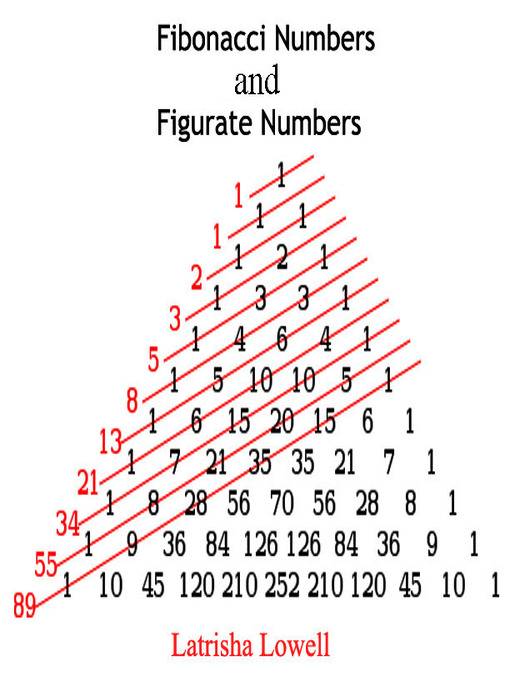
Fibonacci Numbers and Figurate Numbers

Latrisha Lowell

World Technologies | 2012 | 101 páginas | rar - PDF | 1,59 Mb

link (password : matav)

The objective of this book is to provide sufficient knowledge to its readers about Fibonacci Numbers and Figurate Numbers.

Table of Contents
Chapter 1 - Fibonacci Number
Chapter 2 - Fibonacci Coding and Fibonacci Cube
Chapter 3 - Lagged Fibonacci Generator, Lucas Number and Lucas Pseudoprime
Chapter 4 - Fibonacci Word, Fibonacci Retracement and Fibonacci Prime
Chapter 5 - Generalizations of Fibonacci Numbers
Chapter 6 - Golden Section Search and Pisano Period
Chapter 7 - Random Fibonacci Sequence, Young–Fibonacci Lattice and Zeckendorf's Theorem
Chapter 8 - Figurate Number, Pentagonal Number and Octahedral Number
Chapter 9 - Cube (algebra) and Square Pyramidal Number
Chapter 10 - Polygonal Number
Chapter 11 - Square Number
Chapter 12 - Polite Number and Square Triangular Number

Learning to Teach and Teaching to Learn Mathematics: Resources for Professional Development


Matt DeLong e Dale Winter

(Maa Notes)


Mathematical Association of America | 2001 | 285 páginas | rar - PDF | 1,4 Mb

link (password : matav)


Learning to Teach and Teaching to Learn Mathematics is a useful reference for departments interested in creating or enhancing an integrated program to improve the teaching of mathematics by their new and even not so new instructors. The book is a user-friendly guide for implementing such a program. —George Ashline on MAA Online
Any individual community college teacher or mathematics department as a group who wants to actively engage in professional development needs to have this comprehensive resource. This high-quality, comprehensive resource belongs in every mathematics instructor's hands. — Kayana Hoagland, The Mathematics Teacher
Every year thousands of new mathematics instructors and teaching assistants begin their teaching careers, and, scores of experienced faculty seek ways to explore the new teaching possibilities offered by technological and pedagogical innovations. There is a great need for tools to train college mathematics instructors in both basic teaching skills and innovative methodologies. Learning to Teach and Teaching to Learn Mathematics is a self-contained and extensive resource that addresses this need. It describes training and mentoring activities that have been successfully used in a variety of settings. with a wide range of new instructors, including graduate student teaching assistants, undergraduate tutors, graders and lab assistants, as well as postdoctoral, adjunct, part-time and new regular-rank faculty. It addresses a variety of teaching issues including cooperative learning, technology, and assessment.
The book provides a broad range of material including:
  • the structure and operation of an integrated professional development program.
  • a complete description of a pre-semester orientation session for instructors who are either new to teaching or new to a department
  • a guide to visiting and observing classrooms, including samples observations made and the feedback given.
  • descriptions of procedures for customizing and developing new training materials.
  • an extensive list of references and suggested readings.
This material will be of interest to faculty and instructional staff responsible for training and mentoring adjuncts, new faculty, graduate students, and undergraduate assistants and to those interested in an integrated approach to improving and expanding their teaching skills. Although specifically written as training materials, each chapter includes an introduction, goals, activities, and an annotated list of suggested readings.

Platonism, Naturalism, and Mathematical Knowledge


(Routledge Studies in the Philosophy of Science)

James Robert Brown

Routledge | 2011 | 194 páginas | rar - PDF | 1,2 Mb

link (password: matav)

This study addresses a central theme in current philosophy: Platonism vs Naturalism and provides accounts of both approaches to mathematics, crucially discussing Quine, Maddy, Kitcher, Lakoff, Colyvan, and many others. Beginning with accounts of both approaches, Brown defends Platonism by arguing that only a Platonistic approach can account for concept acquisition in a number of special cases in the sciences. He also argues for a particular view of applied mathematics, a view that supports Platonism against Naturalist alternatives. Not only does this engaging book present the Platonist-Naturalist debate over mathematics in a comprehensive fashion, but it also sheds considerable light on non-mathematical aspects of a dispute that is central to contemporary philosophy.


Link para vídeo da conferência de James Brown:

Proofs and Pictures: The Role of Visualization in Mathematical and Scientific Reasoning


Link para o livro:
Philosophy of Mathematics: An Introduction to a World of Proofs and Pictures

terça-feira, 17 de julho de 2012

Russian Mathematics Education History and World Significance

Bruce R. Vogeli,  Alexander Karp

World Scientific Publishing Company | 2010 | 400 páginas | PDF | 2 Mb

Introduction (37 KB)  (link direto)

This anthology, consisting of two volumes, is intended to equip background researchers, practitioners and students of international mathematics education with intimate knowledge of mathematics education in Russia.

Volume I, entitled Russian Mathematics Education: History and World Significance, consists of several chapters written by distinguished authorities from Russia, the United States and other nations. It examines the history of mathematics education in Russia and its relevance to mathematics education throughout the world. The second volume, entitled Russian Mathematics Education: Programs and Practices will examine specific Russian programs in mathematics, their impact and methodological innovations. Although Russian mathematics education is highly respected for its achievements and was once very influential internationally, it has never been explored in depth. This publication does just that.

Contents:
  • Mathematics Education in Russian Before the 1917 Revolution (T Polyakova)
  • Reforms and Counter-Reforms: Schools Between 1917 and the 1950s (A Karp)
  • Toward a History of Mathematics Education Reform in Soviet Schools (1960s–1980s) (A Abramov)
  • Challenges and Issues in Post-Soviet Mathematics Education (M Bashmakov)
  • Mathematicians and Mathematics Education: A Tradition of Involvement (A Sossinsky)
  • Russian Traditions in Mathematics Education and Russian Mathematical Contests (M Saul & D Fomin)
  • The Relevance of Russian Elementary Mathematics Education (J Schmittau)
  • The Preparation of Mathematics Teachers in Russia: Past and Present (N Stefanova)
  • Russian Influence on Mathematics Education in the Socialist Countries:
    • The Traditions and Development of Mathematics Education. Case of Poland (A Pardata)
    • Case of Hungary (K Fried)
    • Case of Cuba (O B Alonso)
  • Influences of Soviet Research in Mathematics Education (J Kilpatrick)

Principles and Standards for School Mathematics


National Council of Teachers of Mathematics | 2003 | 538 páginas | PDF | 12 Mb

Principles for School Mathematics

Introduction 
Educational decisions made by teachers, school administrators, and other professionals have important consequences for students and for society. The Principles for school mathematics provide guidance in making these decisions.
The six principles for school mathematics address overarching themes:
  • Equity. Excellence in mathematics education requires equity—high expectations and strong support for all students.
  • Curriculum. A curriculum is more than a collection of activities: it must be coherent, focused on important mathematics, and well articulated across the grades.
  • Teaching. Effective mathematics teaching requires understanding what students know and need to learn and then challenging and supporting them to learn it well.
  • Learning. Students must learn mathematics with understanding, actively building new knowledge from experience and prior knowledge.
  • Assessment. Assessment should support the learning of important mathematics and furnish useful information to both teachers and students.
  • Technology. Technology is essential in teaching and learning mathematics; it influences the mathematics that is taught and enhances students' learning.

Minilessons for Math Practice, Grades 3-5


Rusty Bresser, Caren Holtzman

Math Solutions | 2006 | 176 páginas | PDF | 920 Kb


These two books present an innovative approach to reinforcing students' math skills. The 27 engaging lessons in each book are easy to implement, require little or no preparation, and take only 5 to 15 minutes to teach. Designed for use during transition times, the minilessons help students practice math concepts, skills, and processes by applyingthem in a variety of problem-solving contexts throughout the school day. Content areas explored include: number and operations; algebra; geometry; data analysis and probability; and measurement. Each activity includes a materials list, teaching directions, a list of key questions, and ideas for extending the activity throughout the year.