domingo, 22 de novembro de 2009

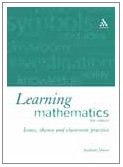
Learning Mathematics: Issues, Theory and Classroom Practice

Anthony Orton

Continuum | 2004 | 3.ª edição | 241 páginas | pdf | 15 Mb

lib.freescienceengineering.org
depositfiles.com

Descrição: Written from the viewpoint of the maths teacher, this book provides answers to many questions that plague teachers. Each chapter explores a particular issue that illustrates the interaction between theory and practice. New Chapters have been includes on cognition, pattern and ICT.

Contents
Preface to the Third Edition
Chapter 1 Do Teachers of Mathematics Need Theories?
The importance of theories
The origins of theories

Chapter 2 What Cognitive Demands Are Made in Learning Mathematics? 13
The problem of classification 13
Retention and recall 13
Using algorithms 18
Learning concepts 20
Problem-solving
Chapter 3 Could We Enhance Learning Through Optimum Sequencing? 27
Behaviourism 27
Objectives 30
Programmed learning 34
Learning hierarchies 40
Chapter 4 Must We Wait Until Pupils Are Ready?
Alternative views
Piaget and readiness
Accelerating learning
Curriculum implementation
Critical evaluation
Cross-cultural issues

Chapter 5 Can Pupils Discover Mathematics for Themselves?
Learning by discovery
Gestalt psychology
Structural apparatus
Problems and investigations
Obstacles and difficulties in problem-solving
Logo

Chapter 6 Is an Appreciation of Pattern Important in Learning
Mathematics?
Pattern in mathematics
Early concepts of pattern
Number patterns
The approach to algebra
Pattern and proof
Pattern in relation to shape

Chapter 7 Does What We Learn Depend on Where We Are?
Applying mathematics
Everyday mathematics
Work mathematics
Transfer of learning and situated cognition
Ethnomathematics
The significance of the situation

Chapter 8 Why Do Some Pupils Achieve More Than Others?
Individual differences
Convergent and divergent thinking
Mathematical ability
Spatial ability
Gender-related differences
Preferences and attitudes

Chapter 9 Does Language Interfere with Learning Mathematics?
Issues of language
The mathematics register
Reading mathematics
Mathematical symbols
Communicating meaning
Language, culture and mathematics
Word problems

Chapter 10 Is There a Theory of Mathematics Learning?
Mathematics and theories of learning
The Dienes theory of mathematics-learning
The van Hiele theory of learning geometry
Ausubel's theory of meaningful learning
Meaningful learning
Superordinate and subordinate learning
Conflicts and failures in learning
A brief note on information processing
Chapter 11 Can Pupils Construct Mathematical Knowledge for
Themselves? 194
Constructivism 194
Versions of constructivism 197
Some constructivist teaching experiments 200
Constructivism in our classrooms 203
Cognitive obstacles 209
References 213
Author index 225
Subject index 227

terça-feira, 17 de novembro de 2009

Educational Studies in Mathematics

Educational Studies in Mathematics
Springer Netherlands

Volume 6
1975 - 1976

rar -pdf
ifile.it (password: gigle.ws | 21,3 Mb)
ifile.it (6,01 Mb)

Conteúdos:

1-22: Arthur Engel -> The probabilistic abacus
23-39: Thomas C. O'Brien -> Deformation and the four card problem
41-51: Perla Nesher and Eva Teubal -> Verbal cues as an interfering factor in verbal problem solving
53-75: Erich Wittmann -> Natural numbers and groupings
77-86: J. D. Gray -> Criticism in the mathematics class
87-91: R. M. Cater and H. W. Johnstone -> A computer language for teaching introductory logic
93-98: Mario Barra -> The cycloid
99-111: H. P. Hahn -> A model of the symmetric group S4 used as a means of teaching fundamental algebraic concepts
113-118: J. B. Harkin -> Introducing the geoboard
119-123: J. Vyšín -> An experience of the Czechoslovakian experimental center
125: Errata
127-186: Hans Freudenthal -> Pupils' achievements internationally compared — The IEA
187-205: Dietger Heitele -> An epistemological view on fundamental stochastic ideas
207-212: James J. Roberge -> Development of comprehension of logical connectives in symbolic or verbal form
213-252: H. N. Jahnke, H. Steinbring and D. Vogel -> Zahlbegriff und Rechenfertigkeit-zur problematik der Entwicklung wissenschaftlicher begriffe
253-257: Announcement
259-271: H. J. L. Kamps and J. H. Van Lint -> A comparison of a classical calculus test with a similar multiple choice test
273-292: A. G. Howson -> University courses for future teachers
293-309: D. E. Mackenzie, J. D. Gray and S. J. Prokhovnik -> Large-group lecturing in mathematics
311-326: Josette Adda -> L'incompréhension en mathématiques et les malentendus
327-338: D. Anxolabéhère and G. Périquet -> Approche des modeles mathematiques de l'evolution des populations par la simulation d'experiences sur ordinateur
339-350: Shlomo Vinner -> The naive platonic approach as a teaching strategy in arithmetics
351-373: John Niman -> Graph theory in the elementary school
375-385: Joseph M. Scandura -> How does mathematics learning take place?
387-388: Errata
389-393: Maurice Glaymann -> Les probabilités à l'école élémentaire
395-408: Floyd Vest -> Teaching problem solving as viewed through a theory of models
409-413: Ramesh Kapadia -> Set-theory and logic in school
415-428: Michèle Artigue and Jacqueline Viennot -> Quelques reflexions sur l'enseignement de la numération aux enfants de 7, 8 ou 9 ans
429-445: Pierre Buisson -> Évaluation-sondage dans le premier cycle (12–16 ans)
447-474: Adele Goldberg and Patrick Suppes -> Computer-assisted instruction in elementary logic at the university level
475-497: M. Otte -> Die didaktischen systeme von V. V. Davidov/ D. B. Elkonin einerseits und L. V. Zankov andererseits
499-500: XVIth International Mathematical Olympiad
501-502: XVIIth International Mathematical Olympiad


Volume 7
1976

rar -pdf
ifile.it (password: gigle.ws | 23,3 Mb)
ifile.it (6,62 Mb)

Conteúdos:

3-22: Josette Adda -> Difficultés liées à la présentation des questions mathématiques
23-40: A. W. Bell -> A study of pupils' proof-explanations in mathematical situations
41-47: Alan J. Bishop -> Decision-making, the intervening variable
49-58: Régine Douady -> Une expérience à Montrouge
59-69: Arthur Engel -> Why does the probabilistic abacus work?
71-82: T. J. Fletcher -> Nomograms and the foundations of geometry
83-88: Maurice Glaymann -> Ou le premier n'est pas toujours premier ...
89-108: Thomas C. O'Brien -> Three informal essays
109-112: H. O. Pollak -> What industry wants a mathematician to know and how we want them to know it
113-120: A. Revuz -> Stratégies pour une approche de ℤ
121-126: Jaroslav Šedivý -> A note on the role of parameters in mathematics teaching
127-137: W. Servais -> Problématique dans l'apprentissage de la mathématique
139-146: Hans Georg Steiner -> Finite geometries and non-measurable voting bodies
147-155: Stefan Turnau -> On a class-room incident
157-169: P. M. Hiele -> Wie kann man im Mathematikunterricht den Denkstufen Rechnung tragen?
171-177: Tamás Varga -> On primary school teachers' mathematics
179-184: Erich Wittmann -> Mathematizing around convexity
189-190: Hans Freudenthal -> Preface
191-192: Foreword
193-331: Mathematics education
332-350: Learning to teach
351-363: Curriculum development — A strategy
364-367: Publications
369-388: Pearla Nesher -> Three determinants of difficulty in verbal arithmetic problems
389-397: Menahem Finegold and Shmuel Avital -> Enquiry, discovery and research: Terminology and meaning
399-411: Shmuel Avital and Rodney T. Hansen -> Mathematical induction in the classroom
413-429: Shlomo Vinner -> The naive concept of definition in mathematics
431-442: H. J. Vollrath -> The place of geometry in mathematics teaching: An analysis of recent developments
443-463: Emma Castelnuovo, Daniela and Claudio Gori-Giorgi -> La géométrie projective à l'école
465-495: G. Walther -> Balancierte graphen-ein thema für die didaktische diskussion zum geometrieunterricht
497-521: Claude Comiti, Marie-Rose Guillermard and Alain Solano -> Approche des statistiques en classe de sixième: Analyse de résultats sportifs
523-527: G. F. Peaker -> A commentary from iea on Dr. Freudenthal's article in: Educational studies in mathematics, vol. 6, no. 2
529-533: H. Freudenthal -> Rejoinder
535: Erratum


Volume 8
1977

rar -pdf
ifile.it (password: gigle.ws | 20,5 Mb)
ifile.it (6,31 Mb)

Conteúdos:
1: Hans Freudenthal -> Creativity
3-16: Hans Freudenthal -> Bastiaan's experiments on Archimedes' principle
17-26: Shlomo Vinner -> The concept of exponentiation at the undergraduate level and the definitional approach
27-34: J. Dormolen -> Learning to understand what giving a proof really means
35-39: János Surány -> “I have lost the thread completely ...”
41-50: Emma Castelnuovo -> L'enseignement des mathématiques
51-116: R. Duval and F. Pluvinage -> Démarches individuelles de réponse en mathématique
117-152: F. Goffree -> Johan—A teacher training freshman studying mathematics and didactics
153-165: E. Fischbein -> Image and concept in learning mathematics
167-179: Shlomo Libeskind -> A problem solving approach to teaching mathematics
181-198: Claude Comiti -> Approche du nombre par des enfants de 6 à 7 ans
199-210: Ramesh Kapadia -> Curriculum development: Practice and theory
211-224: Hans-Joachim Vollrath -> The understanding of similarity and shape in classifying tasks
225-238: Murad E. Jurdak -> Structural and linguistic variables in selected inference patterns for bilinguals in grades six to ten
239-240: Announcements
241-250: Jacques Nimier -> Mathématique et affectivité
251-269: Pearla Nesher and Tamar Katriel -> A semantic analysis of addition and subtraction word problems in arithmetic
271-293: Dieter Lunkenbein -> Rationalising teaching interventions—A working model of a process of research in mathematics teaching
295-316: J. Michael Shaughnessy -> Misconceptions of probability: An experiment with a small-group, activity-based, model building approach to introductory probability at the college level
317-332: Adolf Af Ekenstam -> On children's quantitative understanding of numbers
333-357: J. Grossel -> Recherche sur les difficultés occasionnées chez les étudiants par les notations avec indices et par le signe ‘Σ’ en mathématiques
359-368: Robert B. Wenger and Charles R. Rhyner -> A problem-oriented mathematical optimization course
369-376: H. Freudenthal -> Teacher training—An experimental philosophy
377-389: Iowo-Team -> Eleven minutes group work—A transcript
391-398: Nathan Hoffman -> The teaching and learning of basic number facts
399-404: K. Bognár and T. Nemetz -> On the teaching of probability at secondary level
405-412: Thomas C. O'Brien -> Implications of piagetian research for teachers of teachers and teachers of children
413-438: Nitsa Hadar -> Children's conditional reasoning
439-460: Uwe Beck -> Auslaufvorgänge aus wasserbehältern-eine anwendungsorientierte einführung in die analysis
461-478: Frank Swetz -> The ‘open-door’ policy and the reform of mathematics education in the People's Republic of China
479-508: Norbert Knoche -> On the indicative value of the classical goodness criteria of reliability and validity
509-510: XVIIIth International Mathematical Olympiad (IMO)
511-512: XIXth International Mathematical Olympiad (IMO
)

Volume 9
1978

rar -pdf

ifile.it (password: gigle.ws | 20,8 Mb)
ifile.it (7,85 Mb)

Conteúdos:
1-5: Hans Freudenthal -> Address to the first conference of I.G.P.M.E. (International Group for the Psychology of Mathematical Education), at Utrecht 29 August 1977
7-15: A. Abele -> The usage of graphs in solving mathematical problems
17-39: Annie Bessot and Claude Comiti -> Une etude sur l'approche du nombre par l'eleve du cours preparatoire
41-50: C. Laborde -> Relations arithmetiques-aspect statique-aspect dynamique
51-73: Leen Streefland -> Some observational results concerning the mental constitution of the concept of fraction
75-83: Hans Heege -> Testing the maturity for learning the algorithm of multiplication
85-95: Iowo-Team -> Five plus four minutes class instruction—a transcript
97-114: N. Hadar and L. Henkin -> Children's conditional reasoning part II: Towards a reliable test of conditional reasoning ability
115-140: N. Hadar -> Children's conditional reasoning part III: A design for research on children's learning of conditional reasoning and research findings
141-142: Announcements: International study group on the relations between the history and the pedagogy of mathematics
143-145: Hans Freudenthal -> Change in mathematics education since the late 1950's-ideas and realisation
147-158: A. L. Blakers -> Change in mathematics education since the late 1950's-ideas and realisation Australia
159-170: S. M. Sharfunddin -> Change in mathematics education since the late 1950's-ideas and realisation Bangladesh
171-181: A. Revuz -> Change in mathematics education since the late 1950's-ideas and realisation france
183-223: A. G. Howson -> Change in mathematics education since the late 1950's-ideas and realisation great britain
225-244: Mária Halmos and Tamás Varga -> Change in mathematics education since the late 1950's-ideas and realisation hungary
245-253: J. N. Kapur -> Change in mathematical education since the late 1950's-ideas and realisation India
255-260: Badiollah Rostami -> Change in mathematics education since the late 1950's—Ideas and realisation Iran
261-270: Hans Freudenthal -> Change in mathematics education since the late 1950's — Ideas and realisation the Netherlands
271-281: R. Ogbonna Ohuche -> Change in mathematics education since the late 1950's — Ideas and realisation Nigeria
283-295: Aniela Ehrenfeucht -> Change in mathematics education since the late 1950's — Ideas and realisation Poland
297-302: A. Williams -> Change in mathematics education since the late 1950's — Ideas and realisation Sierra Leone
303-316: A. J. Gunawardena -> Changes in mathematics education since the late 1950's — Ideas and realisation Sri Lanka
317-330: M. Sawi -> Change in mathematics education since the late 1950's — Ideas and realisation Sudan
331-337: Orasri Purakam -> Change in mathematics education since the late 1950's — Ideas and realisation Thailand
339-353: James T. Fey -> Change in mathematics education since the late 1950's — Ideas and realisation U.S.A.
355-379: B. J. Wilson -> Change in mathematics education since the late 1950's — Ideas and realisation West Indies
381-390: A. Vidal-Madjar -> Teaching mathematics and statistics to adults who are keen on psychology
391-409: Stephen I. Brown and Gerald R. Rising -> One third cherokee: Problem solving, teaching, and intuition
411-420: I. D. MacDonald -> Insight and intuition in mathematics
421-427: Brian Griffiths -> Some comments on Macdonald's paper
429-438: Shmuel Avital and Shlomo Libeskind -> Mathematical induction in the classroom: Didactical and mathematical issues
439-460: M. Vandewiele and W. D'Hondt -> Quelques difficultes en mathematique et leur perception par les eleves en classe de troisieme dans l'enseignement secondaire a Dakar
461-502: Dominique Pastre -> Observation du mathematicien: Aide a l'enseignement et a la Demonstration Automatique de Theoremes
503-504: Hans Freudenthal -> Acknowledgment
504: Tribute
505-506: XXth International mathematical Olympiad (IMO)

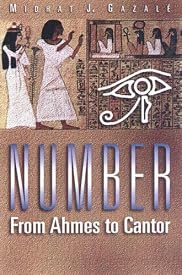
Number: From Ahmes to Cantor


Midhat Gazale

Princeton University Press | 2000 | 297 páginas |  pdf | 29 Mb

lib.freescienceengineering.org

djvu
f3.tiera.ru
lib.freescienceengineering.org

Descrição: We might take numbers and counting for granted, but we shouldn't. Our number literacy rests upon centuries of human effort, punctuated here and there by strokes of genius. In his successor and companion volume to Gnomon: From Pharaohs to Fractals, Midhat Gazalé takes us on a journey from the ancient worlds of the Egyptians, the Mesopotamians, the Mayas, the Greeks, the Hindus, up to the Arab invasion of Europe and the Renaissance. Our guide introduces us to some of the most fascinating and ingenious characters in mathematical history, from Ahmes the Egyptian scribe (whose efforts helped preserve some of the mathematical secrets of the architects of the pyramids) through the modern era of Georg Cantor (the great nineteenth-century inventor of transfinite numbers). As he deftly blends together history, mathematics, and even some computer science in his characteristically compelling style, we discover the fundamental notions underlying the acquisition and recording of "number," and what "number" truly means.Gazalé tackles questions that will stimulate math enthusiasts in a highly accessible and inviting manner. What is a natural number? Are the decimal and binary systems the only legitimate ones? Did the Pythagorean theorem and the discovery of the unspeakable irrationals cost the unfortunate mathematician Hippasus his life? What was the Ladder of Theodorus of Cyrene and how did the ancient Greeks calculate square roots with such extraordinary proficiency? An original generalization of Euler's theorem is offered that explains the pattern of rational number representations. Later on, the field of Continued Fractions paves the way for another original contribution by Gazalé, that of cleavages, which sheds light on the mysterious nature of irrational numbers as it beautifully illustrates Dedekind's famous Schnitt. In the end the author introduces us to the Hilbert Hotel with its infinite number of rooms, guests, and an infinite number of people waiting to check in, where he sets the debate between Aristotle and Cantor about the true nature of infinity.This abundantly illustrated book, remarkable for its coherency and simplicity, will fascinate all those who have an interest in the world of numbers. Number will be indispensable for all those who enjoy mathematical recreations and puzzles, and for those who delight in numeracy.

The Commentary of al-Nayrizi on Books II-IV of Euclid's Elements of Geometry


(Studies in Platonism, Neoplatonism, and the Platonic Tradition)
Anthony Lo Bello
Brill | 2009 | 218 páginas | pdf | 1,548 Mb

lib.freescienceengineering.org

Descrição: "The Commentary of al-Nayrizi (circa 920) on Euclid's Elements of Geometry" occupies an important place both in the history of mathematics and of philosophy, particularly Islamic philosophy. It is a compilation of original work by al-Nayrizi and of translations and commentaries made by others, such as Heron. It is the most influential Arabic mathematical manuscript in existence and a principle vehicle whereby mathematics was reborn in the Latin West. Furthermore, the Commentary on Euclid by the Platonic philosopher Simplicius, entirely reproduced by al-Nayrizi, and nowhere else extant, is essential to the study of the attempt to prove Euclid's Fifth Postulate from the preceding four. "Al-Nayrizi" was one of the two main sources from which Albertus Magnus (1193-1280), the Doctor Universalis, learned mathematics. This work presents an annotated English translation of Books II-IV and of a hitherto lost portion of Book I.

Robert Of Chester's Latin Translation Of The Algebra Of Al-Khowarizmi


Al-Khowarizmi

Kessinger Publishing, LLC | 2009 | 194 páginas | rar - pdf | 4,34 Mb

on-line: archive.org


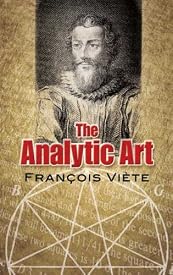
The Analytic Art


Francois Viete

Dover Publications | 2006 | 464 páginas | djvu | 3,3 Mb

f3.tiera.ru
lib.freescienceengineering.org

Descrição: This historic work consists of several treatises that developed the first consistent, coherent, and systematic conception of algebraic equations. Originally published in 1591, it pioneered the notion of using symbols of one kind (vowels) for unknowns and of another kind (consonants) for known quantities.

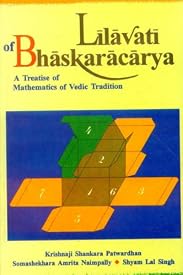
Lilavati of Bhaskaracarya


K. S. Patwardhan, S. A. Nampally

Motilal Banarsidass | 2001 | 228 páginas |  pdf | 53,227 Mb

lib.freescienceengineering.org

djvu
lib.freescienceengineering.org

Descrição: In 1150 AD, Bhaskaracarya, renowned mathematician and astronomer of Vedic tradition composed Lilavati as the first part of a larger work, a comprehensive exposition of arithmetic, algebra, geometry, mensuration, number theory and related topics. This is an enlargement of his work and attempts a thorough mathematical explanation of definitions, formulae, short cuts and methodology as intend by Bhaskara. Stitches are followed by literal translations so that the reader can enjoy and appreciate the beauty of accurate and musical presentation in Lilavati.