quarta-feira, 11 de novembro de 2009
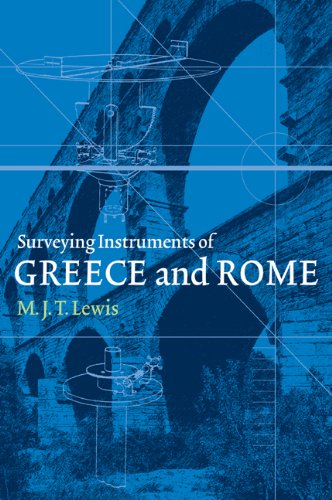
Surveying Instruments of Greece and Rome
Cambridge University Press | 2001 | 410 páginas | pdf | 2,26 Mb
depositfiles.com
lib.freescienceengineering.org
Descrição: The Greeks and Romans achieved extraordinary feats of surveying in building their aqueducts, tunnels and roads and in measuring the circumference of the earth and the heights of mountains. This book, which contains translations of all the ancient texts on surveying instruments, including major sources hitherto untapped, sets out to reconstruct the instruments and to explain how they were used. The subject has never been tackled before in this detail, and a level of technical sophistication emerges which must count as one of the greatest achievements of the ancient world.
domingo, 8 de novembro de 2009
Jornal Internacional de Estudos em Educação Matemática
Este jornal/periódico almeja:
· estimular a reflexão em educação matemática nos seus diferentes níveis;
· gerar discussões produtivas para área;
· encorajar a investigação e a pesquisa;
· promover a crítica e avaliação de idéias e os procedimentos utilizados em nossa área.
Seu público alvo é o educador matemático consciente de que o ensino e a aprendizagem de matemática são tópicos complexos sobre os quais muito ainda precisa ser revelado e compreendido.
Este jornal busca refletir tanto a variedade de pesquisas quanto a variedade de metodologias usadas nessas investigações. Para tal são aceitos artigos em português, inglês, francês e espanhol. Enfatizamos o alto nível dos artigos que vão alem de interesses nacionais ou locais.
on-line: periodicos.uniban.br
Vol. 1, No 1 (2009)
Sumário
Editorial
| Editorial | |
| Janete Bolite Frant, Alessandro Jacques Ribeiro |
Artigos
| INVESTIGAÇÃO COLABORATIVA DE PROFESSORES E ENSINO DA MATEMÁTICA: CAMINHOS PARA O DESENVOLVIMENTO PROFISSIONAL | RESUMO PDF |
| João Pedro da Ponte, Luís Menezes |
| GESTURE, CONCEPTUAL INTEGRATION AND MATHEMATICAL TALK | RESUMO PDF |
| Laurie Edwards |
| LEARNING IN VIRTUAL ENVIRONMENTS: A METHODOLOGY FOR THE ANALYSIS OF TEACHER DISCOURSE | RESUMO PDF |
| Marcelo Bairral |
| REFLEXÃO SOBRE A PRÁTICA DA CONTAGEM: DIÁLOGO ENTRE EDUCADOR INFANTIL, PESQUISADOR E CRIANÇA | RESUMO PDF |
| Maria Tereza Carneiro Soares, Denise Grein Santos, Maria Lucia Faria Moro |
| MATHÉMATIQUES, RÉALITÉ ET DIDACTIQUE DES DOMAINES D'EXPÉRIENCE | RESUMO PDF |
| Nadia Douek |
| TEACHER’S SEMIOTIC GAMES IN MATHEMATICS LABORATORY | RESUMO PDF |
| Ornella Robutti |
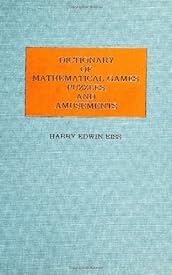
Dictionary of Mathematical Games, Puzzles, and Amusements
Greenwood Press | 1988 | 292 páginas | pdf
lib.freescienceengineering.org
djvu | 2,86 Mb
f3.tiera.ru
lib.freescienceengineering.org
depositfiles.com
Descrição: Mathematical play has challenged and stimulated human ingenuity throughout recorded history. It has ranged from the common sorts of brain teasers such as mazes, arithmetic story problems, and simple geometric puzzles to sophisticated explorations of questions that still concern modern mathematical theorists. This new dictionary provides a tantalizing variety of paradoxes, games, problems, and puzzles that will appeal to mathematics enthusiasts at every level of proficiency. Eiss introduces his subject with an overview of the history of recreational mathematics and its relation to some theoretical questions that have occupied mathematicians for centuries. Dictionary entries include problems posed by particular thinkers as well as traditional puzzlers that have come down to us anonymously. Information on the origins and history of many of the activities is supplied, and thorough cross-referencing enables the reader to locate all puzzles, games, and amusements of a similar type. The bibliography suggest sources of further information.
quinta-feira, 5 de novembro de 2009
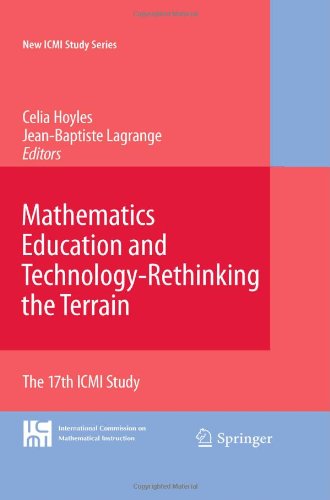
Mathematics Education and Technology-Rethinking the Terrain: The 17th ICMI Study
Celia Hoyles, Jean-Baptiste Lagrange
Springer | 2009 | 494 páginas | pdf | 6,78 Mb
lib.freescienceengineering.org
Descrição:
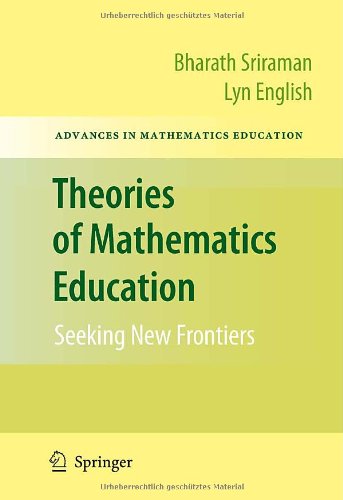
Theories of Mathematics Education: Seeking New Frontiers
(Advances in Mathematics Education)
Bharath Sriraman, Lyn English
Springer | 2009 | 668 páginas | pdf
4shared.com
lib.freescienceengineering.org
Descrição: This inaugural book in the new series Advances in Mathematics Education is the most up to date, comprehensive and avant garde treatment of Theories of Mathematics Education which use two highly acclaimed ZDM special issues on theories of mathematics education (issue 6/2005 and issue 1/2006), as a point of departure. Historically grounded in the Theories of Mathematics Education (TME group) revived by the book editors at the 29th Annual PME meeting in Melbourne and using the unique style of preface-chapter-commentary, this volume consist of contributions from leading thinkers in mathematics education who have worked on theory building.This book is as much summative and synthetic as well as forward-looking by highlighting theories from psychology, philosophy and social sciences that continue to influence theory building. In addition a significant portion of the book includes newer developments in areas within mathematics education such as complexity theory, neurosciences, modeling, critical theory, feminist theory, social justice theory and networking theories. The 19 parts, 17 prefaces and 23 commentaries synergize the efforts of over 50 contributing authors scattered across the globe that are active in the ongoing work on theory development in mathematics education.
Educational Studies in Mathematics, Vol 1 e 3 - 5
Educational Studies in MathematicsSpringer Netherlands
Volume 1
1968 - 1969
pdf | 21,3 Mb
ifile.it
rapidshare.com
Contents:
3-8: Hans Freudenthal -> Why to teach mathematics so as to be useful
9-16: A. Z. Krygovska -> Processus de la mathématisation dans l'enseignement
17: J. M. Hammersley -> On the enfeeblement of mathematical skills by modern mathematics and by similar soft intellectual trash in schools and universities
18-23: H. B. Griffiths -> Pure mathematicians as teachers of applied mathematicians
24-30: H. O. Pollak -> On some of the problems of teaching applications of mathematics
31-36: André Revuz -> Les pièges de l'enseignement des mathématiques
37-54: W. Servais -> Comment enseigner la mathématique pour qu'elle soit utile?
55-60: Jean Tavernier -> The thinking of a physicist about mathematics
61-79: Panel discussion
80-88: A. Delessert -> Quelques observations naïves en marge de deux enquêtes sur l'enseignement mathématique
89-92: Charles Pisot -> Enseignement des mathématiques pour physiciens
93-97: Matts Håstad -> Mathematics and engineers
98-104: R. C. Lyness -> Applied mathematics in english schools
105-110: Gail Young -> The computer and the calculus
111-117: R. J. Walker -> Student use of a computer
118-125: Maurice Glaymann -> Initiation au calcul numérique et usage des machines à calculer
126-160: Murray S. Klamkin -> On the teaching of mathematics so as to be useful
161-165: H. Behnke -> Wandlungen in der auswahl der stoffe für den unterricht
166-180: T. J. Fletcher -> A heuristic approach to matrices
181-201: Hans-Georg Steiner -> Examples of exercises in mathematization on the secondary school level
202-221: Arthur Engel -> Systematic use of applications in mathematics teaching
222-236: André Roumanet -> Une expérience d'enseignement de mathématique avec des enfants de 11 à 13 ans
237-243: A. Brailly -> Un exemple d'exploitation d'une ‘situation’
244: Propositions on the teaching of mathematics
245-246: Final recommandations of the participants about the coordination of the teaching of mathematics and physics
247-251: Joseph M. Scandura, Joan Barksdale, John H. Durnin and Robert Mcgee -> An unexpected relationship between failure and subsequent mathematics learning
252-261: Keith Hirst and Norman Biggs -> Undergraduate projects in mathematics
262-273: Jacques Fort -> Expérimentation d'un enseignement des mathématiques en classe de sixième des lycées et collèges
274-288: Emma Castelnuovo -> Les transformations affines dans le ler cycle de l'école secondaire
289-299: Hans-Georg Steiner -> Examples of exercises in mathematization
300-311: Arnold Kirsch -> An analysis of commercial arithmetic
312-326: Burt A. Kaufman and Hans-G. Steiner -> The CSMP approach to a content-oriented, highly individualized mathematics education
327-337: Hans Freudenthal -> L'intégration après coup ou à la source
338-339: Hans Freudenthal -> The concept of integration at the Varna congress
340-342: Emma Castelnuovo -> L'intégration centrée autour des mathématiques du ler cycle de l'enseignement secondaire
343-346: P. M. Hiele -> Quelques aspects didactiques du développement de la pensée des enfants dans les mathématiques et la physique
347-351: Howard F. Fehr -> Contemporary mathematics and its intervention in the sciences
352-364: A. Z. Krygovska -> Préparation des maîtres à l'enseignement intégré des sciences
365-377: André Delessert -> Connections between the reform of mathematical instruction and the further training of teachers
378-385: Lina Mancini Proia -> An experiment in teaching geometry
386-393: A. Hollinger -> Sur l'initiation à la géométrie
394-401: P. G. J. Vredenduin -> The conclusive force of Venn diagrams, and the implication
402-407: J. Van Dormolen -> The uselessness of Venn diagrams
408-414: Hans Freudenthal -> Braces and Venn diagrams
415-421: J. Bastier -> Games and relations
422-439: Jaroslav Šedivý -> Teaching of elements of logic by means of finite graphs
440-444: Hans-Joachim Vollrath -> Some algebraic aspects in analysis teaching
445-483: Hans-G. Steiner and Burt A. Kaufman -> Checker games in operational systems as media for an inductive approach to teaching Algebra
484-492: Hans Freudenthal -> Further training of mathematics teachers in the Netherlands
493-498: A. Revuz -> Further training of mathematics teachers of secondary level (Programmes, methods, means)
499-502: I. R. Vesselo -> A supplementary course in mathematics for teachers
Volume 31970 - 1971
pdf | 22 Mb
ifile.it
Contents:
1-11: David A. Smith -> A calculus-with-computer experiment
12-42: Z. P. Diénès -> Les six étapes de l'apprentissage des structures
43-62: Lina Mancini Proia -> Une expérience dans un lycée classique
63-67: Thomas C. O'Brien -> Some notes on multiplication of whole numbers
68-83: A. D. Semušin -> Study of geometry in the fourth grade
84-94: Maurice Glaymann -> A geometry on the cube
95-110: William E. Lamon and Lloyd F. Scott -> An investigation of structure in elementary school mathematics: Isomorphism
111-127: J. N. Kapur -> Combinatorial analysis and school mathematics
128-129: XIth International Olympiad Bucharest, 5–20 July 1969
131-132: XIIth International Olympiad Budapest-Keszthely, 10–24 June 1970
133-146: G. D. Balk -> Application of heuristic methods to the study of mathematics at school
147-160: M. A. Grabovskij and P. M. Kotel'Nikov -> The use of kinematic models in the study of trigonometric functions
161-169: E. G. Jakuba -> Experiments on improving the teaching process
170-179: N. M. Roganovskij -> Axiomatic approach to the teaching of solid geometry in grade IX
180-183: S. I. Veksler -> Developing the capabilities of the pupil
184-191: Geoffrey Giles -> Switch boards and logic
192-205: K. Orlov -> Experimental verification of the use of the mathematical balance in secondary teaching
206-219: Alexander Graham and Graham A. Read -> A television programme on finite differences
220-228: Floyd R. Vest -> A catalog of models for multiplication and division of whole numbers
229-243: Joseph M. Scandura -> A research basis for teacher education
244-269: Murray S. Klamkin -> On the ideal role of an industrial mathematician and its educational implications
270-276: M. A. Touyarot -> Inquiry into the meanings of ‘relation’
277-280: Burt Kaufman -> Background
281-285: The CSMP development of geometry
286-287: Geometry conference recommendations
288-309: Friedrich Bachmann -> n-Gons
310-321: H. S. M. Coxeter -> Inversive geometry
322-336: Robert B. Davis -> The problem of relating mathematics to the possibilities and needs of schools and children
337-352: Zoltan P. Diénès -> An example of the passage from the concrete to the manipulation of formal systems
353-394: Arthur Engel -> Geometrical activities for the upper elementary school
395-412: T. J. Fletcher -> The teaching of geometry present problems and future aims
413-435: Hans Freudenthal -> Geometry between the devil and the deep sea
436-453: Peter Hilton -> Topology in the high school
454-476: M. A. Jeeves -> Some experiments on structured learning
477-481: Paul J. Kelly -> Topology and transformations in high school geometry
482-489: Victor Klee -> The use of research problems in high school geometry
490-500: Howard Levi -> Geometric algebra for the High School Program
Volume 41971 - 1972
pdf | 22,7 Mb
ifile.it
Contents:
1-17: Karl Menger -> The geometry relevant to modern education
18-30: G. Papy -> A first introduction to the notion of topological space
31-47: Günter Pickert -> The introduction of metric by the use of conics
48-52: André Revuz -> The position of geometry in mathematical education
53-75: Thomas G. Room -> The geometry and algebra of reflections (and of 2×2 matrices)
76-86: Seymour Schuster -> On the teaching of geometry a potpourri
87-90: Hans-Georg Steiner -> A foundation of euclidean geometry by means of congruence mappings
91-103: Marshall Stone -> Learning and teaching axiomatic geometry
104-110: Herbert E. Vaughan -> The development of euclidean geometry in terms of translations
111-134: Mario Villa -> A logical approach to the teaching of geometry at the secondary level
135-149: John Williams -> Problems and possibilities in the assessment and investigation of mathematics learning
150-152: Hans Zassenhaus -> Genetic development of the congruence axioms
153-165: H. Brian Griffiths -> Mathematical insight and mathematical curricula
166-181: William E. Lamon and Leslie E. Huber -> The learning of the vector space structure by sixth grade students
182-186: Lucie Libois -> Mathematics in the Decroly School
187-200: J. E. Phythian -> Mathematical kujitegemea in Tanzania
201-219: Thomas C. O'Brien, Bernard J. Shapiro and Norma C. Reali -> Logical thinking-language and context
220-224: E. G. Begle -> Time devoted to instruction and student achievement
225-231: Jacques Chayé -> Apprentissage de la déduction
232-242: Magdeleine Motte -> En marge de l'apprentissage de la déduction
243-251: Erich Wittmann -> Complementary attitudes in problem solving
252-263: J. E. Baker, M. Bruckheimer and H. G. Flegg -> A pedagogic approach to morphisms
264-280: E. Fischbein, Ileana Bărbat and I. Mînzat -> Intuitions primaires et intuitions secondaires dans l'initiation aux probabilités
281-298: A. Revuz -> La notion de continuité dans l'enseignement du second degré
299-305: K. E. Hirst -> Derivatives and tangents
306-323: Max Jerman and Raymond Rees -> Predicting the relative difficulty of verbal arithmetic problems
324-330: Philip S. Marcus -> Comments on variable-free calculus
331-345: Joseph M. Scandura and Robert McGee -> An exploratory investigation of basic mathematical abilities of kindergarten children
346-357: T. Varga -> Logic and probability in the lower grades
358-367: Hugh Thurston -> What exactly is dy/dx?
368-392: Josette Adda -> Quelques études pour contribuer à l'observation du comportement mathématique des non-mathématiciens
393-397: A. F. Monna -> Set-theory in 1888
398-399: XIIIth International Olympiad Bratislava-Zilina, 7–20 July 1971
401-428: Thomas C. O'Brien -> Logical thinking in adolescents
429-449: Adele Goldberg and Patrick Suppes -> A computer-assisted instruction program for exercises on finding axioms
450-465: Théo Bernet and André Delessert -> Un inventaire des notions impliquées dans un enseignement général de mathématique à l'école secondaire
466-483: Jan Konior -> Essai de détermination des causes d'échecs des élèves dans la recherche de démonstrations
484-490: H. Freudenthal -> The ‘empirical law of large numbers’ or ‘The stability of frequencies’
491-500: Problèmes de la pensée logique dans l'enseignement des mathématiques
Volume 51973 - 1974
pdf | 21,1 Mb
ifile.it
Contents:
1-22: William E. Hartnett -> The CF/PMM approach to learning Mathematics
23-37: Héléna Siwek -> Logique formelle et raisonnement naturel des élèves dans l'enseignement de la mathématique
39-48: A. Z. Krygovska and Maria Ciosek -> Quelques remarques sur le comportement des élèves concernant les problèmes Mathématiques
49-64: Burt Kaufman and Lennart Råde -> Relations and probability
65-70: Jean Galtier -> Around a game
71-79: Thomas C. O'Brien -> Logical thinking in college students
81-89: Hartmut wallrabenstein -> Development and signification of a geometry test
91-108: Hartmut Wallrabenstein -> Experiments in teaching intuitive topology in the 5th and 6th grades
109-123: Max Jerman -> Problem length as a structural variable in verbal arithmetic problems
125-146: Erich Wittmann -> The concept of grouping in Jean Piaget's psychology — Formalization and applications
147-155: Floyd Vest -> Using models of operations and equations
157-180: A. G. Howson -> Charles Godfrey (1873–1924) and the reform of mathematical education
181-184: Bernard J. Shapiro and Thomas C. O'Brien -> Quasi-Child Logics
185-192: Robert A. Bagnato -> Teaching college Mathematics by question-and-answer
193-205: Lyman Holden -> The march of the discoverer
207-242: Une Équipe De L'I. R. E. M. De Strasbourg -> Sur l'assimilation des programmes de 6ème-5ème (Résultats d'une enquête effectuée en mai-juin 1972 par une équipe de l'I.R.E.M. de Strasbourg dans des classes de 5ème du Bas-Rhin)
243-254: Detlef Laugwitz -> Motivations and Linear Algebra
255-260: Joseph B. Harkin and Gerald R. Rising -> Some psychological and pedagogical aspects of mathematical symbolism
261-277: H. Freudenthal -> The crux of course design in probability
279-290: Zalman Usiskin -> Some corresponding properties of real numbers and implications for teaching
291-299: Barnabas B. Hughes -> Heuristic teaching in mathematics
301-315: Richard J. Shumway and Frank K. Lester -> Negative instances and the acquisition of the mathematical concepts of commutativity and associativity
317-362: Max E. Jerman and Sanford Mirman -> Linguistic and computational variables in problem solving in elementary mathematics
363-370: Amy C. King -> Plan Ahead
371-384: Barbara W. Searle, Paul Lorton and Patrick Suppes -> Structural variables affecting CaI performance on arithmetic word problems of disadvantaged and deaf students
385-386: XIVth International Olympiad Warsaw-Toruń, 7–18 July 1972
387-388: XVth International Olympiad Moscow, 4–17 July 1973
389: International symposium on ‘The Role of Geometry in present-day Mathematics Teaching’ scheduled to be held in Bielefeld (west-Germany) from september 16 to 20, 1974
390: A call for resource Materials
391-412: H. Freudenthal -> Soviet research on teaching algebra at the lower grades of the elementary school
413-417: P. M. Van Hiele -> System separation and transfer
419-424: Ramesh Kapadia -> A critical examination of piaget-Inhelder's view on topology
425-440: T. Roman -> Les olympiades mathématiques en roumanie
441-459: Une Équipe De L'Irem De Strasbourg -> Sur l'Acquisition des structures numériques en fin de 3ème
461-465: J. B. Harkin -> Transformation and tesselation on the geoboard
467-492: Emma Castelnuovo and Daniela et Claudio Gori-Giorgi -> Les graphes de flux dans l'Enseignement secondaire
493-505: Lars C. Jansson -> Structural and linguistic variables that contribute to difficulty in the judgment of simple verbal deductive arguments
sexta-feira, 30 de outubro de 2009
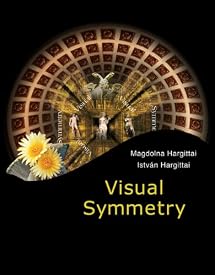
Visual Symmetry
Magdolna Hargittai, István Hargittai