sexta-feira, 31 de julho de 2009

RELIME. Revista Latino Americana de Investigación en Matemática Educativa

RELIME. Revista Latino Americana de Investigación en Matemática Educativa
Comité Latinoamericano de Matemática Educativa

Ano 2009, volume 12, n.º2

on-line:

Conflictos semióticos de estudiantes mexicanos en un problema de comparación de datos ordinales

Silvia Mayen, María del Carmen Batanero Bernabeu, Carmen Díaz Mardomingo


Consideraciones metodológicas para la interpretación de procesos de interacción en el aula de matemáticas

Núria Planas i Raig, Núria Iranzo


Teacher knowledge and teaching in Panama and Costa Rica: a comparative study in primary and secondary education

M. Alejandra Sorto, Jeffery H. Marshall, Thomas F. Luschei, Martín Carnoy


Para outros números da revista: dialnet.unirioja.es

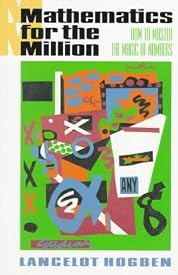
Mathematics for the Million: How to Master the Magic of Numbers


Lancelot Hogben

W.W. Norton & Co. | 1993 | 656 páginas | djvu | 7,5 Mb

link
link1
link2

Descrição: "It makes alive the contents of the elements of mathematics."—Albert Einstein Taking only the most elementary knowledge for granted, Lancelot Hogben leads readers of this famous book through the whole course from simple arithmetic to calculus. His illuminating explanation is addressed to the person who wants to understand the place of mathematics in modern civilization but who has been intimidated by its supposed difficulty. Mathematics is the language of size, shape, and order—a language Hogben shows one can both master and enjoy.

quinta-feira, 30 de julho de 2009

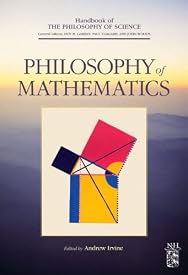
Philosophy of Mathematics


(Handbook of the Philosophy of Science)
Andrew Irvine, Dov M. Gabbay, Paul Thagard, John Woods

North Holland | 2009 | 733 páginas | pdf | 36 Mb

link
link1

djvu - 5,8 Mb
link
link1
link2

Descrição: One of the most striking features of mathematics is the fact that we are much more certain about the mathematical knowledge we have than about what mathematical knowledge is knowledge of. Are numbers, sets, functions and groups physical entities of some kind? Are they objectively existing objects in some non-physical, mathematical realm? Are they ideas that are present only in the mind? Or do mathematical truths not involve referents of any kind?
It is these kinds of questions that have encouraged philosophers and mathematicians alike to focus their attention on issues in the philosophy of mathematics. Over the centuries a number of reasonably well-defined positions about the nature of mathematics have been developed and it is these positions (both historical and current) that are surveyed in the current volume.
Traditional theories (Platonism, Aristotelianism, Kantianism), as well as dominant modern theories (logicism, formalism, constructivism, fictionalism, etc.), are all analyzed and evaluated. Leading-edge research in related fields (set theory, computability theory, probability theory, paraconsistency) is also discussed.
The result is a handbook that not only provides a comprehensive overview of recent developments but that also serves as an indispensable resource for anyone wanting to learn about current developments in the philosophy of mathematics.
-Comprehensive coverage of all main theories in the philosophy of mathematics
-Clearly written expositions of fundamental ideas and concepts
-Definitive discussions by leading researchers in the field
-Summaries of leading-edge research in related fields (set theory, computability theory, probability theory, paraconsistency) are also included

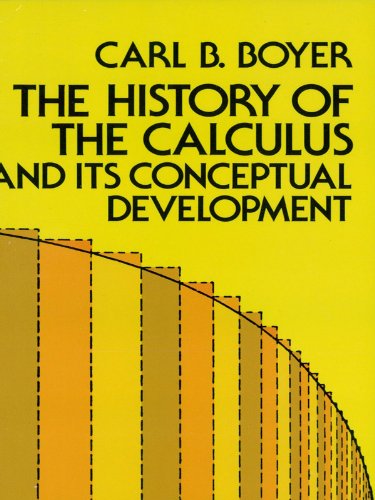
The History of the Calculus and Its Conceptual Development


Carl B. Boyer

Dover Publications | 1959 | 368 páginas | djvu | 5,76 Mb

link
link1

Fluent description of the development of both the integral and differential calculus. Early beginnings in antiquity, Medieval contributions and a century of anticipation lead up to a consideration of Newton and Leibniz, the period of indecison that followed them, and the final rigorous formulation that we know today.


Dover Publications | 1949

online: archive.org

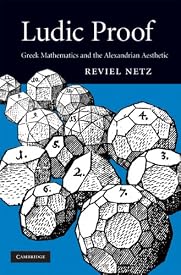
Ludic Proof: Greek Mathematics and the Alexandrian Aesthetic


Reviel Netz

Cambridge University Press | 2009 | 272 páginas  | PDF | 1 Mb

link
link1

Descrição: This book represents a new departure in science studies: an analysis of a scientific style of writing, situating it within the context of the contemporary style of literature. Its philosophical significance is that it provides a novel way of making sense of the notion of a scientific style. For the first time, the Hellenistic mathematical corpus - one of the most substantial extant for the period - is placed centre-stage in the discussion of Hellenistic culture as a whole. Professor Netz argues that Hellenistic mathematical writings adopt a narrative strategy based on surprise, a compositional form based on a mosaic of apparently unrelated elements, and a carnivalesque profusion of detail. He further investigates how such stylistic preferences derive from, and throw light on, the style of Hellenistic poetry. This important book will be welcomed by all scholars of Hellenistic civilization as well as historians of ancient science and Western mathematics.

Mathematics in the Secondary School Classroom: Selected Readings

Gerald R Rising, Richard A. Wiesen

Crowell | 1972 | 433 páginas | djvu | 5,54 Mb

link
link1

Selected reading for Math teachers 1972

terça-feira, 28 de julho de 2009

Math makes sense - 7.º e 8.º anos

Math makes sense 8
Peggy Morrow, Daryl Chichak, et al.

Pearson Education CanadaNumber | 2008 | 512 páginas | rar -pdf | 78,37 Mb

4shared.com

on-line: media.pearsoncmg.com


online: http://www.mathmakessense.ca/
Login:  math8_student
Password:  student2010


Math makes sense 7
Peggy Morrow, Daryl Chichak, et al.

Pearson Education Canada | 2007 | 386 páginas | rar -pdf | 50 Mb

4shared.com

on-line: media.pearsoncmg.com
apresentação do Manual: pearsoned.ca
Exercícios: pearsoned.ca

online: http://www.mathmakessense.ca/
Login:  math7_student
Password:  student2010