quarta-feira, 3 de outubro de 2012

Research on Technology and the Teaching and Learning of Mathematics: Vol. 2, Cases and Perspectives


(Published in Co-operation with the National Council of Teacher of Mathematics)

M. Kathleen Heid , Glendon W. Blume 

Information Age Publishing | 2008 | 485 páginas | RAR-PDF | 10,8 Mb

link (password: matav)
uploading.com (password: matav)
20121003cp


According to NCTM's Principles and Standards for School Mathematics, "Technology is essential in teaching and learning of mathematics; it influences the mathematics that is taught and it enhances students' learning." How does research inform this clarion call for technology in mathematics teaching and learning? In response to the need to craft appropriate roles for technology in school mathematics new technological approaches have been applied to the teaching and learning of mathematics, and these approaches have been examined by researchers world-wide.
The second volume has a dual focus: cases and perspectives. It features descriptive cases that provide accounts of the development of technology-intensive curriculum and tools. In these cases the writers describe and analyze various roles that research played in their development work and ways in which research, curriculum development, and tool development can inform each other. These thoughtful descriptions and analyses provide documentation of how this process can and does occur. The remaining chapters in the second volume address research related issues and perspectives on the use of technology in the teaching and learning of mathematics. The lessons learned from the research presented in these volumes are lessons about teaching and learning that can be applied more broadly than solely in technological settings.


CONTENTS
Preface. 

Research in a Pioneer Constructivist Network-based Curriculum Project for Children’s Learning of Fractions. Sharon Dugdale. 
The Development of a Dynamical Geometry Environment: Cabri-géomètre. Colette Laborde and Jean-Marie Laborde. 
What Lies Behind Dynamic Interactive Geometry Software? E. Paul Goldenberg, Daniel Scher, and Nannette Feurzeig. 
From Network to Microcomputers and Fractions to Functions: Continuity in Software Research and Design. Sharon Dugdale. 
Linking Research and Software Development. Julie Sarama and Douglas H. Clements. 
Development of the Shape Makers Geometry Microworld: Design Principles and Research. Michael T. Battista. 
Integrating Intelligent Software Tutors with the Mathematics Classroom. Steven Ritter, Lisa Haverty, Kenneth R. Koedinger, William Hadley, and Albert T. Corbett. 
Research-Design Interactions in Building Function Probe Software. Jere Confrey and Alan Maloney. Changing Representational Infrastructures Changes Most Everything: The Case of SimCalc, Algebra, and Calculus. Jim Kaput and Roberta Schorr. 
Multiple Representations and Local Linearity: Research Influences on the Use of Technology in Calculus Curriculum Reform. Thomas P. Dick and Barbara S. Edwards. 
The Research Frontier: Where Technology Interacts with the Teaching and Learning of Data Analysis and Statistics. Susan N. Friel. 
Keeping the Faith: Fidelity in Technological Tools for Mathematics Education. Thomas P. Dick. Representations and Cognitive Objects in Modern School Geometry. Michael T. Battista. From Artifacts to Instruments: A Theoretical Framework Behind the Orchestra Metaphor. Paul Drijvers and Luc Trouche. 
Designing Tasks for the Co-development of Conceptual and Technical Knowledge in CAS Activity: An Example from Factoring. Carolyn Kieran and Luis Saldanha. 
Teacher Education: Technology's Conduit to the Classroom.Patricia S. Wilson. 
Perspectives on Research, Policy, and the Use of Technology in Mathematics Teaching and Learning in the United States. Joan Ferrini-Mundy and Glenda A. Breaux. 
The Role of Research Theory, in the Integration of Technology in Mathematics Teaching and Learning, Glendon W. Blume and M. Kathleen Heid.


Volume 1
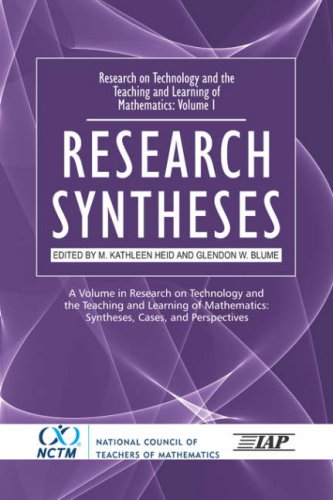


Research on Technology and the Teaching and Learning of Mathematics: Vol. 1, Research Syntheses



Visual Group Theory


(MAA Classroom Resource Materials) 

Nathan C. Carter

The Mathematical Association of America | 2009 | 312 páginas | RAR-PDF | 4,76 Mb

link direto 
link
uploading.com (password : matav)
20121003vgt


Nathan Carter's colorful text, Visual Group Theory, approaches the learning of group theory visually. Its topics and theorems are accompanied by visual demonstrations of the meaning and importance of groups, from the basics of groups and subgroups through advanced structural concepts such as semidirect products and Sylow theory. It allows students to see groups, to experiment with groups—and to understand the significance of groups, subgroups, homomorphisms, products, and quotients.
Defining groups as collections of actions, the opening chapters anchor readers' intuitions with puzzles and symmetrical objects. This approach leads to Cayley diagrams, which embody the visualization technique central to the book because of their unique ability to make group structure visually apparent.
Highlights:
  • Includes more than 300 full-color illustrations
  • Moves from the basics of group theory to Sylow theory and Galois theory
  • An applications chapter shows how group theory describes the symmetry of crystals, dancing, art, architecture, and much more
  • The book is an ideal supplement to a first course in group theory.
Contents:
Preface. Overview. 1. What is a group? 2. What do groups look like? 3. Why study groups? 4. Algebra at last 5. Five families 6. Subgroups 7. Products and quotients 8. The power of homomorphisms 9. Sylow theory 10. Galois theory. Answers to selected exercises. Bibliography. Index of symbols used. Index.

About the Author:
Now at Bentley University, Nathan Carter earned a Ph.D. in mathematics from Indiana University, Bloomington. He received the University of Scranton Excellence in Mathematics award in 1999, an Indiana University Rothrock Teaching award in 2003, and a Bentley University Innovation in Teaching award in 2007. This is his first book, based on lessons learned while writing the software Group Explorer.


sexta-feira, 28 de setembro de 2012

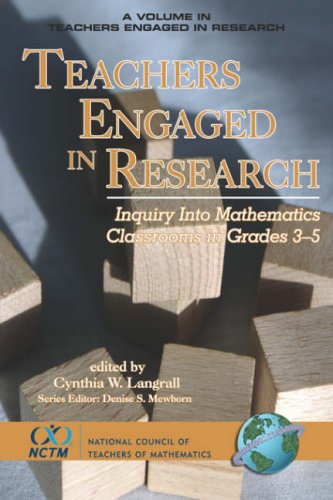
Teachers Engaged in Research: Inquiry in Mathematics Classrooms, Grades 3-5


Cynthia W. Langrall

Information Age Publishing | 2006 | 245 páginas | RAR - PDF | 12,8 Mb

link  (password : matav)

The goal of this series is to use teachers' accounts of classroom inquiry to make public and explicit the processes of doing research in classrooms. Teaching is a complex, multi-faceted task, and this complexity often is not captured in research articles. Our goal is to illuminate this complexity. Research that is done in classrooms by and with teachers is necessarily messy, and our stance is that the ways in which this is so should be articulated, not hidden. Through the chapters in this volume we learn about the questions that capture the attention of teachers, the methodologies they use to gather data, and the ways in which they make sense of what they find. Some of the research findings could be considered preliminary, others confirmatory, and some may be groundbreaking. In all cases, they provide fodder for further thinking and discussion about critical aspects of mathematics education.


CONTENTS
Series Foreword
Marilyn Cochran-Smith zx
l. Introduction to the 3-5 Volume
Cynthia W. Langrall 1
2. The Impact of Classroom Research on Student and Teacher Learning: Division of Fractions
Barbara Adams and Janet Sharp 13
3. Reasoning and Sense-making: What Can We Expect in Grades Three Through Five?
Tammy Covi, Nadene Ratcliff, Cheryl A. Lubinski, and Janet Warfield 33
4. Arithmetic to Algebra: A Teacher's Journey
June Soares 49
5. Exploring Multiplicative Reasoning
Judy Atcheson 59
6. Writing Mathematical Writing
Eileen Phillips 83
7. Applying Research in the Classroom: Investigating Problem-Solving Instruction
Christina Nugent 113
8. Teacher as Researcher-Researcher as Learner
Jennifer Segebart 129
9. The Importance of Student Sharing Sessions: Analyzing and Comparing Subtraction Strategies
Meghan B. Steinmeyer 145
10. Examining Teacher Questioning Through a Probability Unit
Ken Valentine and Dorothy Y. White 155
11. Gwen's Story: Researching Teaching With Others in a Lesson Study Transforms a Beginning Teacher's Understanding
Ann R Taylor, Laurel D. Puchner, Gwen Scheibel 179
12. What's a Literature Person Like You Doing, Teaching and Researching in Elementary Level Mathematics?
Vicki Zack 201

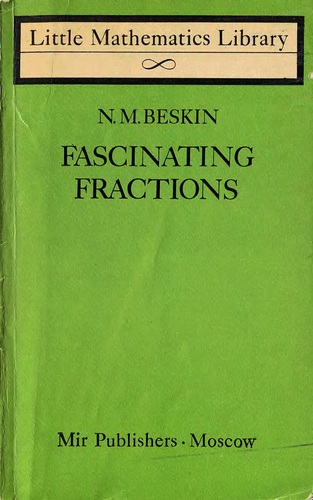
Fascinating Fractions

 N. M. Beskin


Little Mathematics Library 


1986 | MIR | 89 páginas | DJVU  | 827 kb  | 

link
link1
filecloud.io (password : mirtitles)

This booklet is intended for high-school students interested
in mathematics. It is concerned with approximating real
numbers by rational ones, which is one of the most captivating
topics in arithmetic.
…
Continued fractions represent one of the most perfect
creations of 17-18th century mathematicians: Huygens, Euler,
Lagrange, and Legendre. The properties of these fractions
are really striking.
The following should be borne in mind when reading this
booklet. Topics easily understandable are presented in normal print,
while those more difficult are given in small print. Proofs of some theorems given in small print may be omitted safely. These theorems will necessarily be taken for granted. However, mathematics is not just reading for entertainment. A future mathematician as well as a physicist or an engineer has to acquire skill in dealing with  mathematical constructions and proofs. So take a pencil and a sheet of  paper and study carefully the topics given in small print. You may succeed in simplifying some proofs or finding better ones.
The book was translated from the Russian by V. I. Kisin and was first published by Mir Publishers in 1986.
Contents
Preface 7
Chapter 1. Two Historical Puzzles
1.1. Archimedes’ Puzzle 9
1.1.1. Archimedes’ Number 9
1.1.2. Approximation 10
1.1.3. Error of Approximation 12
1.1.4. Quality of Approximation 13
1.2. The Puzzle of Pope Gregory XIII 15
1.2.1. The Mathematical Problem of the Calendar … 15
1.2.2. Julian and Gregorian Calendars 17
Chapter 2. Formation of Continued Fractions
2.1. Expansion of a Real Number into a Continued Fraction 19
2.1.1. Algorithm of Expansion into a Continued Fraction 19
2.1.2. Notation for Continued Fractions 21
2.1.3. Expansion of Negative Numbers into Continued Fractions 21
2.1.4. Examples of Nonterminating Expansion 22
2.2. Euclid’s Algorithm 24
2.2.1. Euclid’s Algorithm 24
2.2.2. Examples of Application of Euclid’s Algorithm 26
2.2.3. Summary 27
Chapter 3. Convergents
3.1. The Concept of Convergents 29
3.1.1. Preliminary Definition of Convergents 29
3.1.2. How to Generate Convergents 30
3.1.3. The Final Definition of Convergents 33
3.1.4. Evaluation of Convergents 34
3.1.5. Complete Quotients 34
3.2. The Properties of Convergents 36
3.2.1. The Difference Between Two Neighbouring Convergents 36
3.2.2. Comparison of Neighbouring Convergents  37
3.2.3. Irreducibility of Convergents 39
Chapter 4. Nonterminating Continued Fractions
4.1. Real Numbers 40
4.1.1. The Gulf Between the Finite and the Infinite . . 40
4.1.2. Principle of Nested Segments 41
4.1.3. The Set of Rational Numbers 44
4.1.4. The Existence of Nonrational Points on the  Number Line 45
4.1.5. Nonterminating Decimal Fractions 46
4.1.6. Irrational Numbers 48
4.1.7. Real Numbers 49
4.1.8. Representing Real Numbers on the Number Line 50
4.1.9. The Condition of Rationality of Nonterminating Decimals 52
4.2. Nonterminating Continued Fractions 52
4.2.1. Numerical Value of a Nonterminating Continued Fraction 52
4.2.2. Representation of Irrationals by Nonterminating Continued Fractions 54
4.2.3. The Single-Valuedness of the Representation of a Real Number by a Continued  Fraction 55
4.3. The Nature of Numbers Given by Continued Fractions 58
4.3.1. Classification of Irrationals 58
4.3.2. Quadratic Irrationals 60
4.3.3. Euler’s Theorem 66
4.3.4. Lagrange Theorem 69
Chapter 5. Approximation of Real Numbers
5.1. Approximation by Convergents 72
5.1.1. High-Quality Approximation 72
5.1.2. The Main Property of Convergents 72
5.1.3. Convergents Have the Highest Quality 76
Chapter 6. Solutions
6.1. The Mystery of Archimedes’ Number 81
6.1.1. The Key to All Puzzles 81
6.1.2. The Secret of Archimedes’ Number 81
6.2. The Solution to the Calendar Problem 83
6.2.1. The Use of Continued Fractions 83
6.2.2. How to Choose a Calendar 84
6.2.3. The Secret of Pope Gregory XIII 86
Bibliography 88
Outros livros em inglês, do mesmo autor, disponíveis no blog:

Images of Geometric Solids (1985)

segunda-feira, 24 de setembro de 2012

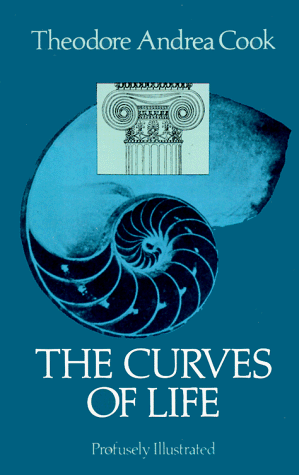
The Curves of Life


Theodore A. Cook

Cornell University Library | 1914

archive.org (online)

link
ryushare.com


Classic, well-thought-out examination of the function of the spiral, or helix, in both nature and art. Demonstrates how spiral is fundamental to structure of shells, leaves, horns, human body, drawings of Leonardo, Leaning Tower of Pisa, more. 1914 edition. 426 illustrations.

domingo, 23 de setembro de 2012

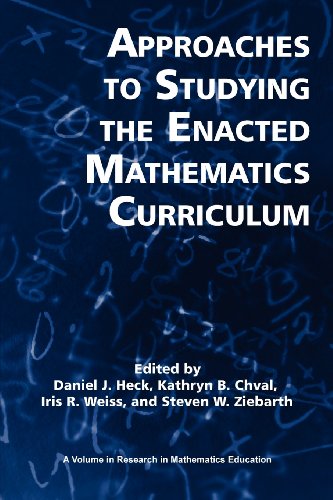
Approaches to Studying the Enacted Mathematics Curriculum


Research in Mathematics Education


Daniel J. Heck, Kathryn B. Chval, Iris R. Weiss, Steven W. Ziebarth

Information Age Publishing | 2012 | 218 páginas | RAR - PDF | 2,7 Mb

link (password :matav)

Curriculum materials are among the most pervasive and powerful influences on school mathematics. In many mathematics classes, student assignments, the questions the teacher asks, the ways students are grouped, the forms of assessment, and much more originate in curriculum materials. At the same time, teachers have considerable latitude in how they use their curriculum materials. Two classes making use of the same materials may differ markedly in what mathematics content is emphasized and how students are engaged in learning that content. This volume considers a variety of research tools for investigating the enactment of mathematics curriculum materials, describing the conceptualization, development, and uses of seven sets of tools. Mathematics education researchers, curriculum developers, teacher educators, district supervisors, teacher leaders, and math coaches will find insights that can improve their work, and guidance for selecting, adapting, and using tools for understanding the complex relationship between curriculum materials and their enactment in classroom instruction.


CONTENTS
Preface. 

Acknowledgments. 
Introduction, Daniel J. Heck, Kathryn B. Chval, Iris R. Weiss, and Steven W. Ziebarth. 
Instruments Used by the University of Chicago School Mathematics Project to Study the Enacted Curriculum, Denisse R. Thompson and Sharon L. Senk. 
Using Concerns-Based Adoption Model Theory to Develop Tools to Examine Variations in Mathematics Textbook Implementation, Mary Ann Huntley. 
Developing Measures of Fidelity of Implementation for Mathematics Curriculum Materials Enactment, Daniel J. Heck, Kathryn B. Chval, Iris R. Weiss, and Steven W. Ziebarth. 
The Development of Multiple Measures of Curriculum Implementation in Secondary Mathematics Classrooms: Insights From a Three-Year Curriculum Evaluation Study, James E. Tarr, Melissa D. McNaught, and Douglas A. Grouws. 
Measuring Implementation of Instructional Materials to Support Conceptual Understanding and Accumulation of Knowledge, Jeanne R. Century Cassie freeman, and Mollie Rudnick. 
A Tool for Analyzing Instructional Practices and Curriculum Materials in the Context of Specific Mathematics Learning Goals, Linda Dager Wilson and Jo Ellen Roseman.
The Surveys of Enacted Curriculum as a Measure of Implementation, Jennifer McMaken and Andrew C. Porter. 
Issues to Consider in Measuring Enactment of Curriculum Materials, Daniel J. Heck, Kathryn B. Chval, Iris R. Weiss, and Steven W. Ziebarth. 
About the Authors.


Origami 3: Third International Meeting of Origami Science, Mathematics, and Education

Thomas Hull

A K Peters/CRC Press | 2002 | 352 páginas | RAR - PDF | 3,04 Mb

uploading.com (password : matav)
2012092303

The book contains papers from the proceedings of the 3rd International Meeting of Origami Science, Math, and Education, sponsored by OrigamiUSA. They cover topics ranging from the mathematics of origami using polygon constructions and geometric projections, applications, and science of origami, and the use of origami in education.


Table of Contents
Preface ix
Part One: Mathematics of Origami 1
Recent Results in Computational Origami
Erik D. Demaine and Martin L. Demaine 3
A Disk-Packing Algorithm for an Origami Magic Trick
Marshall Bern, Erik Demaine, David Eppstein, and Barry Hayes . . 17
The Combinatorics of Flat Folds: A Survey
Thomas C. Hull 29
A Mathematical Model for Non-Flat Origami
sarah-marie belcastro and Thomas C. Hull 39
The Definition of Iso-Area Folding
Jun Maekawa 53
The Geometry of Orizuru
Toshikazu Kawasaki 61
The Validity of the Orb, an Origami Model
Jeannine Mosely 75
Mathematical Origami: Another View of Alhazen's Optical Problem
Roger C. Alperin 83
Just Like Young Gauss Playing with a Square: Folding the Regular 17-gon
Robert Geretschläger 95
Paper-Folding Constructions in Euclidean Geometry: An Exercise in Thrift
Benedetto Scimemi 107
Part Two: Origami Science and Applications 119
Computer Tools and Algorithms for Origami Tessellation Design
Alex Bateman 121
The Foldinator Modeler and Document Generator
John Szinger 129
The Application of Origami Science to Map and Atlas Design
Koryo Miura 137
Origami Pots
Tomoko Fuse, Akira Nagashima, Yasuhiro Ohara and Hiroshi Okumura 147
Polypolyhedra in Origami
Robert J. Lang 153
Origami with Trigonometric Functions
Miyuki Kawamura 169
A Study of Twist Boxes
Noriko Nagata 179
To Fold or to Crumple?
B. A. DiDonna 187
Folded Tubes as Compared to Kikko ("Tortoise-Shell") Bamboo
Biruta Kresling 197
Square Cycles: An Introduction to the Analysis of Flexagons
Ethan Berkove and Jeffrey Dumont 209
Self-Assembling Global Shape Using Concepts from Origami
Radhika Nagpal 219
Part Three: Origami in Education 233
Applications of Origami to the Teaching of Sophisticated Communication Techniques
Deborah Foreman-Takano 235
Origami and the Adult ESL Learner
Lillian Yee Ho 247
Exploring the Possibilities of a Module
Krystyna Burczyk and Wojciech Burczyk 257
Using Graphs to Color Origami Polyhedra
Charlene Morrow 269
Circular Origami: A Survey of Recent Results
Eva Knoll 283
In Praise of the Papercup: Mathematics and Origami at the University
Emma Frigerio 291
Using Triangular Boxes from Rectangular Paper to Enrich Trigonometry and Calculus
V’Ann Cornelius and Arnold Tubis 299
Fold Paper and Enjoy Math: Origamics
Kazuo Haga 307
Origami as a Model for Development in Organisms
Norman Budnitz 329
Instances of Origami within Mathematics Content Texts for Preservice Elementary School Teachers
Jack A. Carter and Beverly J. Ferrucci 337
Contributors 345
Index 349

Outro livro contendo os artigos das conferências "International Meeting of Origami Science, Mathematics, and Education", disponível neste blog


Robert J. Lang (2009). Origami 4 - Fourth International Meeting of Origami Science, Mathematics, and Education. A K Peters