sexta-feira, 24 de agosto de 2012

Mathematical Teasers

Julio A. Mira

Barnes & Noble | 1970 | 190 páginas | PDF | 3,8 Mb

About This Book (from the back cover):

Mathematical Teasers is a collection of some 300 carefully selected, unusual, and above all, challenging mathematical problems, puzzles, riddles, and a number of playing-card and dice tricks for both students and laymen, and especially for those who have a modicum of mathematical ability or a bent for puzzle-solving.

The wide variety of problems in this book range in difficulty, with the more difficult ones in the last three chapters... they can most assuredly be solved by the less-gifted... There are, in addition, many interesting illustrations and lively cartoons that enhance this volume.

The Surprise Attack in Mathematical Problems


L. A. Graham

Dover Publications | 1968| 126 páginas | PDF

scribd.com

Djvu | 1,6 Mb

link
link1

from the Foreword:

In conducting a mathematical column in the Graham Dial over the past twenty-five years, the author found that the most stimulating  experience and the greatest reward for his effort came from the "surprise attack" initiated by readers in solving many of the problems.

For the most part the problems were original contributions and, strange to say, in nearly every case the prize-winning solutions by readers excelled that of the contributor, shed new light on the problem, and opened up entirely new vistas of interest.

In this book we have selected from the scores of original problems used in our column in recent years those that emphasize this feature of surprise - the unexpected approach that not only brings simplicity to the solution but often broadens the scope of the problem and adds an esoteric touch dear to the mathematician's heart.

Note that after the statement of the problem in each chapter, the word Solution appears in bold-faced type; this is a signal to the reader who wishes to tackle the problem himself to postpone further reading at this point until he has completed his own attack.

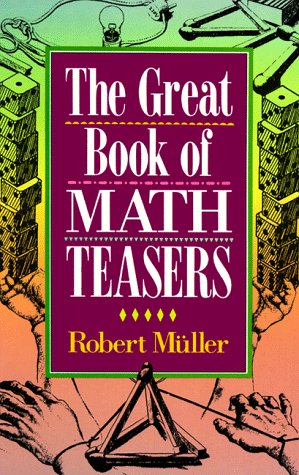
The Great Book Of Math Teasers


Robert Muller


Sterling | 1990  | 96 páginas | Djvu | 1,5 Mb

"This collection of tricky math and logic problems includes many classic puzzlers. Readers without skills in higher mathematics will find that deduction, common sense, and concentration will enable them to answer most of the questions.... Kids will enjoy the attractive pencil drawings that appear throughout... a useful purchase."--Booklist. 

The Search for Certainty: A Philosophical Account of Foundations of Mathematics


Marcus Giaquinto

Oxford University Press | 2002  | 330 páginas | PDF | 13 Mb
rapidgator.net

djvu - 1,8 Mb
link
link1

"The Search for Certainty is a superb synoptic account of the intense and fruitful work that went into clarifying the foundations of mathematics...It fills the gap in the literature that Giaquinto reports to have noticed when a student of logic, and it does so in an excellent manner." -- The Review of Modern Logic
The nineteenth century saw a movement to make higher mathematics rigorous. This seemed to be on the brink of success when it was thrown into confusion by the discovery of the class paradoxes. That initiated a period of intense research into the foundations of mathematics, and with it the birth of mathematical logic and a new, sharper debate in the philosophy of mathematics.
The Search for Certainty examines this foundational endeavour from the discovery of the paradoxes to the present. Focusing on Russell's logicist programme and Hilbert's finitist programme, Giaquinto investigates how successful they were and how successful they could be. These questions are set in the context of a clear, non-technical exposition and assessment of the most important discoveries in mathematical logic, above all Godel's underivability theorems. More than six decades after those discoveries, Giaquinto asks what our present perspective should be on the question of certainty in mathematics. Taking recent developments into account, he gives reasons for a surprisingly positive response.


Livro do mesmo autor, disponível no blog


Visual Thinking in Mathematics (2007)


College Trigonometry


Richard N. Aufmann, Vernon C. Barker, Richard D. Nation

6.ª edição


Books Colee | 2007  | 640 páginas | PDF | 14,8 Mb


Accessible to students and flexible for instructors, College Trigonometry, Sixth Edition, uses the dynamic link between concepts and applications to bring mathematics to life. By incorporating interactive learning techniques, the Aufmann team helps students to better understand concepts, work independently, and obtain greater mathematical fluency. The text also includes technology features to accommodate courses that allow the option of using graphing calculators. Additional program components that support student success include Eduspace tutorial practice, online homework, SMARTHINKING Live Online Tutoring, and Instructional DVDs.The authors' proven Aufmann Interactive Method allows students to try a skill as it is presented in example form. This interaction between the examples and Try Exercises serves as a checkpoint to students as they read the textbook, do their homework, or study a section. In the Sixth Edition, Review Notes are featured more prominently throughout the text to help students recognize the key prerequisite skills needed to understand new concepts.


Table of contents
1. Functions and Graphs
1.1 Equations and Inequalities
1.2 A Two-Dimensional Coordinate System and Graphs
1.3 Introduction to Functions
1.4 Properties of Graphs
1.5 The Algebra of Functions
1.6 Inverse Functions
1.7 Modeling Data Using Regression
2. Trigonometric Functions
2.1 Angles and Arcs
2.2 Right Angle Trigonometry
2.3 Trigonometric Functions of Any Angle
2.4 Trigonometric Functions of Real Numbers
2.5 Graphs of the Sine and Cosine Functions
2.6 Graphs of the Other Trigonometric Functions
2.7 Graphing Techniques
2.8 Harmonic Motion--An Application of the Sine and Cosine Functions
3. Trigonometric Identities and Equations
3.1 Verification of Trigonometric Identities
3.2 Sum, Difference, and Cofunction Identities
3.3 Double- and Half-Angle Identities
3.4 Identities Involving the Sum of Trigonometric Functions
3.5 Inverse Trigonometric Functions
3.6 Trigonometric Equations
4. Applications of Trigonometry
4.1 The Law of Sines
4.2 The Law of Cosines and Area
4.3 Vectors
5. Complex Numbers
5.1 Complex Numbers
5.2 Trigonometric Form of Complex Numbers
5.3 De Moivre's Theorem
6. Topics in Analytic Geometry
6.1 Parabolas
6.2 Ellipses
6.3 Hyperbolas
6.4 Rotation of Axes
6.5 Introduction to Polar Coordinates
6.6 Polar Equations of the Conics
6.7 Parametric Equations
7. Exponential and Logarithmic Functions
7.1 Exponential Functions and Their Applications
7.2 Logarithmic Functions and Their Applications
7.3 Properties of Logarithms and Logarithmic Scales
7.4 Exponential and Logarithmic Functions
7.5 Exponential Growth and Decay
7.6 Modeling Data with Exponential and Logarithmic Functions

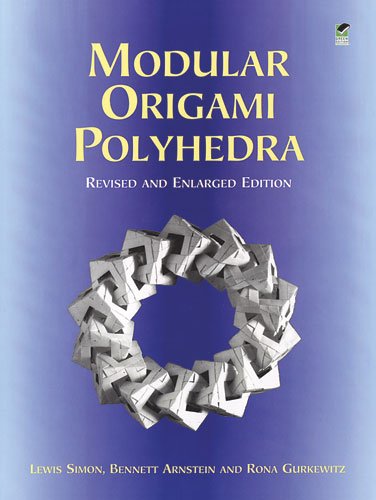
Modular Origami Polyhedra


Lewis Simon, Bennet Arnstein, Rona Gurkewitz 


Dover Publications |  64 páginas | 1999 |  PDF | 3,5 Mb 


link
4shared.com
scribd.com
scribd.com
sma1pekalongan.sch.id (link direto)


Step-by-step instructionsand clearly detailed diagrams enable origamists to build over 35 different polyhedra from origami units. Fascinating models range from relatively simple modular cubes to more advanced two-piece modules, a gyroscope, and a 14-sided cuboctahedron. Subjects will challenge devotees of the craft, and can demonstrate geometric principles in the classroom.

Livros relacionados, disponíveis no blog


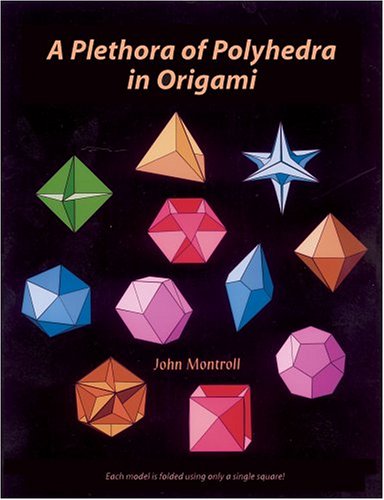
A Plethora of Polyhedra in Origami

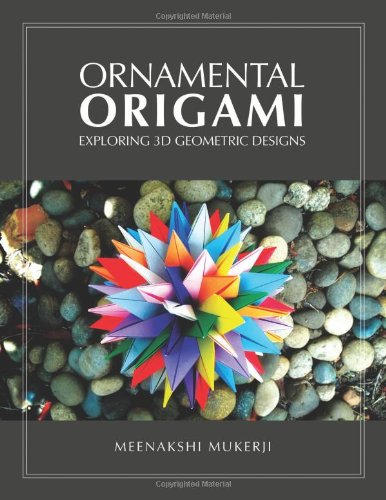
Ornamental Origami: Exploring 3D Geometric Designs


quinta-feira, 23 de agosto de 2012

Math Motivators!: Investigations in Geometry

Alfred S. Posamentier

Addison Wesley Publishing Company | 1982 | 80 páginas | PDF | 5 Mb

uploading.com
bookfi.org
link

Investigations in Geometry is a set of versatile enrichment exercises that covers a wide variety of topics in geometry - Euclidean, post-Euclidean, and non-Euclidean.

 These investigations provide opportunities and incentives to hone problem-solving skills.

Contents
Introduction
Presenting the Investigations
The Extensions
Selecting the Investigations
Constructions
Constructing Segments
Constructing Radical Lengths
Trisecting a Circle
Trisecting an Angle
Constructing a Pentagon
Constructing Triangles
Problems of Antiquity
The Pythagorean Theorem
The Golden Rectangle
The Golden Triangle
The Arbelos
Post-Euclidean Theorems
Ptolemy's Theorem
Ceva's Theorem
Stewart's Theorem
Simson's Theorem
Napoleon's Theorem
Non-Euclidean Geometry
Taxicab Geometry
Transformational Geometry-Symmetry
Projective Geometry
Spherical Geometry
Solid Geometry
This Wraps It Up
Regular Polyhedra
Cavalieri's Principle
The Jolly Green Giant?
Geometric Applications
Mathematics on a Billiard Table
Bypassing an Inaccessible Region
The Inaccessible Angle
Minimizing Distances
Problem Solving-A Reverse Strategy
Geometric Puzzlers
Geometric Fallacies
The Nine-Point Circle
Equicircles
More Equicircles
Locus Methods