terça-feira, 12 de junho de 2012

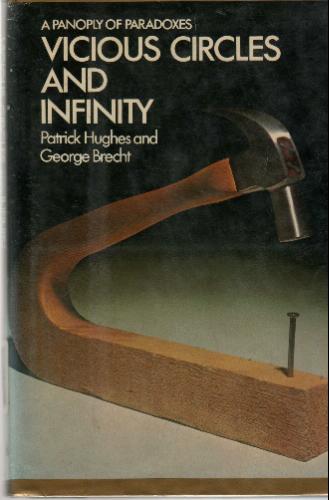
Vicious Circles and Infinity, A Panoply of Paradoxes

Patrick Hughes, George Brecht

Jonathan Cape | 1976 | 112 páginas | Djvu | 1,63 Mb


The anthology has no particular ax to grind, apart from that of having no particular ax to grind. 
We hope you enjoy the paradoxes, verbal and visual, as much as we do. We have tried to let the paradoxes speak 
for themselves. The ratio of comment to material is great in the field of paradox; the paradoxes are few and brief, the commentaries many and lengthy. As is often the case, it is easier to talk about a thing than it is to do it. 
One of the bonds between the authors of this book is the sense of humor; perhaps the paradoxes should be seen in this light.

segunda-feira, 11 de junho de 2012

Archimedes' Revenge: The Joys and Perils of Mathematics


Paul Hoffman

Fawcett | 1989 | 278 páginass | PDF | 10 Mb

link
link1
depositfiles.com

djvu - 2,4 Mb
link
link1

Now anyone can understand what the mathematical geniuses are thinking . . . .
* How topologists figured out the way to turn a smokestack into a bowling ball — and why.
* How game theorists discovered that to elect the candidate of your choice you must sometimes vote for his opponent.
* How computer theorists intend to create a robot that will think for itself — and do all the housework.
* How cryptographers have been laboring since 1822 to decipher a map that will lead to a buried treasure worth millions of dollars.
Archimedes’ Revenge takes the reader on a guided tour of the world of contemporary mathematics and makes its infinite marvels comprehensible, relevant, and fun.
“A breezy and lighthearted account of a number of topics in and around the periphery of mathematics . . . Mr. Hoffman approaches mathematics as a storyteller, and a good one.” — The New York Times Book Review

Archimedes’ Revenge is an extremely accessible, lighthearted account of a number of mathematical topics, many with modern interest, such as complexity theory. Hoffman quotes living mathematicians extensively, giving the reader a feel for the nature of the mathematical community and insight into how this community attempts to resolve open questions. This book is low in mathematical rigor, making it suitable for any interested reader.

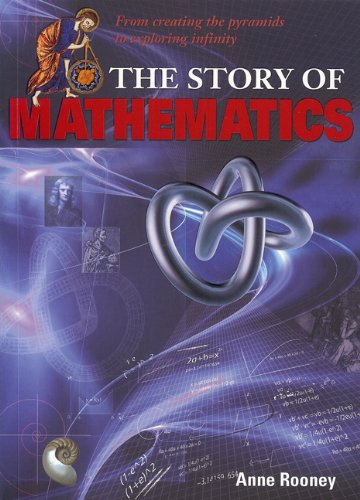
The Story of Mathematics: From Creating the Pyraminds to Exploring Infinity


Anne Rooney

Arcturus Publishing Ltd | 208 Páginas| PDF | 51 Mb


From creating the pyramids to exploring infinity, this pocket size book traces humankind's greatest achievements through the towering mathematical intellects of the past 4,000 years to where we stand today.


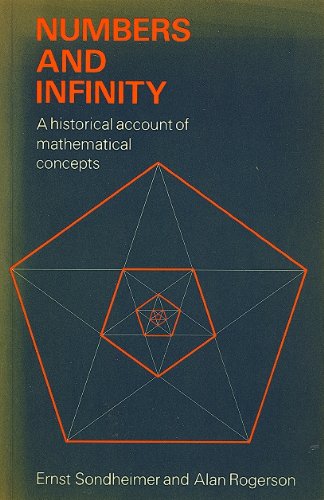
Numbers and Infinity: A Historical Account of Mathematical Concepts


Ernst Sondheimer, Alan Rogerson

Cambridge University Press | 1982 | 192 Páginas | DjVu | 1,3 Mb

This book is a history of the number concept (with emphasis on the concept of infinity) from ancient days to nearly the present. If I have one complaint about it, it is that the book is very thin and could have said more on a few topics that I think are important; for example, the treatment of Robinson's "non-standard analysis" is very brief and would benefit by expansion. Still, it is an interesting read, and belongs in the library of anyone interested in the subject matter.

Since much of the calculus depends on the concept of the infinite (and the infinitesimal) this book is particularly recommended for those interested in the origins of the calculus.

domingo, 10 de junho de 2012

Fair Voting - Weighted Votes for Unequal Constituencies

William F. Lucas

 COMAP, Inc. |  1992 |  81 páginas | PDF

online: prof2000.pt

Students are challenged to use the mathematics of weighted voting to wrestle with important social issues such as how power can be measured quantitatively, and how power is divided in our government. HiMAP Module 19. 

Table of Contents:
CHAPTER 1: VOTING IN DEMOCRATIC INSTITUTIONS
CHAPTER 2: SOME APPROACHES TO FAIR REPRESENTATION
CHAPTER 3: PROPORTIONAL WEIGHTED VOTING: A FIRST ATTEMPT TO REALIZE FAIR REPRESENTATION
CHAPTER 4: MEASURING POWER
CHAPTER 5: ADJUSTED WEIGHTED VOTING: A BETTER IDEA
CHAPTER 6: HISTORICAL ASPECTS
CHAPTER 7: ADDITIONAL TOPICS ON WEIGHTED VOTING
REFERENCES
TRANSPARENCIES

The Mathematical Theory of Elections

Joseph Malkevitch

COMAP, Inc. | 1999 |  68 páginas | PDF

online: prof2000.pt
semmathmodeling.wikispaces.com

This module illustrates how mathematics can design and analyze election and ranking methods. Preference schedules, fairness criteria, and weighted voting all demonstrate that how votes are counted can affect the outcome of an election. HiMAP Module 1.

Table of Contents:
SECTION 1: SOME ELECTIONS RESULTS
SECTION 2: TYPES OF BALLOTS
SECTION 3: ELECTION METHODS
SECTION 4: ARROW'S THEOREM
SECTION 5: PROPORTIONAL REPRESENTATION
SECTION 6: RECENT DEVELOPMENTS
REFERENCES
GLOSSARY

Math Trails


Joel Schneider, Henry Pollak and Mary Margaret Shoaf

Comap | 2004 | 136 páginas | PDF | 3,8 Mb

online:  comap.com
scribd.com

Introduction 

A mathematics trail is a walk to discover mathematics. A math trail can be almost anywhere—a neighborhood, a business district or shopping mall, a park, a zoo, a library, even a government building. The math trail map or guide points to places where walkers formulate, discuss, and solve interesting mathematical problems. Anyone can walk a math trail alone, with the family, or with another group. Walkers cooperate along the trail as they talk about the problems. There’s no competition or grading. At the end of the math trail they have the pleasure of having walked the trail and of having done some interesting mathematics. Everyone, no matter what age, gets an “I Walked the Math Trail” button to wear. 

This book is a guide to blazing a math trail. We’ll review the history of math trails and discuss their attributes. We’ll also discuss practical issues of organization and logistics in setting up and maintaining a math trail. We’ll discuss mathematical issues in choosing and describing problems and tasks along a trail. And we’ll also describe a variety of specific examples of trails and of problems. 

Joel Schneider began his personal math trail in junior high school with a geometry problem found in a science fiction novel. His other stops included some modest research in commutative algebra; helping to develop an elementary school math curriculum and its teacher education program; leading the math team for Square One, a television series about math that PBS broadcast in the 90s; and developing a math game show for children’s television in several countries. Having worked at Sesame Workshop for more than 20 years, Joel passed away in 2004. 

After a rather pure education in mathematics, Henry Pollak spent the major part of his career at Bell Laboratories, including 22 years as Director of Mathematics and Statistics Research. At the same time, a growing interest in mathematics education led to his involvement in the Mathematical Association of America, and in a large variety of projects, from the School Mathematics Study Group to Mathematics: Modeling Our World. A recurring theme in much of his work is the need to wear the two hats of mathematics in the real world and mathematics education on the same head. Dr. Pollak has been a Visiting Professor at Teachers College of Columbia University since 1987. 

Mary Margaret Shoaf received her Ph.D. in Mathematics Education from Columbia University under the direction of Dr. Henry O. Pollak. Dr. Shoaf lives in Waco, Texas where she is an Associate Professor of Mathematics in the Department of Mathematics at Baylor University. Dr. Shoaf wishes to thank her Department Chairperson at Baylor University, Dr. Edwin Oxford, for all of his support and encouragement during the writing of this book. Her areas of research and interest are hand-held mathematics technology, the use of computers in the mathematics classroom, and designing and implementing mathematics curriculum for Grades 3–12 preservice and inservice mathematics teachers

Part 1: Purposes and Organization of a Math Trail
Introduction 6
Background and History 6
Characteristics of Math Trails 8
Blazing a Trail 10
Organizing a Math Trail Project 14

Part 2: Examples of Math Trails
Recreational Mathematics in the Park 16
Recreational Mathematics Around Town 34
Recreational Mathematics at the Zoo 47
Recreational Mathematics in a Mall 57

Part 3: Mathematics of Several Kinds of Trail Situations
Parking 70
Supermarkets 78
Buildings 82
A Hike in the Country 85
Tilings 88
American Flags 99
Moving Vans 106
Estimation 108

References 112

Appendix: “A Mathematics Trail Around the City of Melbourne”