terça-feira, 27 de março de 2012

Branches: Nature's Patterns: A Tapestry in Three Parts

Philip Ball

Oxford University Press | 2009 | 272 páginas | PDF | 6 MB

scribd.com

epub - 6 Mb - link

As part of a trilogy of books exploring the science of patterns in nature, acclaimed science writer Philip Ball here looks at the form and growth of branching networks in the natural world, and what we can learn from them.

Many patterns in nature show a branching form - trees, river deltas, blood vessels, lightning, the cracks that form in the glazing of pots. These networks share a peculiar geometry, finding a compromise between disorder and determinism, though some, like the hexagonal snowflake or the stones of the Devil's Causeway fall into a rigidly ordered structure. Branching networks are found at every level in biology - from the single cell to the ecosystem. Human-made networks too can come to share the same features, and if they don't, then it might be profitable to make them do so: nature's patterns tend to arise from economical solutions.

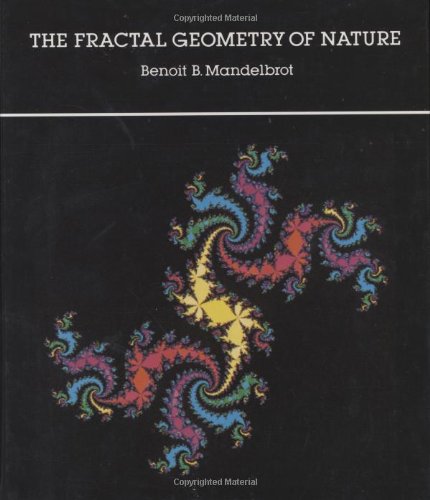
The Fractal Geometry of Nature

Benoit B. Mandelbrot

W. H. Freeman | 1983 | 472 páginas | djvu | 8 Mb


PDF - 31,5 Mb - link

Clouds are not spheres, mountains are not cones, and lightening does not travel in a straight line. The complexity of nature's shapes differs in kind, not merely degree, from that of the shapes of ordinary geometry, the geometry of fractal shapes. 

Now that the field has expanded greatly with many active researchers, Mandelbrot presents the definitive overview of the origins of his ideas and their new applications. The Fractal Geometry of Nature is based on his highly acclaimed earlier work, but has much broader and deeper coverage and more extensive illustrations.

Uses of Infinity

 (New mathematical library)

Leo Zippin

Yale University | 1962 | 158 páginas | djvu | 1,14 Mb

link direto
link
uploading.com

pdf - link

This intriguing, accessible work leads readers to an excellent grasp of the fundamental notions of infinity used in the calculus and in virtually all other mathematical disciplines. Each chapter's teachings are supplemented by challenging problems, with solutions at the end of the book

The Man Who Knew Infinity


Robert Kanigel

Washington Square Press | 1991 | 464 páginas | djvu | 4,2 Mb

libgen.net
libgen.net

PDF - 15 Mb

libgen.net


A biography of the Ramanujan describes how the natural genius of an unschooled Indian clerk came to the attention of a preeminent mathematician and the world.

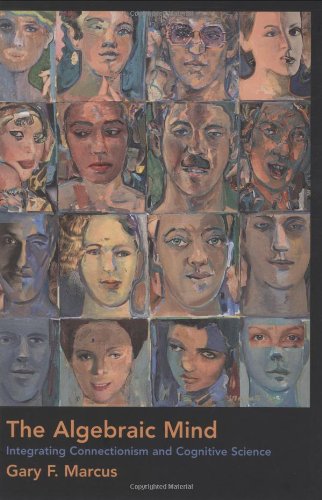
Algebraic Mind


Gary F. Marcus

The MIT Press | 2003 | 240 páginas | PDF | 1,1 Mb

link


 In The Algebraic Mind, Gary Marcus attempts to integrate two theories about how the mind works, one that says that the mind is a computer-like manipulator of symbols, and another that says that the mind is a large network of neurons working together in parallel. Resisting the conventional wisdom that says that if the mind is a large neural network it cannot simultaneously be a manipulator of symbols, Marcus outlines a variety of ways in which neural systems could be organized so as to manipulate symbols, and he shows why such systems are more likely to provide an adequate substrate for language and cognition than neural systems that are inconsistent with the manipulation of symbols. Concluding with a discussion of how a neurally realized system of symbol-manipulation could have evolved and how such a system could unfold developmentally within the womb, Marcus helps to set the future agenda of cognitive neuroscience.

Sets, Functions, and Logic: An Introduction to Abstract Mathematics


Third Edition
(Chapman Hall/CRC Mathematics Series)

Keith Devlin

Chapman and Hall/CRC | 2003 | 160 páginas | PDF | 1,53 Mb

link

Keith Devlin. You know him. You've read his columns in MAA Online, you've heard him on the radio, and you've seen his popular mathematics books. In between all those activities and his own research, he's been hard at work revising Sets, Functions and Logic, his standard-setting text that has smoothed the road to pure mathematics for legions of undergraduate students.

Now in its third edition, Devlin has fully reworked the book to reflect a new generation. The narrative is more lively and less textbook-like. Remarks and asides link the topics presented to the real world of students' experience. The chapter on complex numbers and the discussion of formal symbolic logic are gone in favor of more exercises, and a new introductory chapter on the nature of mathematics--one that motivates readers and sets the stage for the challenges that lie ahead. 

Students crossing the bridge from calculus to higher mathematics need and deserve all the help they can get. Sets, Functions, and Logic, Third Edition is an affordable little book that all of your transition-course students not only can afford, but will actually read…and enjoy…and learn from.

Probability For Dummies

Deborah Rumsey

For Dummies | 2006 | 384 páginas | PDF | 4,5 Mb

depositfiles.com
uploading.com


Packed with practical tips and techniques for solving probability problems

Increase your chances of acing that probability exam -- or winning at the casino!

Whether you're hitting the books for a probability or statistics course or hitting the tables at a casino, working out probabilities can be problematic. This book helps you even the odds. Using easy-to-understand explanations and examples, it demystifies probability -- and even offers savvy tips to boost your chances of gambling success!

Discover how to
* Conquer combinations and permutations
* Understand probability models from binomial to exponential
* Make good decisions using probability
* Play the odds in poker, roulette, and other games