sexta-feira, 17 de setembro de 2010

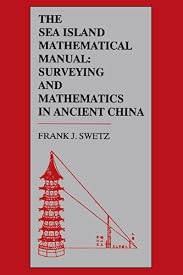
The Sea Island Mathematical Manual: Surveying and Mathematics in Ancient China


Frank Swetz

Pennsylvania State University Press | 1992 | 73 páginas | pdf | 2,4 Mb

link
link1

The Haidao Suanjing or Sea Island Mathematical Manual, is one of the "Ten Classics" of traditional Chinese mathematics, and its contents demonstrate the high standards of theoretical and mathematical sophistication present in early Chinese surveying theory. The Haidao composed in A.D. 263 by Liu Hui, established the mathematical procedures for much of East Asian surveying activity for the next one thousand years. The contents of the Haidao also testify to the ability of the Chinese to systematize mathematics and hint at the use of proof in Chinese mathematics, a concept usually associated with Greek mathematical thought.Frank Swetz provides an annotated translation of the Haidao and an analysis of its surveying problems. In particular, he details surveying techniques and undertakes a mathematical exposition of the Chinese chong cha solution procedures. The Haidao is a testimony to the ingenuity and skill of China's early surveyors and its author, Liu Hui. This study complements and extends the findings of Swetz's previous book, Was Pythagoras Chinese? An Examination of Right Triangle Theory in Ancient China.

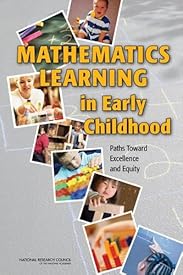
Mathematics Learning in Early Childhood: Paths Toward Excellence and Equity


Committee on Early Childhood Mathematics, National Research Council

National Academies Press | 2009 | 398 páginas

on-line: nap.edu

Early childhood mathematics is vitally important for young children's present and future educational success. Research has demonstrated that virtually all young children have the capability to learn and become competent in mathematics. Furthermore, young children enjoy their early informal experiences with mathematics. Unfortunately, many children's potential in mathematics is not fully realized, especially those children who are economically disadvantaged. This is due, in part, to a lack of opportunities to learn mathematics in early childhood settings or through everyday experiences in the home and in their communities. Improvements in early childhood mathematics education can provide young children with the foundation for school success.
Relying on a comprehensive review of the research, Mathematics Learning in Early Childhood lays out the critical areas that should be the focus of young children's early mathematics education, explores the extent to which they are currently being incorporated in early childhood settings, and identifies the changes needed to improve the quality of mathematics experiences for young children. This book serves as a call to action to improve the state of early childhood mathematics. It will be especially useful for policy makers and practitioners-those who work directly with children and their families in shaping the policies that affect the education of young children.

The Cambridge Dictionary of Statistics


B. S. Everitt, A. Skrondal

4.ª edição

Cambridge University Press | 2010 | 478 páginas
4,177 MB | PDF

link direto
link
uploaded.net

If you work with data and need easy access to clear, reliable definitions and explanations of modern statistical and statistics-related concepts, then look no further than this dictionary. Nearly 4000 terms are defined, covering medical, survey, theoretical, and applied statistics, including computational and graphical aspects. Entries are provided for standard and specialized statistical software. In addition, short biographies of over 100 important statisticians are given. Definitions provide enough mathematical detail to clarify concepts and give standard formula when these are helpful. The majority of definitions then give a reference to a book or article where the user can seek further or more specialized information, and many are accompanied by graphical material to aid understanding.

Mathematics and Humor: A Study of the Logic of Humor


John Allen Paulos

University Of Chicago Press | 1982 | 124 páginas | PDF | 1,45 MB

link
link1

"Jokes, paradoxes, riddles, and the art of non-sequitur are revealed with great perception and insight in this illuminating account of the relationship between humor and mathematics."--Joseph Williams, New York Times"'Leave your mind alone,' said a Thurber cartoon, and a really complete and convincing analysis of what humour is might spoil all jokes forever. This book avoids that danger. What it does. . .is describe broadly several kinds of mathematical theory and apply them to throw sidelights on how many kinds of jokes work."--New Scientist"Many scholars nowadays write seriously about the ludicrous. Some merely manage to be dull. A few--like Paulos--are brilliant in an odd endeavor."--Los Angeles Times Book Review

A Mathematical Tapestry: Demonstrating the Beautiful Unity of Mathematics


Peter Hilton, Jean Pedersen

Cambridge University Press | 2010 | 306 páginas | pdf | 6,1 Mb

link direto
link
link1

This easy-to-read book demonstrates how a simple geometric idea reveals fascinating connections and results in number theory, the mathematics of polyhedra, combinatorial geometry, and group theory. Using a systematic paper-folding procedure it is possible to construct a regular polygon with any number of sides. This remarkable algorithm has led to interesting proofs of certain results in number theory, has been used to answer combinatorial questions involving partitions of space, and has enabled the authors to obtain the formula for the volume of a regular tetrahedron in around three steps, using nothing more complicated than basic arithmetic and the most elementary plane geometry. All of these ideas, and more, reveal the beauty of mathematics and the interconnectedness of its various branches. Detailed instructions, including clear illustrations, enable the reader to gain hands-on experience constructing these models and to discover for themselves the patterns and relationships they unearth.

quinta-feira, 5 de agosto de 2010

Understanding and Teaching Primary Mathematics


Tony Cotton
Longman | 2010 | 272 páginas | pdf | 6 Mb


link

Understanding and Teaching Primary Mathematics is a full colour, core textbook for anyone training to teach Maths at primary level. A self-audit is provided at the outset to assess your prior knowledge and highlight areas for your personal development. The book will then help you to develop your mathematical understanding by encouraging you to think mathematically. You will be asked to create an action plan to aid your development and this will also allow you to build up a portfolio of evidence to help you achieve QTS (Qualified Teacher Status). Rather than treating subject knowledge and pedagogy as two separate entities, the book sets maths subject knowledge in context, showing you how to apply it in the classroom, through models and cases of best practice. Misconception boxes appear throughout each chapter to highlight common misconceptions children have in maths and help you to make connections between different areas of mathematics so that your pupils will see mathematics as a whole rather than a series of separate and often disparate ideas. Case studies in each chapter also provide you with an exemplar lesson plan annotated by a new teacher which shows you how to deal with a common misconception. This book will help you to deliver Maths at primary level in a clear and confident manner.

Contents
Teaching and Learning Primary Mathematics
What Should I Know? What Do I Know?
Using and Applying Mathematics
Counting and Understanding Number
Knowing and Using Number Facts
Calculating
Understanding Shape
Measuring
Handling Data
Teaching and Learning Mathematics in the Early Years
Issues of Inclusion
ICT and Teaching and Learning Mathematics
The QTS Skills Test

Defending Hypatia: Ramus, Savile, and the Renaissance Rediscovery of Mathematical History

(Archimedes)
Robert Goulding

Springer | 2010 | 201 páginas

pdf - 1,6 Mb

link


Why should mathematics, the purest of sciences, have a history? Medieval mathematicians took little interest in the history of their discipline. Yet in the Renaissance the history of mathematics flourished. This book explores how Renaissance scholars recovered and reconstructed the origins of mathematics by tracing its invention in prehistoric Antiquity, its development by the Greeks, and its transmission to modern Europe via the works of Euclid, Theon and Proclus. The principal architects of this story -- the French philosopher and University of Paris reformer Peter Ramus, and his critic, the young Oxford astronomy lecturer Henry Savile – worked out diametrically opposed models for the development of the mathematical arts, models of historical progress and decline which mirrored each scholar’s larger convictions about the nature of mathematical thinking, the purpose of the modern university, and the potential of the human mind. In their hands, the obscure story of mathematical history became a site of contention over some of the most pressing philosophical and pedagogical debates of the sixteenth century.