sexta-feira, 7 de agosto de 2009
Addition and Subtraction
(Math Success)
Lucille Caron, Phil St. Jacques
Enslow Publishers | 2001 | 64 páginas | pdf | 5 Mb
link
link1
terça-feira, 4 de agosto de 2009
The Geometry of Art and Life
Matila Ghyka
Dover Publications | 1977 | 174 páginas | pdf | 19 Mb
link
link1
depositfiles.com
depositfiles.com
Descrição: This classic study probes the geometric interrelationships between art and life in discussions that range from Plato, Pythagoras and Archimedes to modern architecture and art, flowers, shells and marine life, the human face and much, much more. Also explored: the Golden Section, geometrical shapes on the plane, geometrical shapes in space, crystal lattices and many other fascinating topics.
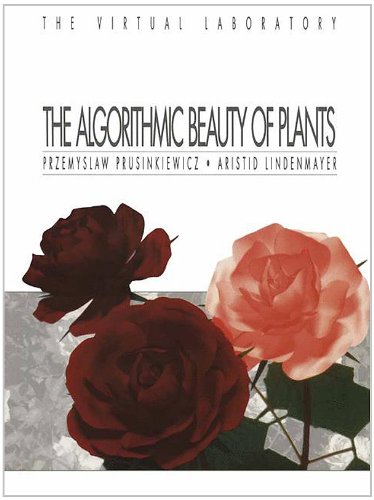
The Algorithmic Beauty of Plants
(The Virtual Laboratory)
Przemyslaw Prusinkiewicz, Aristid Lindenmayer
Springer | 1996 | 228 páginas | PDF | 15 Mb
sma1pekalongan.sch.id (link direto)
depositfiles.com
link
link1
link3
Descrição: This book is the first comprehensive volume on the computer simulation of plant development. It contains a full account of the algorithms used to model plant shapes and developmental processes, Lindenmayer systems in particular. With nearly 50 color plates, the spectacular results of the modelling are vividly illustrated. "This marvelous book will occupy an important place in the scientific literature." Professor Heinz-Otto Peitgen "The Algorithmic Beauty of Plants will perform a valuable service by popularizing this enlightening and bewitching form of mathematics." Steven Levy " ... the garden here is full of delights and an excellent introduction to L-systems, ..." Alvy Ray Smith, IEEE Computer Graphics and its Applications
The Algorithmic Beauty of Sea Shells
(The Virtual Laboratory)Hans Meinhardt
Springer | 2009 | 297 páginas | PDF - 11 Mb
sma1pekalongan.sch.id (link direto)
depositfiles.com
link
link1
Descrição: The patterns on the shells of tropical sea snails are not only compellingly beautiful but also tell a tale of biological development. The decorative patterns are records of their own genesis, which follows laws like those of dune formation or the spread of a flu epidemic. Hans Meinhardt has analyzed the dynamical processes that form these patterns and retraced them faithfully in computer simulations. His book is exciting not only for the astonishing scientific knowledge it reveals but also for its fascinating pictures.
segunda-feira, 3 de agosto de 2009
Childrens Mathematics 4-15: Learning from Errors and Misconceptions

Julie Ryan, Julian Williams
Open University Press | 2007 | 264 páginas | PDF | 2,65 Mb
link
Descrição: The mistakes children make in mathematics are usually not just ‘mistakes’ - they are often intelligent generalizations from previous learning. Following several decades of academic study of such mistakes, the phrase ‘errors and misconceptions’ has recently entered the vocabulary of mathematics teacher education and has become prominent in the curriculum for initial teacher education. The popular view of children’s errors and misconceptions is that they should be corrected as soon as possible. The authors contest this, perceiving them as potential windows into children’s mathematics. Errors may diagnose significant ways of thinking and stages in learning that highlight important opportunities for new learning. This book uses extensive, original data from the authors’ own research on children’s performance, errors and misconceptions across the mathematics curriculum. It progressively develops concepts for teachers to use in organizing their understanding and knowledge of children’s mathematics, offers practical guidance for classroom teaching and concludes with theoretical accounts of learning and teaching. Children’s Mathematics 4-15 is a groundbreaking book, which transforms research on diagnostic errors into knowledge for teaching, teacher education and research on teaching. It is essential reading for teachers, students on undergraduate teacher training courses and graduate and PGCE mathematics teacher trainees, as well as teacher educators and researchers.
domingo, 2 de agosto de 2009
Toward Equity in Quality in Mathematics Education

Murad Jurdak
Springer | 2009 | 178 páginas | pdf | 830 kb
minus.com
pdf - 1,8 Mb
link
link1
Descrição: Educational equity and quality are not only research issues which cut across different disciplines but are major determinants of socio-economic and human development in both industrial and developing countries. The status and role of mathematics, a subject which has long enjoyed a privileged status in school curricula worldwide due to its perceived role in science and technology, render equity and quality in mathematics education at the heart of human development. This is reflected by governments’ relatively large investments in improving the quality of mathematics education and extending it to marginalized and underprivileged groups. The purpose of Toward Equity in Quality in Mathematics Education is four-fold. First, the book examines the constructs of equity and quality and their interdependence from different perspectives. Second, it develops a conceptual framework for studying and analyzing the two constructs. Third, it examines, consolidates, and re-structures the literature on equity and quality in mathematics education. Finally, using data from TIMSS 2003, the book investigates the within and across country impact of the different equity-related factors on mathematics achievement in a sample of countries representative of worldwide geographical and cultural regions. Towards Equity in Quality in Mathematics Education uses a multi-dimensional conceptual framework to study and analyze issues in equity and quality. The framework consists of five perspectives hypothesized as determinants of equity in quality in mathematics education: Mathematical, societal, educational, ideological, and genetic. The framework can be thought of as a pyramid with mathematics as its base and the societal, educational, ideological, and genetic perspectives as its faces. Thus, each point within this pyramid represents a unique equity in quality situation i.e. with different coordinates with respect to mathematical, societal, educational, ideological, and genetic perspectives. Towards Equity in Quality in Mathematics Education is useful for teachers and researchers in mathematics education.
Martianus Capella and the Seven Liberal Arts
Volume 1
The Quadrivium of Martianus Capella Latin Traditions in the Mathematical Sciences 50 BC- AD 1250
William Harris e Richard Johnson com E.L. Burge Stahl
Columbia University | 1971 | 274 páginas | PDF | 9,71 Mb
link
Part of a detailed compendium of late-Roman learning in each of the seven liberal arts, set within an amusing mythological-allegorical tale of courtship and marriage among the pagan gods. The text provides an understanding of medieval allegory and the components of a medieval education.
table of contents
Frontmatter
List of Tables Compiled from Book IX
Abbreviations
PART I. INTRODUCTION
Roman Science in Intellectual History
The Author
The Work
Sources
Influence
Manuscripts and Editions
PART II. THE ALLEGORY AND THE TRIVIUM
The Allegory and Its Sources
Religious Ideas
The Curriculum of the Seven Liberal Arts
The Trivium
Grammar
Dialectic
Rheotoric
PART III. THE QUADRIVIUM
On Geometry
On Arithmetic
On Astronomy
On Harmony
PART IV. CONCLUSION
APPENDIX A Bibliographical Survey of the Seven Liberal Arts in Medieval and Renaissance Iconography
APPENDIX B Hapax Legomena and Rariora from Books VI‐IX of the De nuptiis Philologiae et Mercurii
BIBLIOGRAPHY
INDEX
Subscrever:
Mensagens (Atom)