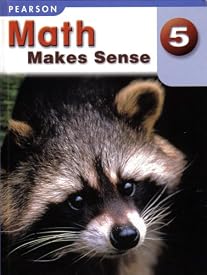
 Math Makes Sense 5
Ray Appel, Daryl Chichak, Sharon Jeroski, Peggy Morrow, Ricki Wortzman, Tervor Brown, Lalie Harcourt, Lorraine Kinsman, Cynthia Pratt Nicolson
Pearson Education Canada | 2008 | 340 páginas | rar -pdf | 74,68 Mb
5.ºano de escolaridade
4shared.co
on-line:
-->
media.pearsoncmg.com
online: http://www.mathmakessense.ca/
Login: math5_student
Password: student2010
Math Makes Sense 6
Pearson Education Canada | 2009 | 340 páginas | pdf | 38,5 Mb
6.ºano de escolaridade
link direto
online: http://www.mathmakessense.ca/
Login: math6_student
Password: student2010
Contents
Investigation: Palindromes 2
UNIT Patterns and Equations
Launch Crack the Code! 4
Lesson 1 Input/Output Machines 6
Lesson 2 Patterns from Tables 11
Lesson 3 Strategies Toolkit 16
Game What’s My Rule? 18
Lesson 4 Using Variables to Describe Patterns 19
Lesson 5 Plotting Points on a Coordinate Grid 24
Lesson 6 Drawing the Graph of a Pattern 29
Lesson 7 Understanding Equality 33
Lesson 8 Keeping Equations Balanced 36
Unit Review Show What You Know 40
Unit Problem Crack the Code! 42
UNIT Understanding Number
Launch At the Apiary 44
Lesson 1 Exploring Large Numbers 46
Lesson 2 Numbers All Around Us 51
Lesson 3 Exploring Multiples 55
Lesson 4 Prime and Composite Numbers 59
Lesson 5 Investigating Factors 63
Game The Factor Game 67
Lesson 6 Strategies Toolkit 68
Lesson 7 Order of Operations 70
Lesson 8 What Is an Integer? 74
Lesson 9 Comparing and Ordering Integers 78
Unit Review Show What You Know 82
Unit Problem At the Apiary 84
UNIT Decimals
Launch Harnessing the Wind 86
Lesson 1 Numbers to Thousandths and Beyond 88
Lesson 2 Estimating Products and Quotients 92
Lesson 3 Multiplying Decimals by a Whole Number 95
Lesson 4 Multiplying a Decimal Less than 1 by a Whole Number 99
Lesson 5 Dividing Decimals by a Whole Number 103
Lesson 6 Dividing Decimals 108
Lesson 7 Dividing a Decimal Less than 1 by a Whole Number 112
Game Make the Lesser Product 115
Lesson 8 Strategies Toolkit 116
Unit Review Show What You Know 118
Unit Problem Harnessing the Wind 120
Cumulative Review 1–3 122
UNIT Angles and Polygons
Launch Designing a Quilt Block 124
Lesson 1 Naming Angles 126
Lesson 2 Exploring Angles 130
Lesson 3 Measuring Angles 133
Lesson 4 Drawing Angles 139
Game Angle Hunt 143
Lesson 5 Strategies Toolkit 144
Lesson 6 Investigating Angles in a Triangle 146
Lesson 7 Investigating Angles in a Quadrilateral 150
Unit Review Show What You Know 154
Unit Problem Designing a Quilt Block 156
Investigation: Ziggurats 158
UNIT Fractions, Ratios, and Percents
Launch Designing a Floor Plan 160
Lesson 1 Mixed Numbers 162
Lesson 2 Converting between Mixed Numbers and
Improper Fractions 166
Game Fraction Match Up 170
Lesson 3 Comparing Mixed Numbers and Improper Fractions 171
Lesson 4 Exploring Ratios 176
Lesson 5 Equivalent Ratios 180
Lesson 6 Strategies Toolkit 184
Lesson 7 Exploring Percents 186
Lesson 8 Relating Fractions, Decimals, and Percents 190
Unit Review Show What You Know 194
Unit Problem Designing a Floor Plan 196
UNIT Geometry and Measurement
Launch Puzzle Mania! 198
Lesson 1 Exploring Triangles 200
Lesson 2 Naming and Sorting Triangles by Angles 205
Lesson 3 Drawing Triangles 209
Lesson 4 Investigating Polygons 214
Lesson 5 Congruence in Regular Polygons 219
Lesson 6 Strategies Toolkit 224
Lesson 7 Perimeters of Polygons 226
Lesson 8 Area of a Rectangle 231
Lesson 9 Volume of a Rectangular Prism 235
Game Beat the Clock! 239
Unit Review Show What You Know 240
Unit Problem Puzzle Mania! 242
Cumulative Review 1–6 244
UNIT Data Analysis and Probability
Launch Alien Encounters! 246
Lesson 1 Using a Questionnaire to Gather Data 248
Technology Using Databases and Electronic Media
to Gather Data 252
Lesson 2 Conducting Experiments to Gather Data 255
Lesson 3 Interpreting Graphs 259
Lesson 4 Drawing Graphs 263
Lesson 5 Choosing an Appropriate Graph 267
Lesson 6 Theoretical Probability 271
Lesson 7 Experimental Probability 276
Technology Investigating Probability 280
Game Game of Pig 281
Lesson 8 Strategies Toolkit 282
Unit Review Show What You Know 284
Unit Problem Alien Encounters! 286
UNIT Transformations
Launch Art and Architecture 288
Lesson 1 Drawing Shapes on a Coordinate Grid 290
Lesson 2 Transformations on a Coordinate Grid 295
Technology Using Technology to Perform Transformations 301
Lesson 3 Successive Transformations 303
Lesson 4 Combining Transformations 308
Lesson 5 Creating Designs 313
Lesson 6 Strategies Toolkit 318
Technology Using a Computer to Make Designs 320
Game Unscramble the Puzzle 321
Unit Review Show What You Know 322
Unit Problem Art and Architecture 324
Investigation: The Domino Effect 326
Cumulative Review 1–8 328
Illustrated Glossary 332
Index 346
Acknowledgments 350

 Math makes sense 8
 Math makes sense 7

 Math makes sense 4

 Grade 6